CM Yogi Hails Bulandshahr as Land of Farmers and Soldiers
Synopsis
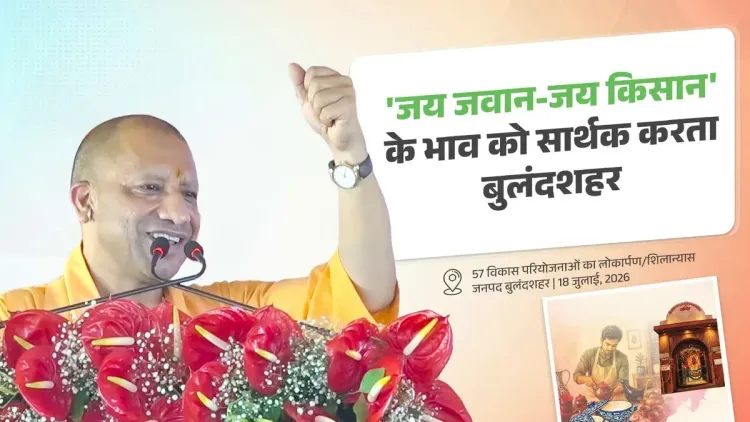
Chief Minister Yogi Adityanath has lauded Bulandshahr as a district where the spirit of 'Jai Jawan, Jai Kisan' is visibly alive, praising its farmers and its strong tradition of military service to the nation.
Key Takeaways
CM Yogi Adityanath described Bulandshahr as a district embodying both farming excellence and significant military contribution on 18 July 2026 .
The Chief Minister noted that nearly every village in Bulandshahr has at least one former soldier or military officer.
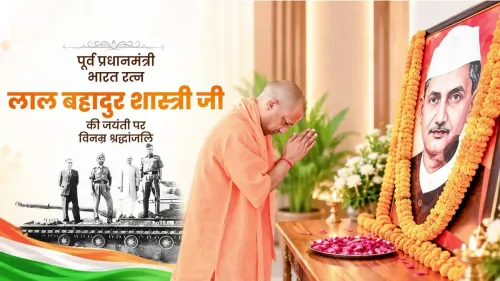
He invoked the slogan 'Jai Jawan, Jai Kisan' , originally coined by former PM Lal Bahadur Shastri in 1965 , to frame the district's dual identity.
Bulandshahr is located in western Uttar Pradesh , a region with a long tradition of supplying recruits to the Indian Army .
The statement highlights both ex-servicemen and farmers as key stakeholders in the district's social fabric.
Observers will watch for follow-up policy announcements on veteran welfare and agricultural support in the region.
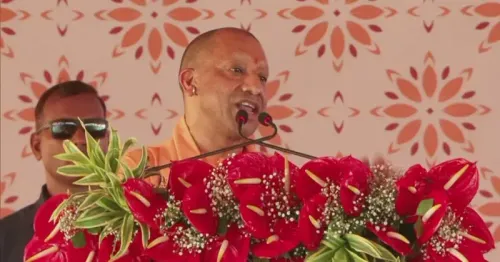
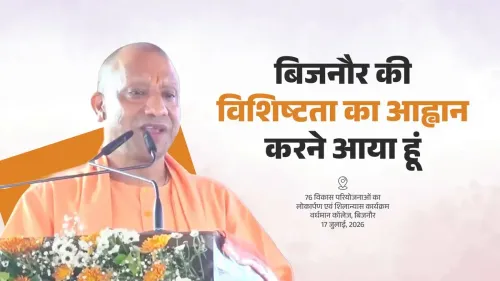
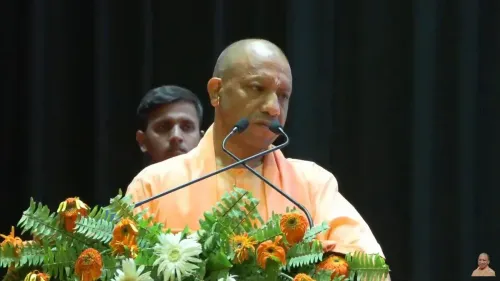
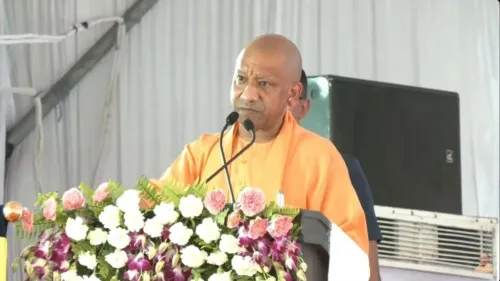
The Chief Minister's Office of Uttar Pradesh, quoting Chief Minister Yogi Adityanath, on Saturday, 18 July 2026, described Bulandshahr as a district that exemplifies the spirit of 'Jai Jawan, Jai Kisan' — honouring both its farming community and its exceptional contribution to the Indian armed forces.
Context
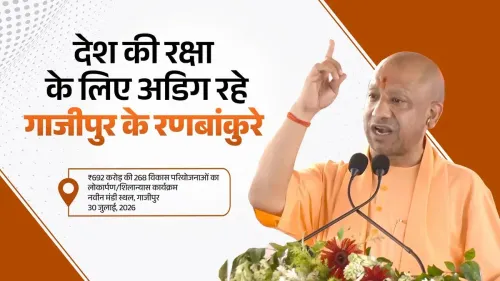
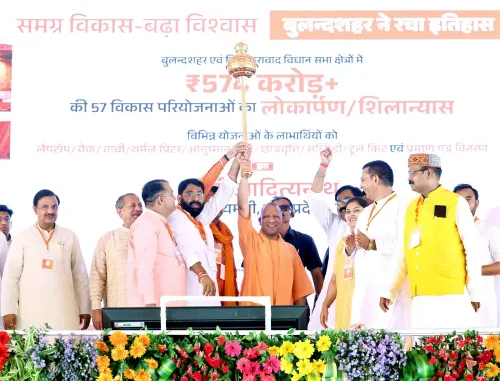
Speaking about Bulandshahr, CM Yogi Adityanath stated that the district is distinguished not only by the hard work of its annadata (food-giving) farmers but also by its record of sending a large number of soldiers to defend the nation. He noted that virtually every village in the district has at least one former soldier or military officer, making the dual identity of farmer and defender a lived reality there. The Chief Minister concluded that Bulandshahr is where the sentiment of 'Jai Jawan, Jai Kisan' — 'Long live the soldier, long live the farmer' — is visibly realised.
Policy Backdrop
The slogan 'Jai Jawan, Jai Kisan' was first articulated by former Prime Minister Lal Bahadur Shastri in 1965, during the Indo-Pakistani war, to underline the inseparable link between national food security and defence preparedness. The phrase has since become a touchstone of Indian political rhetoric, invoked to honour the twin pillars of rural labour and military service. CM Yogi Adityanath, who has served as Chief Minister of Uttar Pradesh since 2017, has frequently used such formulations to spotlight the state's rural and defence contributions in public outreach.
Several districts in western Uttar Pradesh, including Bulandshahr, have historically served as significant recruitment catchments for the Indian Army, shaped by entrenched community traditions of military service alongside intensive agriculture. State governments across successive tenures have sought to link veteran welfare, agricultural productivity, and nationalist messaging in district-level communications.
Stakeholders and Impact
The statement directly acknowledges two groups: ex-servicemen and serving military personnel from Bulandshahr, and the district's farming community. For families that straddle both identities — veterans who returned to till the land — the Chief Minister's framing carries symbolic recognition of their dual contribution to the nation. Such public acknowledgements also tend to precede or accompany state-level welfare announcements targeting ex-servicemen and agricultural households.
The broader audience is western Uttar Pradesh, a politically significant region where the interplay of agrarian concerns and military pride shapes voter sentiment. By invoking Bulandshahr specifically, the statement elevates a district-level identity into a statewide and national narrative.
What's Next
Observers will watch for scheduled army recruitment rallies in Bulandshahr and any new state schemes targeting ex-servicemen families engaged in farming — both of which would give concrete policy weight to the Chief Minister's remarks. The statement may also signal increased government attention to veteran welfare infrastructure in western Uttar Pradesh ahead of future electoral cycles.
Point of View
Jai Kisan' for Bulandshahr is a deliberate act of district-level identity politics in a region where military service and agrarian life are deeply intertwined. By naming a specific district rather than speaking in generalities, the statement personalises nationalist sentiment in a way that resonates with voters who straddle both identities. This fits a broader pattern in which the Yogi government has sought to consolidate support in western Uttar Pradesh by spotlighting local contributions to national causes. Whether the rhetoric translates into targeted policy — recruitment infrastructure, veteran pensions, or farm-support schemes — will determine its durability beyond the news cycle.
NationPress
17 Oct 2026
Frequently Asked Questions
Why did CM Yogi Adityanath praise Bulandshahr?
CM Yogi Adityanath praised Bulandshahr on 18 July 2026 for its dual distinction as a district of hardworking farmers and a major contributor of soldiers to the Indian armed forces, calling it a living example of the 'Jai Jawan, Jai Kisan' spirit.
What does 'Jai Jawan, Jai Kisan' mean?
'Jai Jawan, Jai Kisan' translates to 'Long live the soldier, long live the farmer.' The slogan was coined by former Prime Minister Lal Bahadur Shastri in 1965 to honour the twin pillars of India's defence and food security.
Is Bulandshahr known for military recruitment in Uttar Pradesh?
Yes, Bulandshahr is part of western Uttar Pradesh, a region with a long tradition of supplying recruits to the Indian Army, shaped by community ties and established regimental connections.
Who is CM Yogi Adityanath?
Yogi Adityanath is the Chief Minister of Uttar Pradesh, serving since 2017. He frequently highlights the state's rural and military contributions in public statements and district-level outreach.
What policy announcements could follow CM Yogi's statement on Bulandshahr?
Observers are watching for army recruitment rallies in Bulandshahr and potential state schemes targeting ex-servicemen families who are also engaged in farming, which would give policy substance to the Chief Minister's remarks.