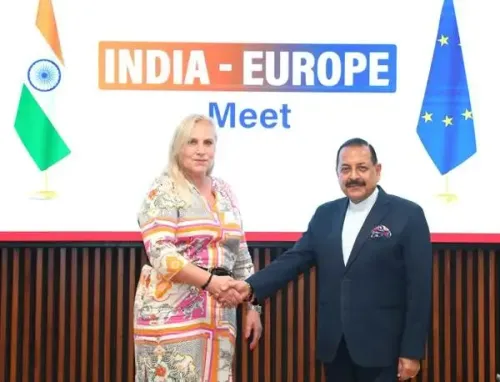
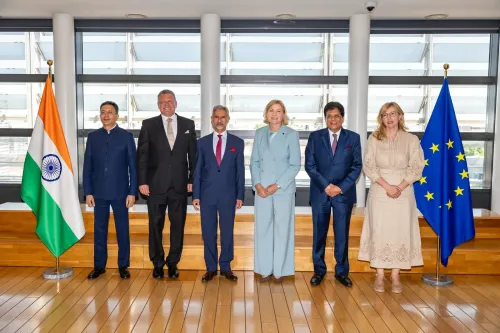
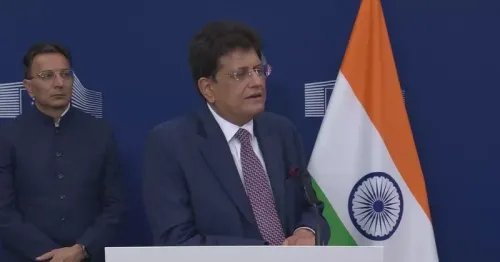
Giriraj Singh flags India-EU tech alliance on AI, chips, clean energy
Synopsis
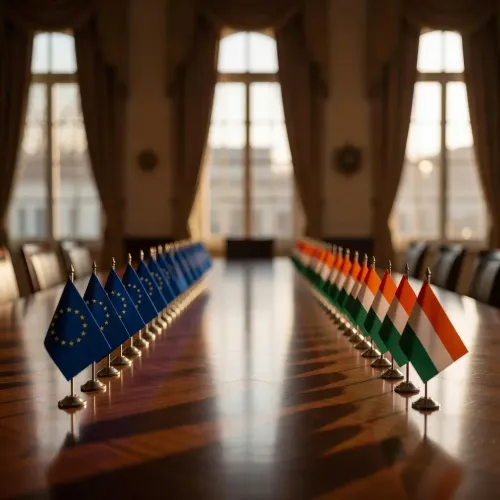
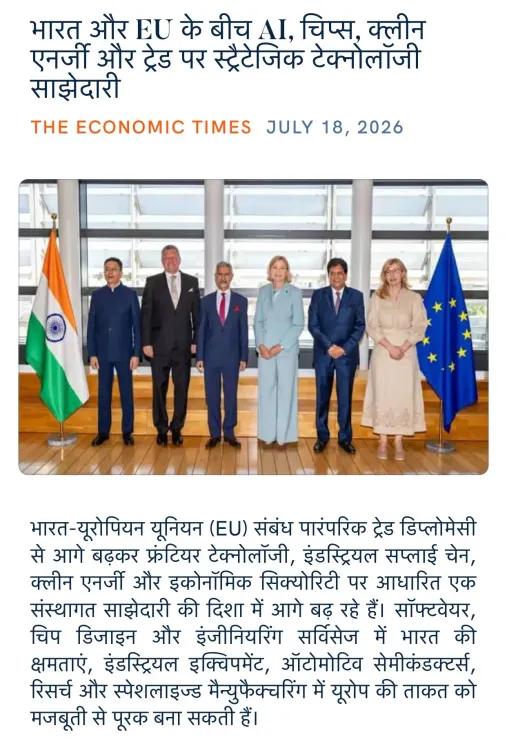
Union Textiles Minister Giriraj Singh on 18 July 2026 spotlighted a strategic technology partnership between India and the European Union covering artificial intelligence, semiconductors, clean energy and trade, amplifying a key plank of India's multi-alignment foreign-policy strategy.
Key Takeaways
Giriraj Singh shared details of an India-EU strategic technology partnership on 18 July 2026 via the NaMo App.
The partnership spans four domains: artificial intelligence, semiconductors (chips), clean energy and trade .
The EU-India Trade and Technology Council , established at the Brussels Summit in May 2022 , is the primary institutional vehicle for this cooperation.
India-EU trade agreement negotiations, originally launched in 2007 and resumed in June 2022 , remain a key pending milestone.
Domestic programmes including the India Semiconductor Mission (2021) and the National Green Hydrogen Mission underpin India's positioning as an EU technology partner.
The alliance complements India's parallel technology dialogues with the US, Japan and Australia under multi-alignment frameworks.
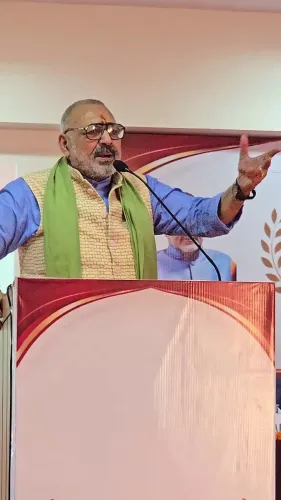
Union Textiles Minister Giriraj Singh on Saturday, 18 July 2026 drew attention to a developing strategic technology partnership between India and the European Union, sharing details of the alliance covering artificial intelligence, semiconductors, clean energy and bilateral trade.
Context
Posting on X via the NaMo App, Singh highlighted what he described as a 'स्ट्रैटेजिक टेक्नोलॉजी साझेदारी' — a strategic technology partnership — between India and the EU spanning four critical domains: AI, chips, clean energy and trade. While Singh serves as Union Textiles Minister, senior BJP leaders routinely amplify foreign-policy and technology developments that align with the ruling party's economic messaging.
The post signals growing political salience of the India-EU technology corridor at a time when New Delhi is actively diversifying its supply chains and technology partnerships across multiple geographies.
Policy Backdrop
The India-EU relationship in the technology space has deep institutional roots. The EU-India Trade and Technology Council (TTC), established at the Brussels Summit in May 2022, created a dedicated bilateral mechanism to coordinate on digital trade, semiconductor supply chains and clean technology — the same pillars Singh's post highlights.
Separately, negotiations on the India-EU Broad-based Trade and Investment Agreement, originally launched in 2007 and formally resumed in June 2022, have kept market access and investment facilitation at the centre of the bilateral agenda. On the domestic side, programmes such as the India Semiconductor Mission — launched in 2021 — and the National Green Hydrogen Mission have positioned India as a credible partner for EU firms seeking supply-chain alternatives.
Prime Minister Narendra Modi has been the principal driver of this technology diplomacy, using successive summits to advance cooperation on semiconductors, AI governance and climate-aligned energy projects with European counterparts.
Stakeholders and Impact
The sectors named in the partnership — AI, chips and clean energy — have direct implications for Indian technology firms, electronics manufacturers and MSME exporters who supply components into global value chains. A deepened EU partnership could open preferential procurement channels and co-investment pipelines for Indian companies operating in these verticals.
For the EU, India represents a large and growing market as well as an alternative manufacturing base amid global semiconductor and clean-energy supply-chain restructuring. Aligning standards, data-governance frameworks and investment rules between the two sides remains a key technical challenge that any formal agreement would need to address.
The India-EU technology axis also fits into India's broader multi-alignment strategy — running parallel to technology dialogues with the United States, Japan and Australia under frameworks such as the Quad and bilateral TTC-style mechanisms.
What's Next
Attention will now turn to the next formal India-EU Summit, where observers will watch for concrete project pipelines, co-funding commitments and any breakthrough on the long-pending trade agreement. Progress on aligning AI regulation and semiconductor co-investment frameworks will be the clearest indicators of whether the strategic partnership translates into binding commitments. A concluded trade deal, if achieved, would mark the most significant upgrade in EU-India economic ties in nearly two decades.
Point of View
Chips, clean energy and trade — map precisely onto India's most politically visible industrial ambitions, from the semiconductor mission to the green hydrogen push. Singh's post, though outside his direct ministerial portfolio, reflects a coordinated effort to build public awareness of India's multi-alignment strategy as a government-wide achievement. The real test will be whether the partnership yields binding agreements on trade and co-investment, or remains at the level of high-profile declarations.
NationPress
16 Oct 2026
Frequently Asked Questions
What is the India-EU strategic technology partnership about?
The India-EU strategic technology partnership focuses on cooperation in artificial intelligence, semiconductor chips, clean energy and bilateral trade, building on the Trade and Technology Council framework established in 2022.
What is the EU-India Trade and Technology Council?
The EU-India Trade and Technology Council is a bilateral body launched at the Brussels Summit in May 2022 to coordinate on digital trade, semiconductor supply chains, clean technology and security-related technology issues.
What did Giriraj Singh post about India and EU?
Union Textiles Minister Giriraj Singh shared a post on 18 July 2026 highlighting a strategic technology partnership between India and the EU covering AI, chips, clean energy and trade.
What is the India Semiconductor Mission?
The India Semiconductor Mission is a central government programme launched in 2021 that offers financial incentives to attract semiconductor fabrication, assembly and design investments into India.
What is the status of the India-EU trade agreement?
The India-EU Broad-based Trade and Investment Agreement was originally launched in 2007 , formally resumed in June 2022 , and remains under negotiation with market access and investment facilitation as core issues.