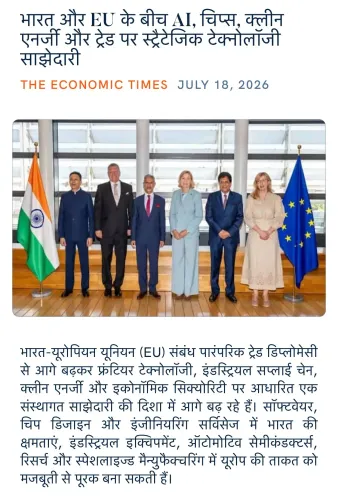
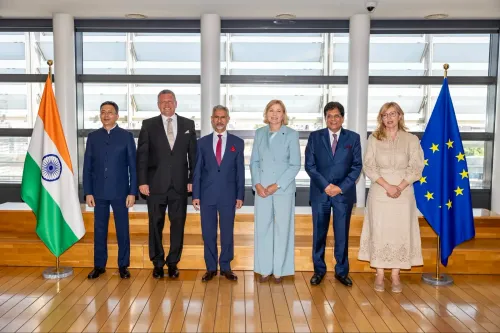
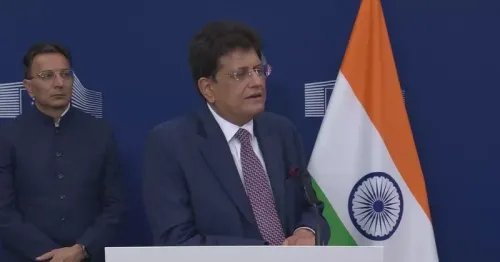
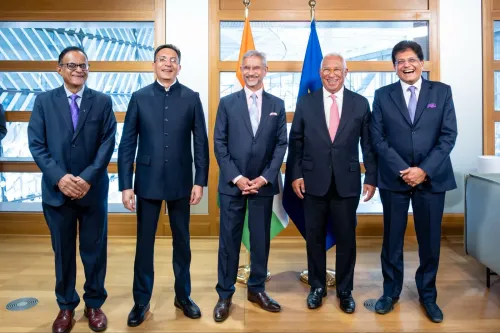
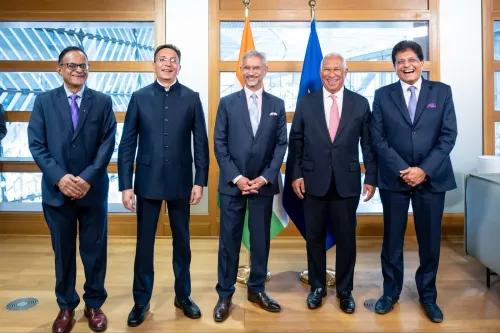
Jaishankar addresses press after 3rd India-EU TTC meeting
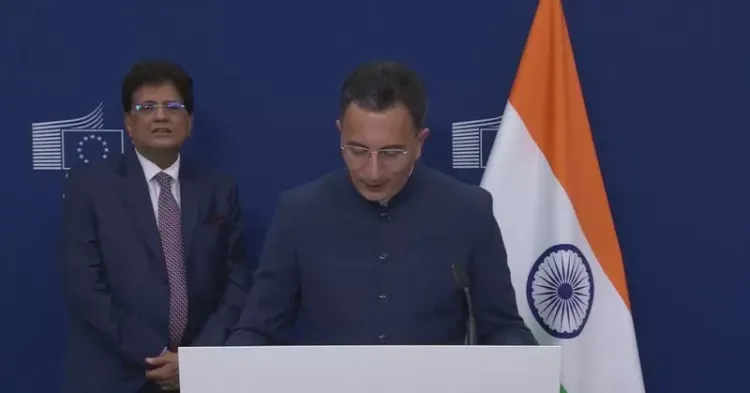
Synopsis
External Affairs Minister Dr. S. Jaishankar addressed the press on 15 July 2026 after the third India-EU Trade and Technology Council meeting, a key bilateral forum on trade, technology, and supply-chain resilience established in 2022 to deepen India-EU strategic ties.
Key Takeaways
Jaishankar spoke to the press on 15 July 2026 after the third India-EU Trade and Technology Council (TTC) meeting.
The India-EU TTC was established in 2022 to institutionalise cooperation on trade, technology, digital governance, and supply-chain resilience.
The TTC is part of India's broader strategy to diversify partnerships with Western economies and secure technology access.
Key stakeholders include Indian tech exporters, EU investors, and regulators on both sides.
The TTC runs alongside ongoing India-EU negotiations for a comprehensive trade and investment agreement .
Follow-up outcomes from working groups on semiconductors, AI, and digital trade will be closely watched.
Union External Affairs Minister Dr. S. Jaishankar spoke to the press on Wednesday, 15 July 2026, following the conclusion of the third meeting of the India-European Union Trade and Technology Council (TTC), sharing updates from the high-level bilateral dialogue between India and the 27-member European Union.
Context
The India-EU Trade and Technology Council was established in 2022 at a bilateral summit as an institutionalised mechanism to advance cooperation across trade, technology, digital governance, and supply-chain resilience. It represents one of the most structured bilateral frameworks India maintains with a major Western economic bloc. The third edition of the TTC meeting marks a continued deepening of this engagement, which has grown in strategic significance as both sides seek to align on emerging technology standards and investment flows.
Dr. Jaishankar, who has served as India's Foreign Secretary and as Indian Ambassador to the United States, China, and Singapore, brings extensive diplomatic experience to the India-EU engagement. His direct press interaction after the TTC meeting signals the importance New Delhi attaches to transparency and communication around the bilateral process.
Policy Backdrop
India's engagement with the EU through the TTC sits within a broader foreign policy posture of diversifying strategic partnerships with Western economies. New Delhi has pursued this approach to secure technology access, reduce supply-chain vulnerabilities, and establish itself as a credible partner in global technology governance. The TTC complements India's participation in the Quad, the G20, and various bilateral technology dialogues with individual nations.
Running parallel to the TTC process are ongoing negotiations between India and the EU for a comprehensive trade and investment agreement, which has seen renewed momentum in recent years. Progress on digital trade standards, semiconductor cooperation, and artificial intelligence governance frameworks are among the areas closely watched by stakeholders on both sides. The TTC provides a structured channel to advance these conversations at the technical and ministerial level simultaneously.
Stakeholders and Impact
Indian technology exporters and EU investors stand among the primary stakeholders in the TTC process, as outcomes from the council can shape the regulatory and commercial environment for cross-border technology trade. Agreements or understandings reached within the TTC framework can influence standards in areas such as data flows, digital infrastructure, and clean technology supply chains. Regulators on both sides also use the TTC as a forum to align on emerging governance frameworks before they harden into divergent rules.
For India, the council offers an avenue to engage the EU — a bloc with significant norm-setting power in global technology and trade regulation — as an equal partner rather than a rule-taker. For the EU, India's scale as a digital economy and its growing manufacturing base make it an indispensable partner in efforts to build resilient, diversified supply chains away from single points of dependency.
What's Next
Attention will now turn to any follow-up outcomes from working groups convened under the TTC on sectors such as semiconductors, artificial intelligence, and digital trade. The next scheduled India-EU summit will be a key moment to assess whether the third TTC meeting has translated into concrete deliverables or a fresh policy mandate. Dr. Jaishankar's press interaction is likely to be followed by more detailed readouts from the Ministry of External Affairs outlining the specific agenda items addressed. The trajectory of the TTC will also be watched for its bearing on the broader India-EU free trade agreement negotiations, where technology provisions remain a central and complex chapter.
Point of View
Institutionalised partnership rather than a transactional arrangement. The TTC, now in its third iteration, has become a barometer for how seriously both sides are pursuing technology and trade alignment at a time of global supply-chain restructuring. For India, sustaining this mechanism signals a consistent foreign policy bet that deepening ties with the EU can yield both economic dividends and strategic leverage. The meeting also comes at a moment when India's broader diplomatic bandwidth — spanning the Quad, G20, and bilateral tech dialogues — is being tested, making the TTC's continued momentum a meaningful signal of bandwidth and priority.
NationPress
14 Oct 2026
Frequently Asked Questions
What is the India-EU Trade and Technology Council?
The India-EU Trade and Technology Council (TTC) is a bilateral mechanism established in 2022 to institutionalise cooperation between India and the European Union on trade, technology, digital governance, and supply-chain resilience.
When was the 3rd India-EU TTC meeting held?
The third India-EU Trade and Technology Council meeting took place on 15 July 2026, after which EAM Dr. S. Jaishankar addressed the press.
What does the India-EU TTC cover?
The TTC covers areas including trade facilitation, technology standards, digital governance, artificial intelligence, semiconductor cooperation, and supply-chain resilience between India and the EU.
Why is the India-EU TTC important for India?
The TTC gives India a structured platform to engage the EU — a major global norm-setter — as an equal partner, helping secure technology access, attract EU investment, and shape international digital and trade standards.
What happens after the India-EU TTC meeting?
After each TTC meeting, working groups on sectors like semiconductors, AI, and digital trade are expected to follow up on agreed outcomes, with the next India-EU summit serving as the key milestone to assess progress.