Jaishankar calls on EU Council President Antonio Costa
Synopsis
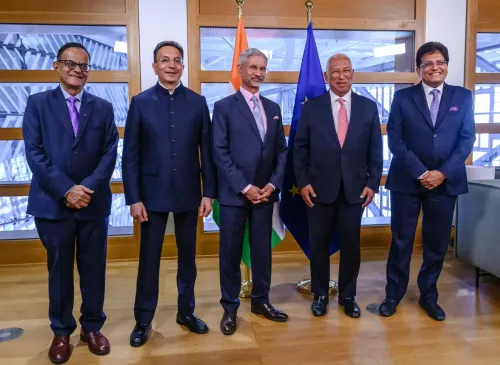
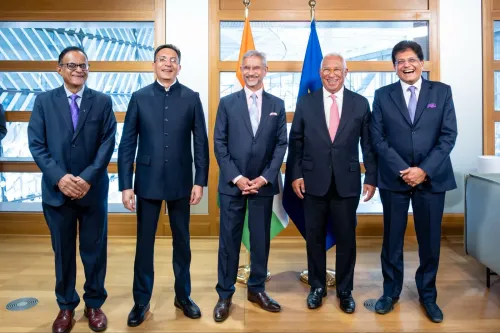
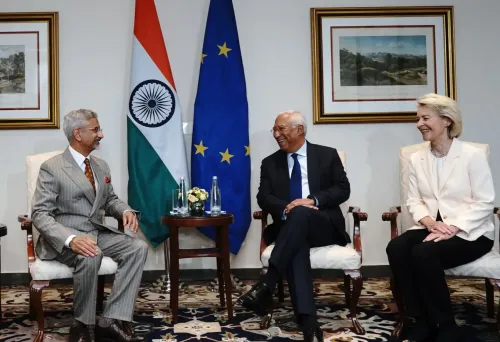
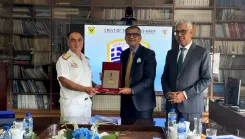
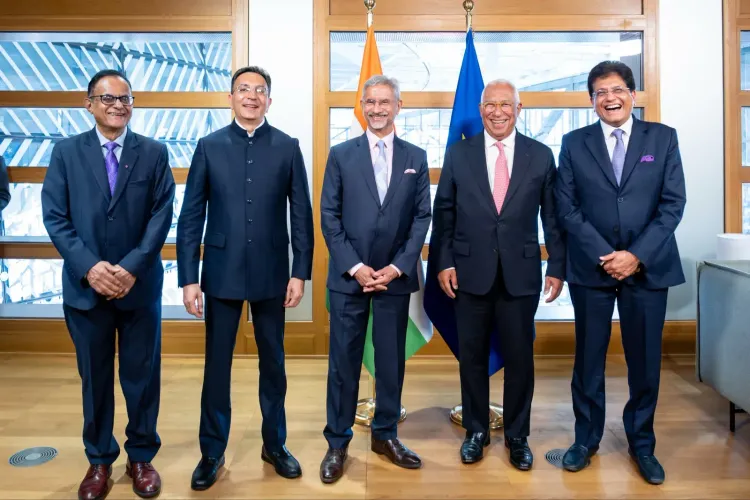
EAM Dr. S. Jaishankar, joined by Commerce Minister Piyush Goyal and Principal Scientific Adviser Prof. Ajay K. Sood, called on EU Council President Antonio Costa on 15 July 2026, conveying PM Modi's wishes and reviewing progress in India-EU trade and technology cooperation since their landmark summit.
Key Takeaways
Jaishankar led a high-level Indian delegation that called on EU Council President Antonio Costa on 15 July 2026 .
The delegation included Commerce Minister Piyush Goyal , MoS MEITY Jitin Prasada , and Principal Scientific Adviser Prof.
Jaishankar conveyed the warm wishes of Prime Minister Narendra Modi to President Costa.
The meeting acknowledged 'significant progress' in the India-EU partnership since a landmark summit held earlier in 2026 .
Focus areas include trade, digital technology and clean energy — the three pillars of the India-EU Trade and Technology Council established in 2022 .
Next steps include further ministerial meetings of the India-EU TTC and potential movement on the Bilateral Trade and Investment Agreement .
Union External Affairs Minister Dr. S. Jaishankar called on President of the European Council Antonio Costa on Wednesday, 15 July 2026, alongside a high-level Indian delegation that included Commerce and Industry Minister Piyush Goyal, Minister of State for Electronics and Information Technology Jitin Prasada, and Principal Scientific Adviser Prof. Ajay K. Sood. Dr. Jaishankar conveyed the warm wishes of Prime Minister Narendra Modi and joined his colleagues in acknowledging significant forward movement in the India-EU partnership since a landmark summit held earlier this year.
Context
Posting on X, Dr. Jaishankar wrote that the delegation was 'pleased to call on President of the European Council' and that they 'recognised the significant progress in our partnership since the landmark India-EU summit earlier this year.' He added that he valued Costa's 'guidance and warm sentiments for advancing our trade and technology cooperation.' The meeting brought together ministers overseeing trade, technology and science — signalling the breadth of the bilateral agenda on the table.
Antonio Costa, a Portuguese politician who assumed the Presidency of the European Council in 2024, has been a key interlocutor for non-EU partners seeking deeper institutional ties with the bloc. His role positions him as a convener of the EU's 27 member states on strategic external partnerships.
Policy Backdrop
The meeting sits within a long arc of India-EU institutional engagement. The two sides relaunched negotiations on a broad-based Bilateral Trade and Investment Agreement (BTIA) following the India-EU Summit of July 2020, after nearly a decade of stalled talks. A further milestone came in May 2022, when the India-EU Trade and Technology Council (TTC) was established during European Commission President Ursula von der Leyen's visit to New Delhi — modelled on a similar EU-US mechanism and designed to coordinate on trade, digital technologies and clean energy.
The composition of the Indian delegation — spanning commerce, technology and science — mirrors the three working groups of the TTC: trade, trusted technology and green and clean energy. The presence of Prof. Ajay K. Sood, Principal Scientific Adviser to the Government of India, underscores the growing emphasis on research and innovation linkages alongside commercial negotiations.
Stakeholders and Impact
India has pursued deeper institutional engagement with the EU to diversify economic partnerships and secure technology supply chains, particularly in semiconductors and digital infrastructure. The EU, for its part, has framed India as a partner for its 'de-risking' agenda — reducing strategic dependence on single suppliers in critical sectors. Indian technology exporters, trade negotiators and research institutions are among the primary stakeholders watching these talks closely.
The involvement of Piyush Goyal, who leads India's trade policy, alongside the technology and science portfolios, suggests the delegation was engaged across the full spectrum of TTC working groups. Any momentum generated in such high-level meetings typically feeds back into technical negotiating rounds that follow.
What's Next
Attention will now turn to the next ministerial meeting of the India-EU Trade and Technology Council and whether the diplomatic energy generated by the summit and subsequent high-level calls translates into fresh movement on the long-pending Bilateral Trade and Investment Agreement. The consistent senior-level engagement — from the Prime Minister's level downward — suggests both sides are invested in sustaining the current momentum. A concrete deliverable on market access or technology transfer frameworks would be the clearest indicator that the partnership is moving from dialogue to outcomes.
Point of View
Technology and science alongside the External Affairs Minister indicates India is treating the EU engagement as a whole-of-government priority. Dr. Jaishankar's explicit reference to 'significant progress' since the landmark summit suggests both sides are keen to lock in momentum before domestic political calendars on either side create friction. The EU's de-risking agenda and India's supply-chain diversification goals are structurally aligned, making the TTC a rare bilateral mechanism with genuine strategic buy-in from both parties. Whether that alignment converts into a concluded trade agreement remains the defining test of the partnership's ambitions.
NationPress
13 Oct 2026
Frequently Asked Questions
Why did Jaishankar meet EU Council President Antonio Costa?
Dr. Jaishankar met Antonio Costa on 15 July 2026 to review progress in the India-EU partnership, convey PM Modi's warm wishes, and advance cooperation on trade and technology through mechanisms like the India-EU Trade and Technology Council.
Who is Antonio Costa and what is his role?
Antonio Costa is a Portuguese politician who became President of the European Council in 2024. In this role he chairs EU summits and represents the bloc externally on strategic partnerships.
What is the India-EU Trade and Technology Council?
The India-EU Trade and Technology Council (TTC) is a bilateral mechanism launched in May 2022 to coordinate cooperation on trade, trusted technologies and clean energy between India and the European Union.
What is the India-EU Bilateral Trade and Investment Agreement?
The Bilateral Trade and Investment Agreement (BTIA) is a long-pending comprehensive trade deal between India and the EU. Talks were relaunched after the July 2020 India-EU Summit following nearly a decade of stalled negotiations.
What were the outcomes of Jaishankar's meeting with Antonio Costa?
While no specific deliverables were announced, the delegation — including Commerce Minister Piyush Goyal and Principal Scientific Adviser Prof. Ajay K. Sood — acknowledged significant progress in the India-EU partnership and discussed advancing trade and technology cooperation.