Owaisi: Mob lynchers, not Muslims, are radicalised
Synopsis
AIMIM president Asaduddin Owaisi declared on 15 July 2026 that Muslims are not radicalised — those who commit mob lynching upon seeing a hijab, beard, or skullcap are. The statement challenges dominant political narratives and renews calls for a central anti-lynching law in India.
Key Takeaways
On 15 July 2026 , Asaduddin Owaisi posted in Hindi arguing that mob lynchers who target visible Muslim religious markers are the true 'radicalised' individuals.
The post directly inverts a common political framing that associates radicalisation almost exclusively with Muslim communities.
The Supreme Court of India issued binding anti-lynching guidelines to states in 2018 , but implementation has remained uneven across jurisdictions.
AIMIM has a record of raising the anti-lynching issue in Parliament and has called for a uniform central law on mob violence.
State police forces and pending state-level anti-lynching bills remain key pressure points for enforcement of existing court directives.
The next session of Parliament is expected to see renewed opposition demands for central anti-lynching legislation.
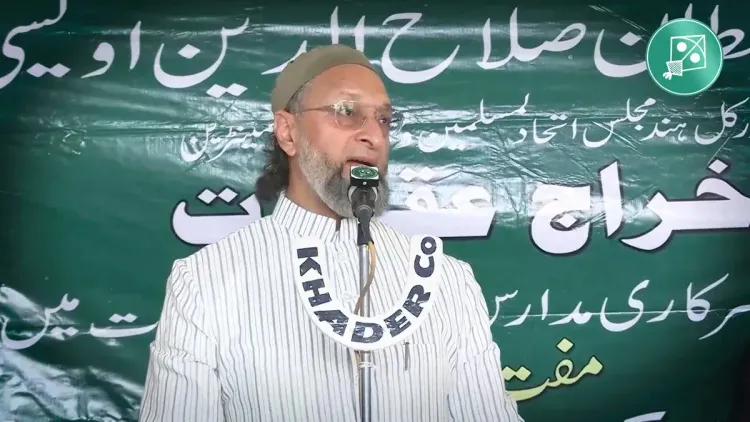
AIMIM president Asaduddin Owaisi on Wednesday, 15 July 2026, challenged the framing of radicalisation in India, asserting that it is those who commit mob lynching upon seeing a hijab, beard, or skullcap who are radicalised — not Muslims. The Hyderabad Lok Sabha MP made the remark in a post on X that has drawn wide attention on social media.
In the original Hindi, Owaisi wrote: 'Musalman Radicalise nahi hota, balki Radicalise wo log hain jo hijab, daadhi aur topi dekhkar mob lynching karte hain' — translating to: 'Muslims are not radicalised; rather, it is those people who commit mob lynching upon seeing a hijab, beard, and skullcap who are radicalised.'
Context
The statement inverts a narrative that has dominated parts of India's political discourse, in which the word 'radicalisation' is almost exclusively applied to Muslim communities. Owaisi, a barrister and five-term MP, has consistently argued that communal violence targeting visible markers of Muslim identity represents a form of vigilante extremism that deserves equal scrutiny.
Attacks on individuals identified by religious markers such as a beard, skullcap, or hijab have been documented across several Indian states since the mid-2010s, frequently linked to cow-protection vigilantism. The pattern has generated sustained debate about the state's obligations to protect minority communities from targeted violence.
Policy Backdrop
The Supreme Court of India issued binding guidelines in 2018 directing states to enact dedicated laws against mob lynching and vigilante violence, following a spate of high-profile incidents. Despite the directive, legislative action has been uneven: some states have passed or amended anti-lynching statutes, while others have yet to act.
Implementation gaps have remained a persistent criticism from civil society groups and opposition lawmakers. AIMIM has repeatedly raised the issue in Parliament, calling for a central law that would set a uniform standard of accountability for perpetrators of mob violence.
Stakeholders and Impact
Muslim minorities are the most directly affected stakeholder group, particularly those in states where anti-lynching protections remain weak or unenforced. State police forces are simultaneously under pressure from courts to prosecute perpetrators and, in some cases, face allegations of delayed or partial response to mob violence incidents.
Owaisi's framing also has implications for the broader political conversation: by labelling mob lynchers as 'radicalised', he applies a term usually reserved for terrorism discourse to perpetrators of communal violence, a rhetorical move designed to prompt a reexamination of how the concept is deployed in public debate.
What's Next
Attention will now turn to state legislatures where anti-lynching bills remain pending, as well as to the next session of Parliament, where opposition members — including from AIMIM — are expected to press for a central anti-lynching law. Whether Owaisi's post triggers a formal legislative push or a cross-party debate on the definition of radicalisation will be a key indicator of its political impact.
The post underscores a deepening fault line in Indian politics over who bears the burden of the 'radicalisation' label — and whether the legal framework around mob violence will be strengthened before the next parliamentary sitting.
Point of View
He forces a definitional debate that the ruling establishment has so far avoided. The statement fits a broader pattern of AIMIM using parliamentary and social-media platforms to shift the burden of proof in communal-violence discourse. It also arrives against the backdrop of years of stalled central legislation on mob lynching, making the timing politically pointed. Whether it galvanises a legislative response or remains a social-media moment will test the opposition's capacity to convert online traction into floor-of-the-house action.
NationPress
15 Jul 2026
Frequently Asked Questions
What did Owaisi say about radicalisation and mob lynching?
Owaisi said that Muslims are not radicalised; rather, people who commit mob lynching upon seeing a hijab, beard, or skullcap are the ones who are radicalised.
Is there a law against mob lynching in India?
There is no central anti-lynching law in India. The Supreme Court issued binding guidelines to states in 2018 to enact such laws, but implementation has been uneven, with only some states passing relevant legislation.
Who is Asaduddin Owaisi?
Asaduddin Owaisi is the president of AIMIM (All India Majlis-e-Ittehadul Muslimeen) and a five-term Lok Sabha MP representing the Hyderabad constituency in Telangana.
What is AIMIM's position on communal violence?
AIMIM has consistently demanded stronger legal protections for Muslim minorities, including a central anti-lynching law, and has raised the issue repeatedly in Parliament.
What does the Supreme Court's 2018 guideline on mob lynching say?
The Supreme Court's 2018 guidelines directed all state governments to enact dedicated laws against mob lynching and vigilante violence and to set up fast-track mechanisms to prosecute perpetrators.