Owaisi Slams Modi Govt Over CBI Appeal Decisions in Babri, Blast Cases
Synopsis
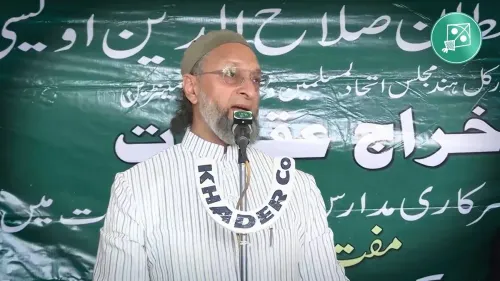
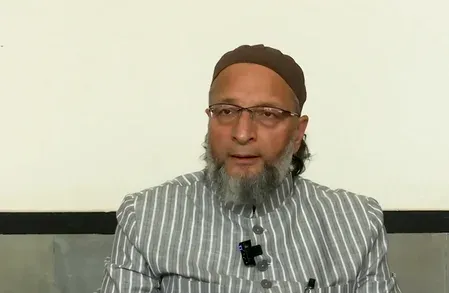
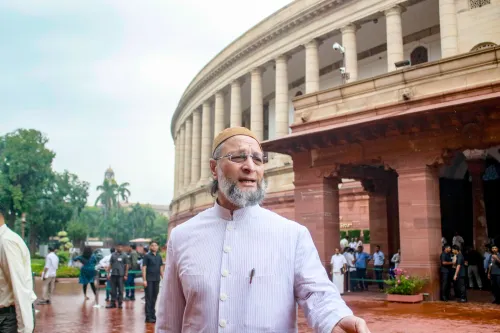
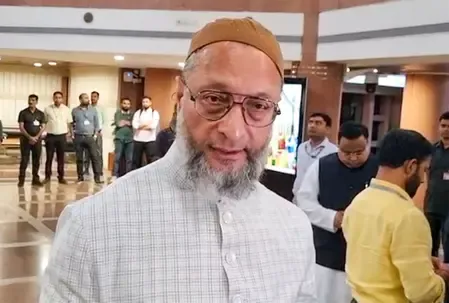
AIMIM president Asaduddin Owaisi on June 20, 2026 accused the Modi government of blocking CBI appeals in the Babri Masjid demolition, Mecca Masjid blast, and Ajmer blast acquittal cases, calling it 'shameful and grave injustice' and alleging the government pursues appeals only for political reasons.
Key Takeaways
AIMIM president Asaduddin Owaisi on June 20, 2026 accused the Modi government of not allowing the CBI to appeal acquittals in the Babri Masjid demolition case , Mecca Masjid blast case , and Ajmer blast case .
In all three cases, no accused was found guilty despite deaths of large numbers of people, according to Owaisi.
A special CBI court in Lucknow acquitted all 32 accused in the Babri Masjid demolition conspiracy case in September 2020 .
The accused in the Mecca Masjid and Ajmer Dargah blast cases were acquitted by special courts in 2018–2019 .
Owaisi alleged the government appeals cases 'not for justice but for political reasons,' pointing to a pattern of selective legal action.
The Osmanabad MP was flagged as being in a 'Catch 22 situation,' with Owaisi expressing hope the MP receives legal justice.
AIMIM president Asaduddin Owaisi on Saturday, June 20, 2026, sharply criticised the Modi government for not allowing the Central Bureau of Investigation (CBI) to file appeals in several high-profile acquittal cases, including the Babri Masjid demolition criminal case, the Mecca Masjid blast case, and the Ajmer blast case — all of which resulted in no accused being found guilty.
Context
Owaisi called the government's inaction 'very shameful and grave injustice,' pointing out that people died in large numbers in these incidents yet no convictions followed. He also alleged that when the government does choose to appeal in cases, it does so 'not for justice but for political reasons,' suggesting a selective approach to pursuing legal remedies in communal violence cases.
The Hyderabad MP also referenced the deaths of Pawan Raje and driver Samad Kazi in 2006, and flagged that the Osmanabad MP is caught in what he described as a 'Catch 22 situation,' expressing hope that the MP receives legal justice.
Policy Backdrop
In September 2020, a special CBI court in Lucknow acquitted all 32 accused — including senior BJP leaders — in the Babri Masjid demolition conspiracy case stemming from the events of December 6, 1992. The court found the prosecution had not proved the charges of criminal conspiracy beyond reasonable doubt.
In 2018–2019, special courts acquitted the accused in both the Mecca Masjid blast case (the 2007 Hyderabad explosion that killed several worshippers) and the Ajmer Dargah blast case (2007). Both cases had been investigated by central agencies and were linked to alleged extremist networks. In each instance, the acquittals drew criticism from victims' families and civil society groups who questioned the rigour of the prosecution.
The decision whether to appeal an acquittal rests with the prosecuting agency and, in CBI cases, requires the sanction of the central government. Critics have long argued that the government's choices on which acquittals to challenge reveal political priorities rather than a uniform commitment to justice.
Stakeholders and Impact
The families of blast victims in Hyderabad and Ajmer, as well as Muslim community organisations that have campaigned for accountability in the Babri Masjid demolition case, are the most directly affected by the government's decision not to appeal. For these groups, the absence of a challenge to the acquittals effectively closes the criminal chapter of cases that carry deep historical and communal significance.
The reference to the Osmanabad MP adds a contemporary political dimension, suggesting that the broader pattern of selective legal action has immediate consequences for elected representatives navigating legal and political pressures simultaneously.
What's Next
Owaisi's remarks are likely to intensify pressure on the government ahead of the monsoon session of Parliament, where opposition members could raise the issue through questions or adjournment motions. Legal advocates and victims' families may also explore independent petitions before the Supreme Court or relevant High Courts to challenge the government's decision not to direct the CBI to appeal, though the legal threshold for such challenges is high. The political debate over selective justice in communal violence cases shows no sign of abating.
Point of View
He draws a pattern of inaction that spans multiple governments and case types, though the current administration bears the most direct accountability. The reference to appeals being filed 'for political reasons' signals a broader opposition argument that justice in communal violence cases is instrumentalised rather than pursued on merit. This framing is likely to resonate ahead of the monsoon parliamentary session, where the government will face pressure to explain its appeal calculus in each case.
NationPress
19 Sept 2026
Frequently Asked Questions
Why did the CBI not appeal in the Babri Masjid demolition case?
The central government did not direct the CBI to challenge the September 2020 acquittal of all 32 accused by the special CBI court in Lucknow . AIMIM president Asaduddin Owaisi has called this decision 'shameful and grave injustice,' alleging the government is selective in pursuing appeals based on political considerations rather than a uniform commitment to justice.
What was the verdict in the Mecca Masjid blast case?
The accused in the Mecca Masjid blast case — the 2007 Hyderabad explosion that killed several people — were acquitted by a special court around 2018–2019 . The CBI did not appeal the acquittal, a decision Owaisi has criticised as part of a broader pattern of inaction in communal violence cases.
What happened in the Ajmer Dargah blast case?
The 2007 Ajmer Dargah blast was investigated by central agencies and the accused were acquitted by a special court around 2018–2019 . No appeal was filed by the CBI, which Owaisi cited alongside the Babri and Mecca Masjid cases as evidence of selective justice.
Who is the Osmanabad MP that Owaisi mentioned?
Owaisi referred to the Osmanabad MP as being caught in a 'Catch 22 situation' and expressed hope the MP receives legal justice. The specific details of the situation described in the post fall after established public record and cannot be independently verified at this time.
Can victims independently challenge a CBI acquittal if the government does not appeal?
Yes, in principle. Victims or their families can approach the High Court or the Supreme Court with independent petitions challenging an acquittal, though the legal threshold is high and courts scrutinise such petitions carefully. The government's decision not to direct the CBI to appeal does not automatically foreclose all legal avenues for affected parties.