Bhojshala HC order mirrors Babri verdict, says Owaisi; cites Places of Worship Act

Synopsis
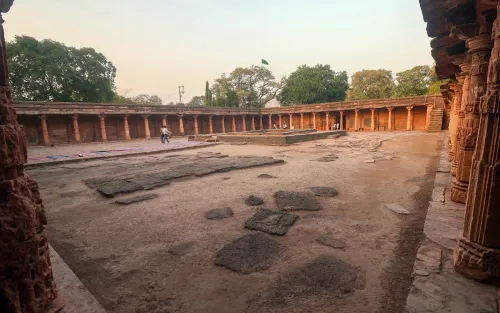
Owaisi's Bhojshala press conference was more than a legal objection — it was a pointed warning that the Babri Masjid verdict's 'aastha' logic has now become a template. With a 700-year namaz record, a 1935 state gazette, a 1985 Waqf notification, and an ASI order all allegedly set aside, the AIMIM chief argues the Places of Worship Act is being systematically hollowed out.
Key Takeaways
AIMIM President Asaduddin Owaisi on 15 May called the Madhya Pradesh High Court 's Bhojshala ruling 'erroneous' and comparable to the Babri Masjid Supreme Court verdict.
He cited the 1935 Dhar State Gazette , 1985 Waqf registration , and a 1951 ASI order as documentary evidence the court allegedly overlooked.
Muslims had been offering namaz at the site for 700 years and were in possession until the High Court order, Owaisi argued.
He contended the ruling violates Section 4 of the Places of Worship (Special Provisions) Act, 1991 , which freezes the religious character of sites as of 15 August 1947 .
Owaisi alleged the Modi government and ASI acted in concert with petitioners, calling it a violation of Articles 14 and 12 of the Constitution.
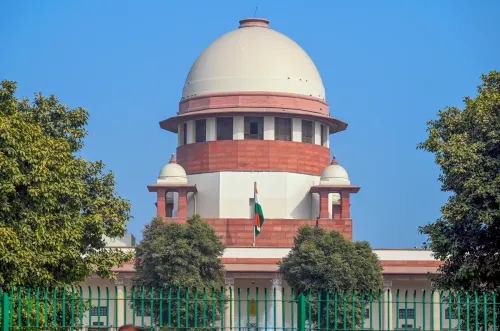
He expressed hope that the Supreme Court would correct the ruling on appeal.
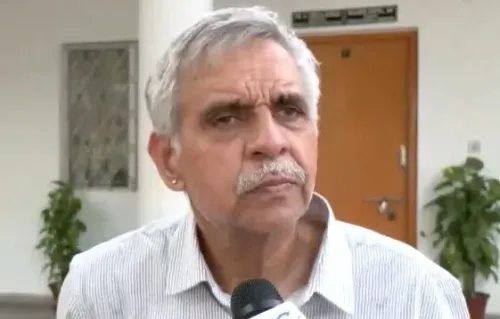
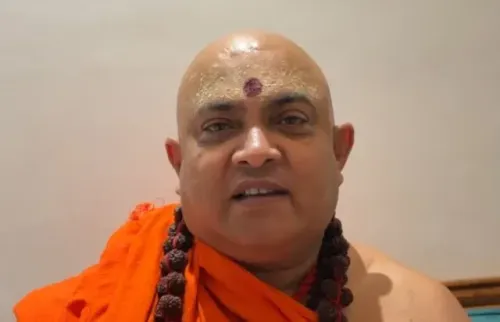
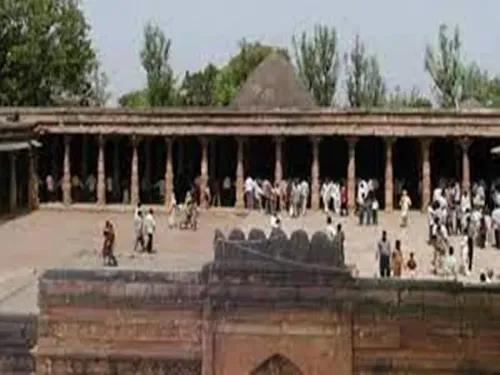
All India Majlis-e-Ittehadul Muslimeen (AIMIM) President Asaduddin Owaisi on Friday, 15 May declared that the Madhya Pradesh High Court order declaring the Bhojshala-Kamal Maula mosque complex a temple is structurally identical to the Supreme Court's judgement in the Babri Masjid case — both, he argued, rest on 'aastha' (belief) rather than legal title. Speaking at a press conference in Hyderabad, the Hyderabad Member of Parliament called the High Court ruling 'erroneous' and said it ignored foundational documentary evidence.
The Parallel Owaisi Draws
Owaisi argued that the two rulings share a common flaw: courts deciding on religious character of disputed sites on the basis of faith rather than established possession or legal record. He noted a key distinction, however — in the Babri Masjid case, the court had held that Muslims were not in possession, whereas in the Bhojshala dispute, the Muslim community had been in continuous possession until the High Court order. 'Muslims had been offering namaz there for 700 years,' he said. 'It is a Waqf by dedication. The erstwhile state of Dhar had given it to Muslims.'
Documentary Evidence the Court Allegedly Overlooked
The AIMIM chief cited a chain of official records he contends the High Court disregarded. The 1935 Dhar State Gazette and Dhar durbar proceedings, he said, explicitly acknowledged that namaz was being offered at the site and that the state had relinquished guardianship, transferring the property to the Muslim community. In 1951, the Director General of the Archaeological Survey of India (ASI) issued orders that only Muslims would offer namaz there and that rituals of no other religion would be permitted. A formal Waqf gazette notification followed in 1985 under the Waqf Act, 1954. 'The ASI in 1951 and 1952 clarified this is a mosque and rejected applications by those who wanted to celebrate 'Bhuj Utsav',' Owaisi said.
The Gurukul Argument
Addressing claims that the site was originally a temple, Owaisi contended that inscriptions found at the location indicate it functioned as a gurukul — a centre for Sanskrit learning promoted by Raja Bhoj — rather than a place of Hindu worship. 'Just as we call Parliament a temple of democracy, it does not mean it is a place of worship. Similarly, it was a gurukul. There was an earthquake in 1220 and it was reconstructed,' he said. He also noted that in 1995, certain influential Muslims in Dhar entered into an agreement permitting puja inside the mosque every Tuesday and on Basant Panchami — a decision he described as a mistake made by that community at the time.
Legal Challenge: Places of Worship Act, 1991
Owaisi argued that the High Court order directly violates the Places of Worship (Special Provisions) Act, 1991. He cited Section 4 of the Act, which bars any change to the religious character of a place of worship as it stood on 15 August 1947. He also invoked the ASI Act, which he said prohibits altering the nature and character of any protected religious site. 'This judgment is not in accordance with Constitutional values,' he said. 'Even in the Babri Masjid case, the court judgment favoured one religion while ending the right of worship of another. Such judgments have opened the floodgates, and now anyone can challenge the places of worship, weakening the significance of the Places of Worship Act.'
Political Allegation and Next Steps
The AIMIM chief alleged that the Narendra Modi government and the ASI are 'hand-in-hand with the petitioners' — a charge he said amounts to a violation of Articles 14 and 12 of the Constitution. He expressed hope that the Supreme Court would take into account the 1935 Dhar State Gazette, the 1985 Waqf registration, and the Places of Worship Act while hearing any appeal. Owaisi recalled that after the Babri Masjid-Ram Mandir verdict, he had predicted that a faith-based ruling would open the door to multiple similar disputes — a warning he argued has now come to pass.
Point of View
Not merely rhetorical — both rulings are now being read by critics as establishing 'belief' as a judicially cognisable basis for title, which the Places of Worship Act was explicitly designed to prevent. The 1935 gazette, 1951 ASI order, and 1985 Waqf notification form a documentary chain that courts in similar disputes have been expected to weigh heavily; the fact that Owaisi says these were set aside is the real legal question the Supreme Court will have to answer. More broadly, this case tests whether the Places of Worship Act has any enforceable teeth — a question that matters far beyond Bhojshala, given the pipeline of similar petitions that have accumulated since the Babri verdict.
NationPress
7 Oct 2026
Frequently Asked Questions
What did the Madhya Pradesh High Court rule on Bhojshala?
The Madhya Pradesh High Court declared the Bhojshala-Kamal Maula mosque complex a temple, a ruling that AIMIM chief Asaduddin Owaisi has called 'erroneous' and challenged on grounds of documented Muslim possession and Waqf registration. The case is expected to be contested before the Supreme Court.
Why does Owaisi compare the Bhojshala order to the Babri Masjid verdict?
Owaisi argues both rulings were delivered on the basis of 'aastha' (belief) rather than legal title or proven possession. He says the Bhojshala case is actually a stronger Muslim claim because, unlike in Babri, the community was in active possession of the site until the High Court order.
What documentary evidence does Owaisi cite in support of Muslim ownership?
Owaisi cited the 1935 Dhar State Gazette, which acknowledged namaz at the site and recorded the state's transfer of guardianship to the Muslim community; a 1951 ASI Director General order permitting only Muslim prayers; and a 1985 Waqf gazette notification under the Waqf Act, 1954.
How does the Places of Worship Act, 1991 apply to the Bhojshala case?
Section 4 of the Places of Worship (Special Provisions) Act, 1991 prohibits changing the religious character of any place of worship as it stood on 15 August 1947. Owaisi argues the High Court order directly contravenes this provision, as the site's Muslim character was established well before that date.
What is Owaisi's position on the 1995 agreement allowing puja inside the mosque?
Owaisi acknowledged that in 1995, some influential Muslims in Dhar agreed to allow puja inside the mosque on Tuesdays and on Basant Panchami, but described this as a mistake made by that section of the community — not a legal concession of ownership or religious character.