SC refuses stay on MP HC Bhojshala verdict, allows Friday namaz at nearby open space
Synopsis
The Supreme Court declined to pause the MP High Court's ruling that the Bhojshala-Kamal Maula Mosque complex in Dhar is a Hindu temple — but carved out an ad hoc Friday namaz space nearby for Muslims. With ASI structural changes now frozen pending court approval and final hearings weeks away, the centuries-old dispute enters a delicate new legal phase.
Key Takeaways
The Supreme Court on 14 July refused to stay the MP High Court 's verdict declaring the Bhojshala complex in Dhar a Hindu temple.
A CJI Surya Kant -led Bench directed the state to provide a separate open space near the monument for Friday namaz between 1 pm and 3 pm as an ad hoc measure.
The ban on Muslim prayers inside the Bhojshala premises — as ordered by the MP High Court — remains in force.
The ASI has been barred from making any structural alterations to the monument without prior Supreme Court approval.
Notices have been issued to the Centre , Madhya Pradesh government , ASI , and others; the next hearing is expected in two to three weeks .
The MP High Court's 15 May ruling had relied on a 2024 ASI survey finding Sanskrit inscriptions and a havan kund at the site.
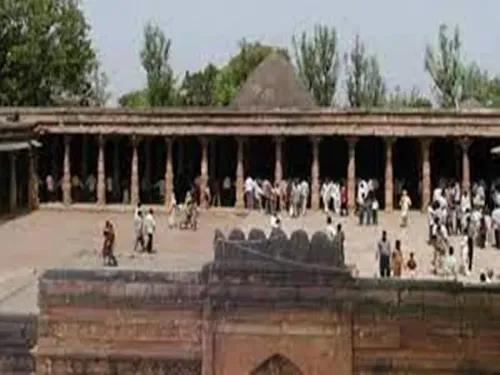
The Supreme Court on Tuesday, 14 July declined to stay the Madhya Pradesh High Court's verdict declaring the disputed Bhojshala-Kamal Maula Mosque complex in Dhar a Hindu temple, while directing the state government to provide a separate open space adjacent to the monument for Muslim worshippers to offer Friday namaz between 1 pm and 3 pm as an interim arrangement. The order keeps the High Court's ban on prayers inside the protected complex in force.
Key Directions from the Supreme Court
A Bench comprising Chief Justice of India Surya Kant, Justice Joymalya Bagchi, and Justice V. Mohana specified that the interim arrangement would be 'without prejudice to the rights of both sides' and would remain subject to the final outcome of the special leave petitions (SLPs) challenging the High Court's ruling.
The Bench ordered: 'Without prejudice to the rights of both sides, it is directed that a separate open space adjacent/near to the subject premises may be provided to the appellant and other members of the community for offering namaz on Friday between 1-3 PM. It shall be ensured that no disturbance is caused from both sides in performance of religious affairs. Arrangement shall be ad-hoc in nature and subject to final outcome of the present proceedings.'
The court also directed that the Archaeological Survey of India (ASI) must not undertake any structural alterations to the monument without prior permission from the Supreme Court — a safeguard that came after senior advocate Huzefa Ahmadi, appearing for the Muslim side, raised concerns over potential changes to the site.
What the MP High Court Had Ruled
The Muslim side has challenged the 15 May judgment of the Indore Bench of the Madhya Pradesh High Court, delivered by Justices Vijay Kumar Shukla and Alok Awasthi, which recognised the Bhojshala complex as a Hindu temple and held that the Hindu community's right to worship at the site 'was never extinguished.'
The High Court had quashed the ASI's 7 April 2003 order that had permitted Muslims to offer namaz on the premises on Fridays, ruling that the arrangement was inconsistent with the monument's established religious character. It had also suggested the state government consider allotting alternative land to the Muslim community for construction of a mosque, and directed the Union government to seek repatriation of the ancient idol of Goddess Saraswati, believed to be housed at the British Museum in London.
The High Court's findings relied extensively on a 2024 ASI survey that recorded Sanskrit inscriptions, a havan kund, and other architectural features associated with a Hindu temple and a centre of Vedic learning.
The Bhojshala Dispute: Background
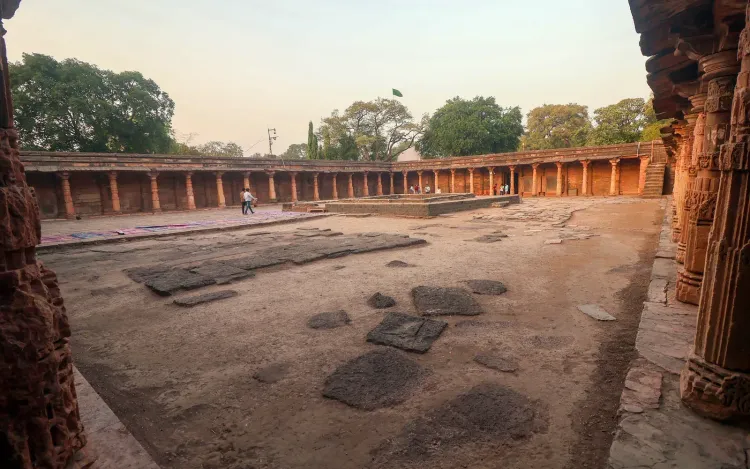
The Bhojshala complex in Dhar, Madhya Pradesh, has been one of central India's most sensitive religious disputes for decades. Hindus assert it was established by Raja Bhoj in the 11th century as a temple dedicated to Goddess Saraswati and a centre of Sanskrit learning. The Muslim side maintains that the Kamal Maula Mosque has stood at the site for centuries, and that Friday namaz had been conducted there under the earlier administrative arrangement dating to the 2003 ASI order.
This is not the first time the site has reached the apex court; the dispute has seen multiple rounds of litigation, administrative orders, and communal tension over the years, making the Supreme Court's call for patience from both communities particularly significant.
What Happens Next
The Supreme Court issued notices on the SLPs to the Centre, the Madhya Pradesh government, the ASI, the concerned District Magistrate, and the Hindu respondents, seeking their responses. The CJI Kant-led Bench assured that the matter would be listed for final hearing at the earliest, with the next date expected in two to three weeks. Until then, the ad hoc namaz arrangement at the adjacent open space and the freeze on structural changes to the monument will remain in effect.
Point of View
But it tilts the status quo firmly toward the High Court's position — the ban on namaz inside the complex stands, and the Muslim side gets only an ad hoc outdoor space, not a reversal. What the court has bought is time, not resolution. The freeze on ASI structural changes is the most consequential safeguard: in similar disputes, ground-level alterations during litigation have repeatedly hardened positions and complicated eventual settlements. The final hearing will test whether the judiciary can thread the needle between constitutionally protected religious rights and the evidentiary weight of archaeological surveys — a question with implications far beyond Dhar.
NationPress
12 Oct 2026
Frequently Asked Questions
What did the Supreme Court order on the Bhojshala dispute?
The Supreme Court on 14 July refused to stay the Madhya Pradesh High Court's verdict declaring the Bhojshala-Kamal Maula Mosque complex in Dhar a Hindu temple. It directed the state government to provide a separate open space near the monument for Muslim worshippers to offer Friday namaz between 1 pm and 3 pm as an ad hoc arrangement, without prejudice to the rights of either side.
What had the MP High Court ruled about Bhojshala?
The Indore Bench of the Madhya Pradesh High Court, in its 15 May judgment, recognised the Bhojshala complex as a Hindu temple and held that the Hindu community's right to worship there 'was never extinguished.' It quashed the ASI's 2003 order permitting Friday namaz inside the premises and suggested the state consider allotting alternative land for a mosque.
Can Muslims still offer namaz inside the Bhojshala complex?
No. The Supreme Court declined to grant interim permission for namaz inside the Bhojshala premises, allowing the MP High Court's ban on prayers within the protected complex to continue. Muslims may offer Friday namaz only at the separate open space to be arranged by the state government near the monument.
What safeguards has the Supreme Court put in place for the monument?
The court directed that the Archaeological Survey of India must not carry out any structural alterations to the Bhojshala complex without prior permission from the Supreme Court. This order came after the Muslim side raised concerns about potential changes to the site during the pendency of the case.
When will the Bhojshala case be heard next?
The Supreme Court indicated the matter would be listed for the next hearing in two to three weeks. Notices have been issued to the Centre, the Madhya Pradesh government, the ASI, the concerned District Magistrate, and the Hindu respondents, who must file their responses before the final hearing.