Madhya Pradesh High Court to Conduct Site Visit Ahead of Bhojshala-Kamal Maula Hearings

Synopsis
The Madhya Pradesh High Court's Indore bench plans to inspect the Bhojshala Temple-Kamal Maula Mosque site before the next hearing on April 2, as the dispute over the complex intensifies. Both communities present conflicting claims regarding its historical significance.
Key Takeaways
Madhya Pradesh High Court to inspect Bhojshala-Kamal Maula site.
Next hearing scheduled for April 2 .
Parties must submit documents before the hearing.
ASI report indicates the structure's historical significance.
Conflicting claims from Hindu and Muslim communities.
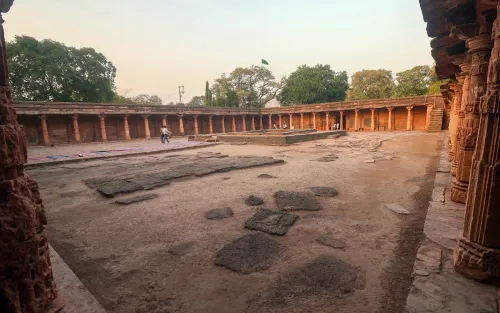
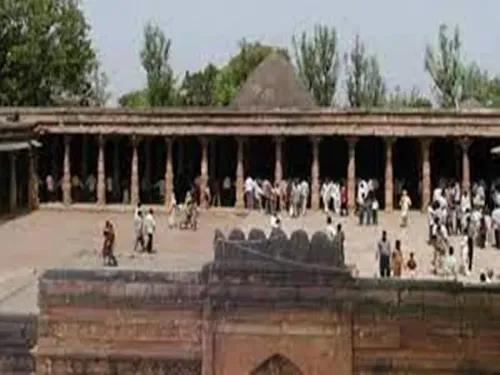
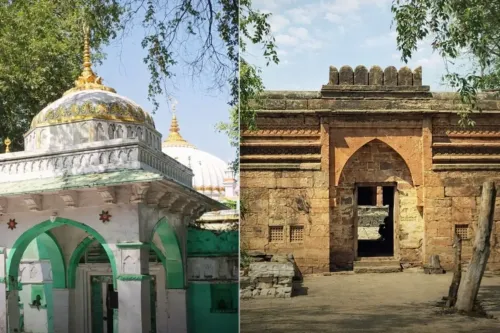
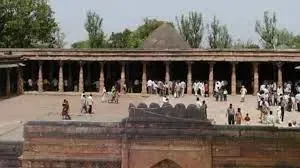
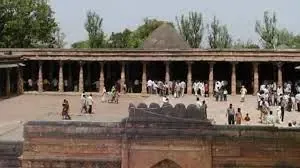
Indore, March 16 (NationPress) The divisional bench of the Madhya Pradesh High Court in Indore, currently deliberating on the controversy surrounding the Bhojshala Temple-Kamal Maula Mosque complex in the Dhar district, announced on Monday its intention to examine the structure protected by the Archaeological Survey of India (ASI) prior to the upcoming hearing set for April 2.
Justices Vijay Kumar Shukla and Alok Awasthi, after reviewing extensive arguments, accepted separate interim applications submitted in the case. The court stated that involved parties may present documents and affidavits pertaining to these applications.
The court remarked, “In light of the various disputes, the Court plans to visit the site before the next hearing date.” It further clarified that no party involved in the dispute will be permitted to be present at the site during this inspection.
Additionally, the bench confirmed that it would conduct regular hearings regarding the Bhojshala Temple-Kamal Maula Mosque complex starting on April 2, ensuring that all parties receive an opportunity to present their cases.
The court instructed all parties to submit their objections, opinions, suggestions, or recommendations concerning the ASI report by April 2.
The complex in Dhar is safeguarded by the ASI, which conducted a scientific survey following orders from the High Court and submitted a comprehensive report last month.
According to the ASI, a significant structure from the era of the Parmar kings of Dhar predates the mosque, with the current construction utilizing materials from ancient temples.
The report indicated that, based on scientific investigations, surveys, archaeological digs, and the analysis of found artefacts, architectural remnants, sculptures, and inscriptions, the existing structure was created from the remnants of prior temples.
It emphasized that the artistry and architectural features of the ornate pillars and pilasters suggest they were originally part of older temples and have been repurposed in the mosque's colonnades, which is situated on a prominent basalt platform.
The primary dispute revolves around claims from the Hindu community asserting that coins, sculptures, and inscriptions uncovered during the ASI survey substantiate that the structure was initially an ancient temple.
Conversely, the Muslim community has contested this assertion, questioning the validity of the survey, alleging that the ASI disregarded previous objections and included “objects placed in the disputed complex” in its findings.
Point of View
It is essential to present the ongoing legal dispute surrounding the Bhojshala Temple-Kamal Maula Mosque complex in an unbiased manner. The situation highlights the complexities of historical claims and the need for a fair judicial process that respects all perspectives involved.
NationPress
26 Sept 2026
Frequently Asked Questions
What is the Bhojshala-Kamal Maula complex?
The Bhojshala-Kamal Maula complex is a disputed site in Dhar, Madhya Pradesh, claimed by both Hindu and Muslim communities for its historical significance.
When is the next hearing for this case?
The next hearing for the Bhojshala-Kamal Maula case is scheduled for April 2.
What did the ASI report reveal?
The ASI report indicated that the current structure was built using parts from ancient temples and includes significant historical artefacts.
Will the parties be allowed at the site during inspection?
No, the court has stated that no parties involved in the dispute will be permitted to be present at the site during the inspection.
What are the main claims from both communities?
The Hindu community claims that archaeological findings support the structure's original identity as a temple, while the Muslim community contests this and questions the ASI survey's findings.