Trump Cites Naval Blockade Against Iran After Qatar Talks
Synopsis
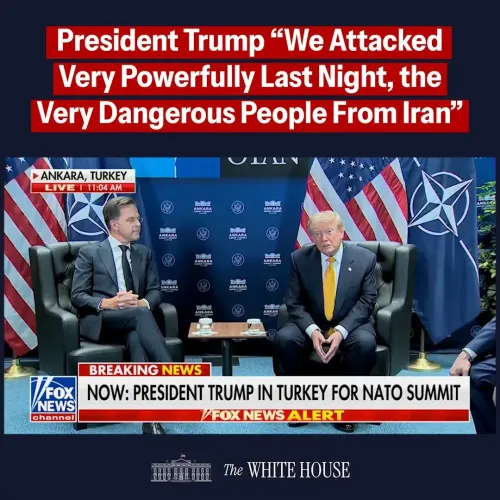
President Trump announced a 'historically successful' naval blockade against Iran after meeting Qatar's Prime Minister, declaring the military engagement will leave the world 'far safer.' The White House framing marks a sharp escalation in US-Iran tensions with significant implications for Gulf energy markets and Indian oil imports.
Key Takeaways
President Trump publicly cited a 'historically successful naval blockade against Iran' on 9 November 2026 .
The announcement followed a bilateral meeting with the Prime Minister of Qatar , a key US military partner hosting Al Udeid Air Base .
Trump stated that 'at the conclusion of the military engagement, the American people and the people of the world will be far safer.' Qatar has historically served as both a US basing hub and a mediator with Iran , giving it a uniquely layered role in this engagement.
The Strait of Hormuz , controlled in part by Iran, handles roughly 20 percent of global oil trade, making the standoff consequential for India and global energy markets.
No operational timeline or UN response has been released by the White House.
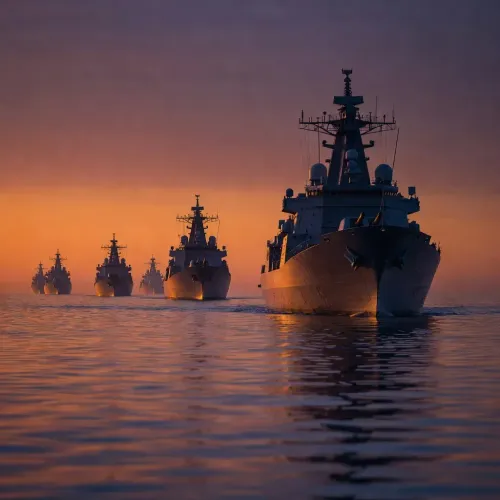
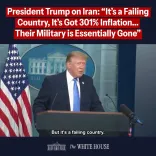
A naval blockade against Iran — framed by the White House as 'historically successful' — has become the centrepiece of President Donald Trump's latest foreign-policy address, delivered after a closed-door meeting with the Prime Minister of Qatar on Monday, 9 November 2026. Trump declared that the conclusion of what he called a 'military engagement' would leave 'the American people and the people of the world far safer.'
What Trump Said — and What It Signals
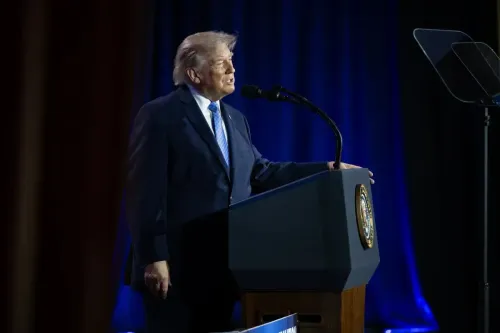
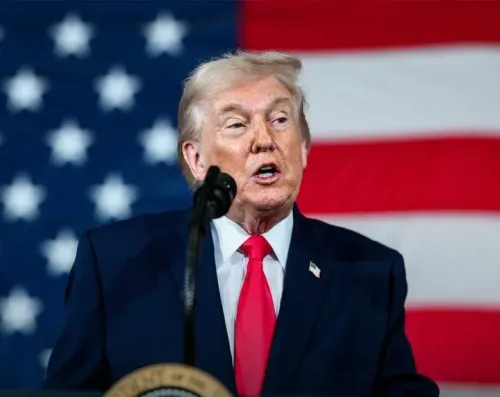
Speaking after the bilateral sit-down, Trump offered a stark assessment: 'At the conclusion of the military engagement, the American people and the people of the world will be far safer.' The language is deliberate — 'military engagement' is not a phrase the White House deploys lightly, and pairing it with a Gulf ally known for both hosting US Central Command's forward headquarters and historically maintaining back-channel ties with Tehran amplifies the strategic weight of the moment.
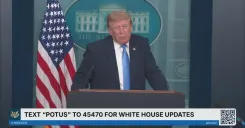
The White House did not release a detailed readout of the meeting's operational conclusions, but the public framing — a press update, not a quiet diplomatic communiqué — signals the administration wants this on the record and in the headlines.
Qatar's Dual Role: American Base, Iranian Interlocutor
Qatar is one of the most strategically layered partners the United States has in the Gulf. It is home to Al Udeid Air Base, the largest American military installation in the Middle East, while simultaneously having served as a mediator in some of Washington's most sensitive regional negotiations. That the Trump administration chose Doha as a coordination partner for a naval blockade against Iran — rather than a purely confrontational posture — reflects the kind of coercive-diplomacy architecture Washington has relied upon in the Gulf for decades.
The Blockade in Historical Context
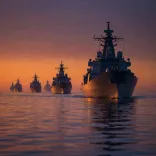
US naval presence in the Persian Gulf and the Strait of Hormuz is not new. After the 2019 tanker attacks attributed to Iran, Washington expanded patrols and built the International Maritime Security Construct, drawing in allied navies to protect shipping lanes. Trump's first term also saw the May 2018 withdrawal from the Joint Comprehensive Plan of Action (JCPOA) and a 'maximum pressure' sanctions campaign designed to strangle Iranian oil revenues. What the White House is now calling a 'naval blockade' — a term with specific legal weight under international law — escalates that pressure campaign into an explicitly kinetic register.
The Strait of Hormuz handles roughly 20 percent of global oil trade; any sustained blockade or counter-blockade scenario has immediate implications for Gulf energy markets, Indian oil imports, and global shipping insurance rates. India, as one of the largest buyers of Gulf crude, has a direct stake in how this engagement unfolds.
No Operational Timeline, But Pressure Is Public
The White House has not specified an operational timeline or confirmed international partners beyond Qatar. No statement from the United Nations or other Gulf states has been referenced. What is clear is that the Trump administration is treating this moment as a public milestone — a signal to Tehran, to Gulf partners, and to domestic audiences simultaneously.
When a sitting US president frames a live naval engagement in terms of generational safety, the clock is already running.
Point of View
Reassurance for Gulf partners, and domestic political theatre. The choice of Qatar as the visible partner is shrewd; Doha's dual identity as American military landlord and Iranian interlocutor gives Washington both a hard-power platform and a potential diplomatic off-ramp. For India, which imports substantial volumes of Gulf crude and has worked to maintain independent ties with Iran, the development is a direct pressure test on New Delhi's strategic autonomy. If the blockade holds and escalates, the question of whether India aligns with Washington's posture or seeks to mediate will define a consequential chapter in the evolving US-India relationship.
NationPress
10 Nov 2026
Frequently Asked Questions
What is the US naval blockade against Iran that Trump mentioned?
President Trump described it as a 'historically successful naval blockade against Iran' announced after his meeting with Qatar's Prime Minister on 9 November 2026. The White House characterised it as part of an ongoing 'military engagement,' though operational details have not been publicly released.
Why did Trump meet Qatar's Prime Minister about Iran?
Qatar hosts the largest US military base in the Middle East and has historically served as a diplomatic intermediary with Iran, making it a critical partner for coordinating both pressure and potential off-ramp strategies in any US-Iran confrontation.
How does the Iran naval blockade affect India?
India is one of the largest importers of Gulf crude oil, and the Strait of Hormuz — which Iran borders — handles about 20 percent of global oil trade. A sustained blockade or escalation could disrupt supply chains, raise oil prices, and force New Delhi into a difficult diplomatic position between Washington and Tehran.
What is Trump's history of maximum pressure on Iran?
Trump withdrew the United States from the JCPOA nuclear deal in May 2018 and imposed sweeping sanctions aimed at cutting Iranian oil revenues. His first administration also expanded naval patrols in the Gulf after the 2019 tanker attacks attributed to Iran.
What happens next after Trump's statement on the Iran blockade?
The White House has not released an operational timeline. Analysts will watch for follow-up statements from the United Nations, Gulf Cooperation Council states, and Iran itself, as well as any movement in global oil prices and Indian government responses.