Trump Declares 'No Amnesty' in Stark Immigration Warning

Synopsis
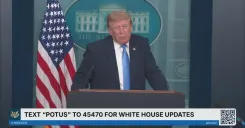
The White House quoted President Donald J. Trump in a blunt five-word statement on November 10, 2026: 'There won't be amnesty.' The declaration reaffirms his long-standing opposition to legalisation pathways for undocumented immigrants and signals a veto threat against any such legislation in Congress.
Key Takeaways
The White House posted a direct quote from President Donald J.
Trump on November 10, 2026 : 'There won't be amnesty.' The statement reaffirms Trump's hardline stance against offering legal status or citizenship pathways to undocumented immigrants in the United States .
During his first term (2017–2021) , Trump moved to rescind DACA and rejected bipartisan legalisation proposals.
The declaration effectively signals a White House veto threat against any immigration bill containing amnesty provisions.
The specific trigger for the November 2026 statement — a new bill, court ruling, or border development — has not been confirmed.
Four words. No ambiguity. President Donald J. Trump has drawn the sharpest possible line on immigration, with the White House posting a terse, unequivocal declaration on November 10, 2026: 'There won't be amnesty.'
A one-line policy position that lands like a closed door
The statement is stripped of legislative detail — deliberately so. Its power is in its brevity. For the millions of undocumented immigrants in the United States, and for the lawmakers on both sides of the aisle who have spent years crafting pathways to legal status, the message is unambiguous: the current White House will not negotiate a broad pardon or regularisation of undocumented residents.
From DACA fights to the present: a consistent hard line
This is not a new posture. During Trump's first term (2017–2021), his administration moved to rescind DACA — the Deferred Action for Childhood Arrivals programme that shielded immigrants brought to the US as children — and flatly rejected legislative packages that included citizenship pathways. The 2013 Senate 'Gang of Eight' bill, a rare bipartisan effort that would have offered a route to legal status for millions, became a symbolic punching bag for the enforcement-first wing of the Republican Party that Trump came to personify.
The pattern has held across both terms: interior removals over legalisation, enforcement over pathways, closure over compromise. The November 2026 statement is less a new announcement than a reinforcement — a public signal to Congress, to advocacy groups, and to the courts that the White House calculus has not shifted.
What it means for any immigration bill in Congress
With the statement now on the record, any bipartisan immigration bill that includes an amnesty provision faces a White House veto threat before a word is debated on the floor. Congressional Republicans pushing enforcement-only legislation receive a boost; moderate Republicans and Democrats seeking a compromise deal face a steeper climb. The five-word quote functions, in effect, as a presidential pre-emptive strike against legalisation language in any upcoming bill.
Whether a specific legislative trigger prompted the statement — a new Senate proposal, a court ruling, or a surge in border crossings — is not established. What is clear is that Trump chose this moment to restate the position in its starkest possible form.
In Washington, sometimes the shortest statements carry the longest consequences.
Point of View
He constrains the negotiating space of Republican moderates before any bipartisan bill can gather momentum. It fits a broader pattern in which enforcement maximalism functions as both domestic base-activation and a deterrent signal to migration flows. For India, which has the largest diaspora in the US and closely watches H-1B and undocumented-worker policy, any hardening of the US immigration regime carries real downstream consequences for visa processing, Green Card backlogs, and the political standing of Indian-Americans in the US. The statement's very brevity is strategic — brevity forecloses debate.
NationPress
10 Nov 2026
Frequently Asked Questions
What did Trump say about amnesty for immigrants?
President Donald J. Trump declared, 'There won't be amnesty,' in a statement posted by the White House on November 10, 2026, reaffirming his opposition to any legalisation pathway for undocumented immigrants in the United States.
What is amnesty in US immigration policy?
In US immigration policy, 'amnesty' refers to a government provision that grants undocumented immigrants legal status or a pathway to citizenship, forgiving their violation of immigration laws. It has been a deeply contested concept since at least the 1986 Immigration Reform and Control Act.
Did Trump end DACA during his first term?
Yes. During his first term (2017–2021), the Trump administration moved to rescind the DACA programme, which had protected undocumented immigrants brought to the US as children from deportation. The effort faced legal challenges in federal courts.
What was the Gang of Eight immigration bill?
The 'Gang of Eight' bill was a bipartisan Senate proposal from 2013 that sought to overhaul US immigration law, including a pathway to citizenship for millions of undocumented immigrants. It passed the Senate but was never brought to a vote in the House of Representatives.
How does Trump's no-amnesty stance affect Indians in the US?
India has the largest immigrant diaspora in the United States. A strict no-amnesty, enforcement-first immigration regime can affect undocumented Indian nationals and may also signal broader restrictionism that impacts Green Card backlogs and skilled-worker visa policies relevant to Indian professionals.