Trump: Gulf States Back Naval Blockade, 'Operation Iron Gate'
Synopsis
President Trump declared that Qatar, Saudi Arabia, UAE, Bahrain, Kuwait, and other Gulf states prefer the continuation of what he called the 'Greatest Naval Blockade in History' and the new 'Operation Iron Gate', now extended to land and sea, marking a bold public framing of US-GCC maritime and ground strategy in the Middle East.
Key Takeaways
President Trump publicly attributed support for a sweeping naval blockade and 'Operation Iron Gate' to Qatar, Saudi Arabia, UAE, Bahrain, Kuwait , and other Gulf states.
The operation is described as covering both land and sea dimensions, suggesting a multi-domain military or security strategy.
The specific terms 'Greatest Naval Blockade in History' and 'Operation Iron Gate' appear to reference recent developments and could not be verified against prior established reporting.
All five named Gulf states have deep US security ties — Bahrain and UAE are Abraham Accords signatories; Qatar hosts a major US military base; Kuwait has been a US partner since the 1991 Gulf War .
India, as a major Gulf crude importer with over 8 million nationals in the GCC, faces indirect stakes in any escalation of US-Gulf maritime strategy.
The statement aligns with the broader US maximum pressure posture toward Iran , active since the 2018 JCPOA withdrawal .
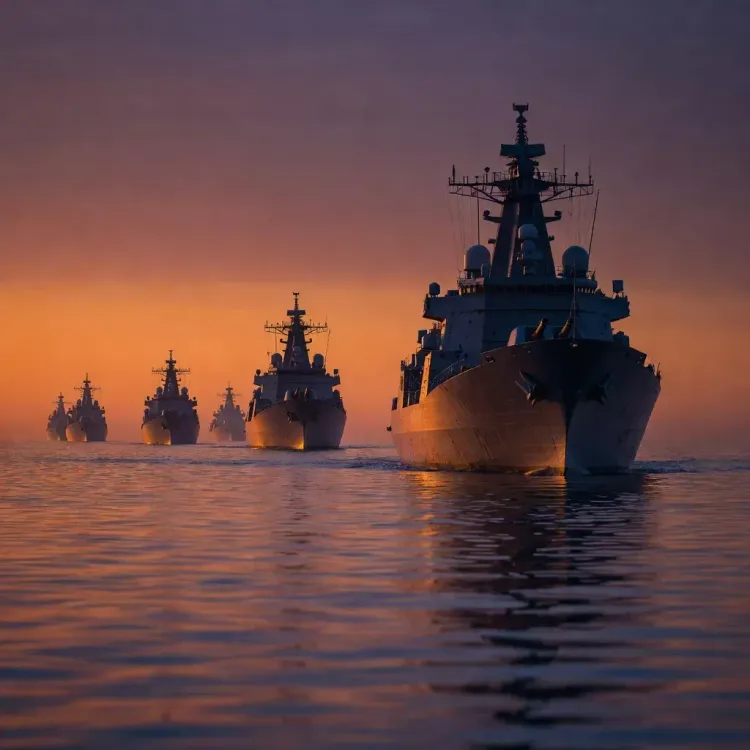
A naval blockade described as the greatest in history, a new operation named Iron Gate, and a bloc of Gulf Arab monarchies lining up behind both — President Donald J. Trump framed the United States' maritime posture in the Middle East in sweeping, unambiguous terms on Tuesday, November 10, 2026, citing preferences expressed by Qatar, Saudi Arabia, the UAE, Bahrain, Kuwait, and other regional partners.
What Trump Said — and What It Signals
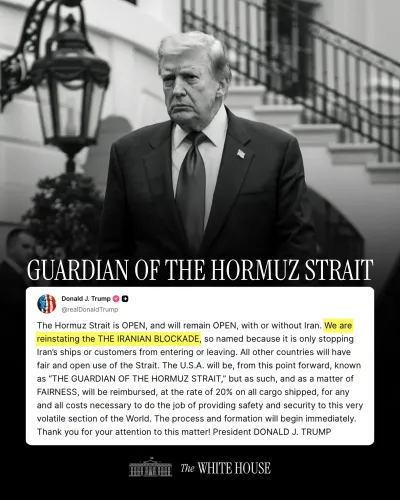
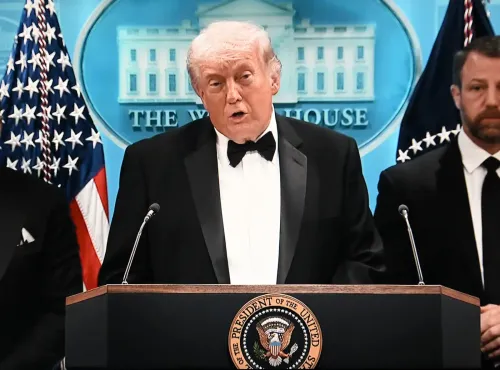
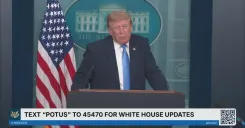
In a direct quote carried by The White House, Trump stated: 'Qatar, Saudi Arabia, UAE, Bahrain, Kuwait, and others, would prefer the status quo, in other words, a continuation of the Greatest Naval Blockade in History, and the new Operation Iron Gate — Therefore, Land and Sea.' The phrasing is deliberate: Trump is not merely reporting Gulf preferences — he is publicly anchoring US policy to those preferences, lending each Gulf capital a kind of co-authorship over the strategy.
The 'Land and Sea' suffix is the sharpest addition. It signals that whatever operation is underway has expanded beyond purely maritime dimensions, suggesting coordinated action across multiple domains in a theatre that has long been contested between US-aligned Gulf forces and rival actors in the region.
The Gulf Capitals Behind the Strategy
Saudi Arabia, the region's dominant oil power, has maintained deep US security ties for decades. Qatar hosts one of the most significant US military installations in the entire Middle East. Bahrain is home to a key US naval base and, alongside the UAE, signed the landmark Abraham Accords in 2020 — a Trump-era diplomatic achievement that normalised relations with Israel and reshuffled Gulf-Israel dynamics overnight. Kuwait's bond with Washington stretches back to the 1991 Gulf War, when a US-led coalition liberated it from Iraqi occupation.
That these five states, representing virtually the entire Gulf Cooperation Council, are cited as endorsing the current naval arrangement tells a story: the architecture of US-GCC maritime deterrence has found consensus, at least as the White House presents it.
'Greatest Naval Blockade in History' and Operation Iron Gate
The specific phrase 'Greatest Naval Blockade in History' and the operational name 'Operation Iron Gate' could not be verified against established prior reporting and appear to reference recent developments in the region. What can be contextualised is the broader pattern: since the US withdrew from the JCPOA in 2018 and re-imposed maximum pressure on Iran, the Persian Gulf and adjacent straits have become flashpoints for maritime confrontations — tanker seizures, drone strikes on shipping, and contested passage through the Strait of Hormuz have all featured in the years since.
A named naval operation with Gulf backing, now explicitly extended to land as well, represents a qualitative escalation in that pressure architecture — or at minimum, a White House decision to announce it loudly and attributively.
Why India Is Watching Closely
India is among the world's largest importers of Gulf crude oil. Any sustained naval operation that reshapes shipping lanes, port access, or the security calculus of Gulf Arab states carries direct implications for Indian energy supply chains and the roughly 8 million Indian nationals working across the GCC. New Delhi has historically walked a careful line — maintaining strong ties with both Washington and Gulf capitals while guarding its strategic autonomy on Iran. A formalised, named US-GCC naval doctrine, now expanded to land dimensions, narrows the space for that neutrality.
When a US president names an operation, lists its backers, and calls it the greatest of its kind — the region has already moved. The only question now is how far.
Point of View
Washington is making it politically costly for any of them to later distance themselves from the strategy. For India, the expansion to 'land and sea' dimensions is the most consequential signal: it suggests US-GCC coordination has moved beyond deterrence-at-sea into a potentially broader regional campaign, with unpredictable consequences for energy flows and diaspora security across the Gulf.
NationPress
10 Nov 2026
Frequently Asked Questions
What is Operation Iron Gate announced by Trump?
'Operation Iron Gate' is a US military or naval operation in the Middle East referenced by President Trump, described as covering both land and sea and backed by Gulf Arab states including Saudi Arabia, UAE, Qatar, Bahrain, and Kuwait. Specific operational details have not been independently confirmed from prior established sources.
Which Gulf countries support the US naval blockade according to Trump?
President Trump cited Qatar, Saudi Arabia, UAE, Bahrain, Kuwait , and others as preferring the continuation of the naval blockade and Operation Iron Gate.
What is the 'Greatest Naval Blockade in History' Trump mentioned?
Trump used this phrase to describe an ongoing US-led naval operation in the Middle East region. The specific scope and targets of the blockade appear to relate to recent developments and could not be verified from prior established reporting.
How does Trump's Gulf naval strategy affect India?
India imports a large share of its crude oil from Gulf states and has over 8 million nationals working in the GCC. Any major US-led maritime or land operation in the region carries direct implications for Indian energy supply chains and the safety of the Indian diaspora.
What are the Abraham Accords and how do they connect to this?
The Abraham Accords , brokered by the first Trump administration in 2020 , normalised diplomatic relations between Israel and several Arab nations including UAE and Bahrain. The Gulf states now named by Trump as supporters of Operation Iron Gate are largely the same bloc that engaged in that US-led diplomatic realignment.