Trump praises UAE, Qatar after Iran nuclear deal at Evian summit
Synopsis
At Evian, Trump held back-to-back meetings with the UAE and Qatari leaders to celebrate what he called a landmark Iran nuclear deal — one he says will permanently bar Tehran from a nuclear weapon and reopen the Strait of Hormuz by Friday. The full text remains unreleased, and the enforcement mechanics are unknown, making this a diplomatic headline still waiting for its fine print.
Key Takeaways
President Donald Trump met UAE President Sheikh Mohammed bin Zayed and Qatari Emir Sheikh Tamim bin Hamad Al Thani in Evian on 16 June .
Trump credited both Gulf states with helping broker a new agreement with Iran , saying its core provision is that 'Iran will never have a nuclear weapon.' Trump claimed shipping through the Strait of Hormuz was already recovering and would be 'fully open by Friday.' The Qatari Emir projected bilateral US-Qatar trade and investment reaching $1.2 trillion .
Trump expressed optimism about expanding the Abraham Accords to additional countries.
The full text of the Iran deal has not been released; Trump pledged a public press conference readout.
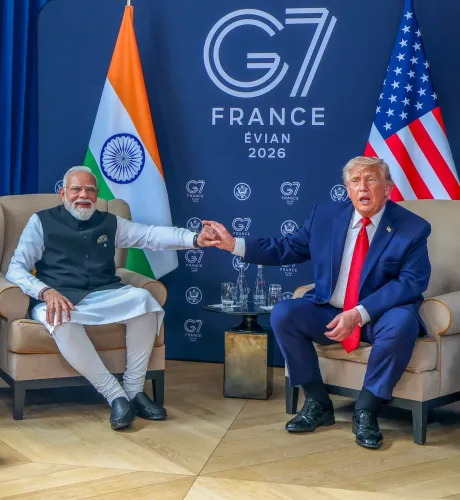
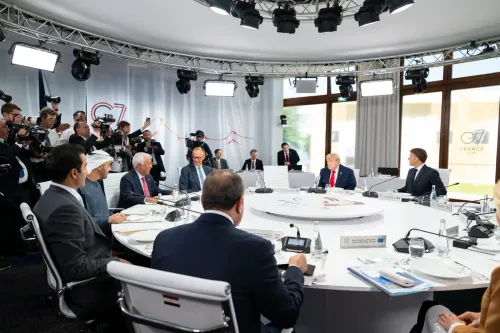
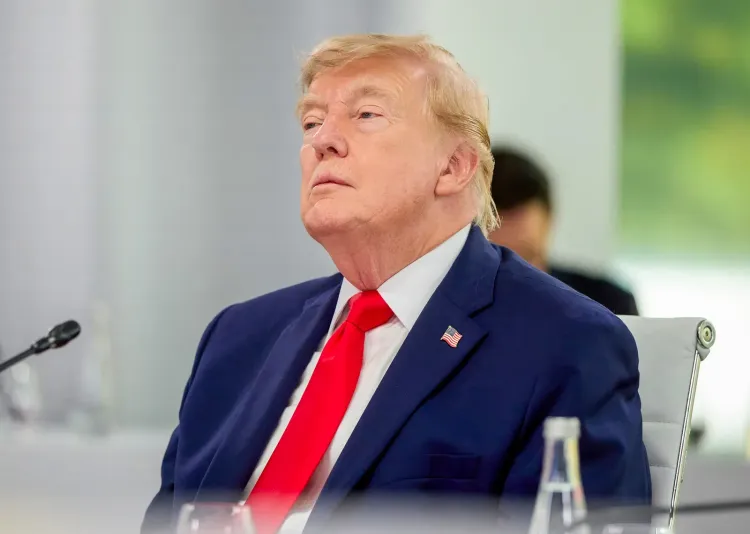
US President Donald Trump on Monday, 16 June publicly credited the leaders of the United Arab Emirates and Qatar with helping broker a new agreement with Iran, describing the accord as a diplomatic breakthrough that would prevent Tehran from acquiring a nuclear weapon. The meetings took place on the sidelines of international gatherings in Evian, with Trump holding separate sessions with UAE President Sheikh Mohammed bin Zayed Al Nahyan and Qatari Emir Sheikh Tamim bin Hamad Al Thani.
What Trump Said About the Iran Deal
Trump was effusive in crediting both Gulf states with enabling the accord. During his meeting with Sheikh Mohammed, he said, 'We just signed a deal with Iran, and this country was very, very — a very powerful ally and good things are happening.' He repeatedly returned to what he called the deal's central objective: 'The one thing that's happening that's of note, frankly, the only thing that really matters to me is Iran will never have a nuclear weapon.'
Trump indicated he would eventually release the full text of the agreement. 'I'll probably have a press conference and read it to you word by word,' he said, summarising its core provision as: 'Here's what it says: Iran will never have a nuclear weapon.'
Strait of Hormuz and Oil Markets
Trump claimed that shipping traffic through the Strait of Hormuz — a critical global oil chokepoint — was already recovering following the deal. 'The ships are starting to move now. We're going to have a — fully open by Friday,' he said, adding that oil prices were 'coming down rapidly.' The remarks suggest the agreement is already producing tangible economic effects, though independent verification of the shipping claims was not immediately available.
Gulf Leaders Respond
Sheikh Mohammed thanked Trump for US support during the recent regional conflict, saying, 'Without your support, your commitment, Mr. President, not only my country, but the Middle East would be a different situation today.' He also signalled an intent to deepen bilateral ties, noting 'a lot of things we can talk about for going forward between our two countries.'
Qatari Emir Sheikh Tamim described the accord as 'a very important deal' and urged continued momentum. 'There's still a lot of work to be done, but I think, you know, with this momentum, if we continue like that, Mr. President, I think we can achieve and do great in the region,' he said. He added that the agreement would be 'very important for the region, very important also for Iran as well.'
Economic Ties and Abraham Accords
Both meetings also spotlighted the expansion of economic partnerships between Washington and its Gulf allies. Trump said the UAE had invested 'trillions of dollars' in the United States. The Qatari Emir said the bilateral trade and investment relationship was growing fast, projecting: 'Our trade partnership is gonna reach $1.2 trillion.'
Trump also expressed optimism about expanding the Abraham Accords normalisation framework. 'I think they're all going to come in,' he said when asked whether additional countries could join. Notably, both the UAE and Qatar have historically served as back-channel intermediaries during periods of elevated Gulf tension, giving their diplomatic roles in the Iran negotiations significant regional credibility.
What Comes Next
The full text of the Iran agreement has not yet been released, and the details of its verification and enforcement mechanisms remain undisclosed. Trump has pledged a public readout. Regional analysts will be watching whether the Strait of Hormuz fully reopens by the timeline Trump cited and whether Iran publicly confirms the terms of the accord. The expansion of the Abraham Accords, if it materialises, would mark a further reshaping of Middle East alignments.
Point of View
Which remains entirely undisclosed. The Strait of Hormuz reopening claim, if it holds, would be the most tangible proof of the accord's immediate value. But the Abraham Accords optimism and trillion-dollar trade projections suggest Washington is already treating this as a done deal — a posture that could complicate renegotiation if Iran's interpretation of the terms diverges from Trump's public framing.
NationPress
24 Sept 2026
Frequently Asked Questions
What is the Iran deal that Trump announced at Evian?
Trump announced a new agreement with Iran on 16 June, describing it as a deal that would permanently prevent Tehran from obtaining a nuclear weapon. The full text has not been released; Trump pledged to hold a press conference and read it publicly.
What role did the UAE and Qatar play in the Iran agreement?
Both countries reportedly served as diplomatic intermediaries during the negotiations. Trump credited UAE President Sheikh Mohammed bin Zayed and Qatari Emir Sheikh Tamim bin Hamad Al Thani directly with supporting the talks that led to the accord.
Is the Strait of Hormuz open after the Iran deal?
Trump claimed on 16 June that shipping through the Strait of Hormuz was already beginning to recover and said he expected it to be 'fully open by Friday.' Independent confirmation of the shipping recovery was not immediately available.
What did the Qatari Emir say about the Iran agreement?
Emir Sheikh Tamim bin Hamad Al Thani called it 'a very important deal' for the region and for Iran, and urged that the current momentum be maintained. He also projected US-Qatar bilateral trade and investment reaching $1.2 trillion.
What are the Abraham Accords and why did Trump mention them?
The Abraham Accords are a US-brokered normalisation framework between Israel and several Arab states, originally signed in 2020. Trump suggested at the Evian meetings that additional countries could join the framework, saying 'I think they're all going to come in,' signalling further Middle East realignment ambitions.