Punjab Police hits Day 616 of Yudh Nashian Virudh, 91,612 arrested
Synopsis
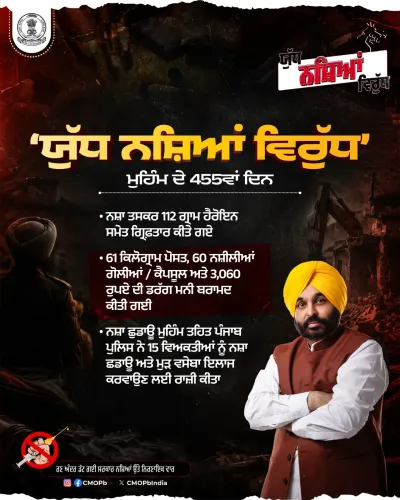
Punjab Police's 'Yudh Nashian Virudh' anti-drug campaign hit Day 616 on 8 November 2026, pushing the total arrests to 91,612. The latest daily haul included 1.3 kg heroin, 5 kg poppy husk, 558 intoxicant pills, and ₹400 in drug money, while 14 people were persuaded to enter de-addiction treatment.
Key Takeaways
616 consecutive days of uninterrupted anti-drug operations by Punjab Police under the Yudh Nashian Virudh campaign.
Cumulative arrests have reached 91,612 drug smugglers since the drive's launch.
Day 616 seizures: 1.3 kg heroin , 5 kg poppy husk , 558 intoxicant pills , and ₹400 drug money .
14 individuals were convinced to voluntarily enter de-addiction and rehabilitation treatment on the same day.
The campaign combines daily enforcement with parallel rehabilitation outreach, with de-addiction centre funding remaining a key fiscal question for Punjab.
Six hundred and sixteen days. That is how long Punjab Police has kept its anti-drug campaign, Yudh Nashian Virudh ('War Against Drugs'), on a continuous war footing — and on Sunday, 8 November 2026, the Chief Minister's Office of Punjab posted the latest count: the cumulative arrest tally has crossed 91,612 drug smugglers since the drive began.
What Day 616 seized — and who it convinced to seek help
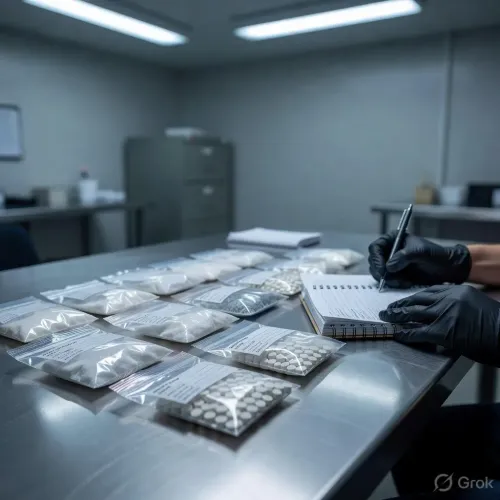
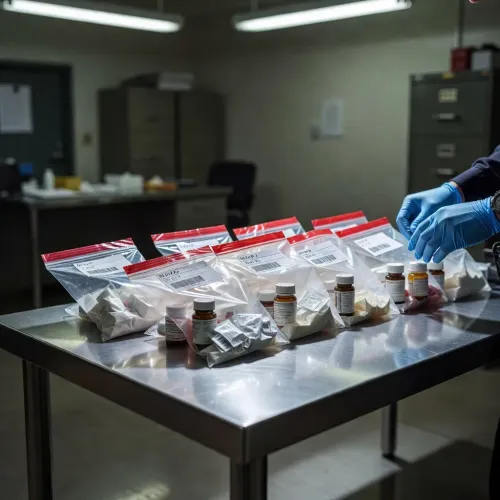
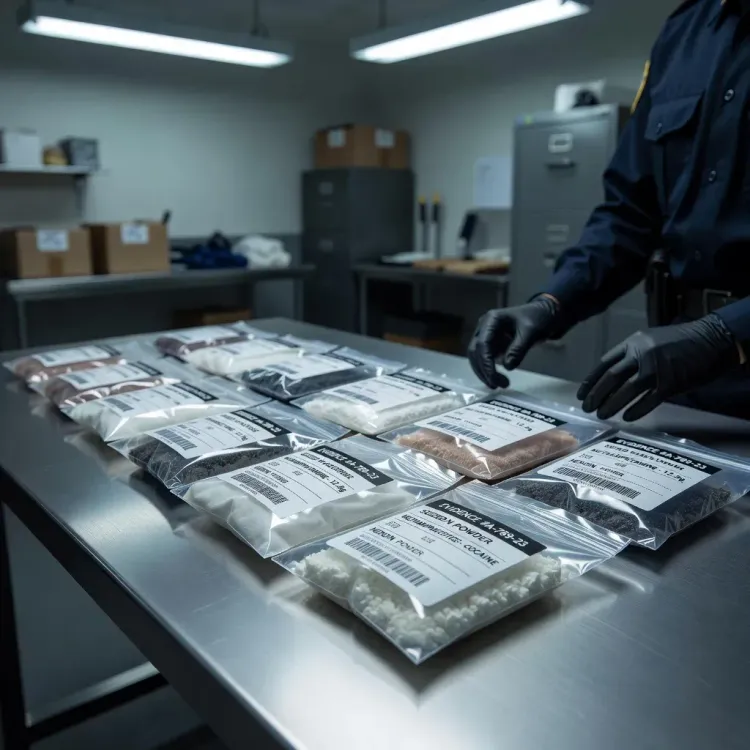
In the latest 24-hour cycle, police teams recovered 1.3 kg heroin, 5 kg poppy husk, and 558 intoxicant pills, along with ₹400 in drug money. The numbers are modest in isolation; in the context of a campaign now stretching nearly 21 months without pause, they represent the relentless daily grind of enforcement that the state has staked its anti-narcotics credibility on.
Equally significant — if less headline-grabbing — is the rehabilitation count. On Day 616, 14 individuals were persuaded by Punjab Police teams to voluntarily enter de-addiction and rehabilitation treatment. That softer strand of the campaign, running parallel to enforcement, signals an acknowledgment that arrests alone cannot close the loop on addiction.
The long arc of Punjab's drug crisis
Punjab's struggle with substance abuse is not new. The state has confronted documented trafficking corridors and elevated addiction rates since at least the early 2010s, sitting as it does along a geographic corridor with cross-border exposure to narcotics flows. Successive governments — across party lines — have launched enforcement campaigns, each generating its own tallies of arrests and seizures.
What distinguishes Yudh Nashian Virudh is the deliberate daily public accounting: the CMO's office publishes figures each day, turning the cumulative arrest number into a running performance metric. By the time the counter crossed 91,612, the campaign had made the enforcement scorecard a fixture of Punjab's governance communication.
Rehabilitation: the harder count
The de-addiction strand deserves a closer look. Law enforcement convincing people in active substance use to enter treatment is operationally far harder than making an arrest — it requires sustained community outreach, trust, and coordination with health infrastructure. The daily tally of such conversions, however small, is the metric that tells the longer-term story of whether the campaign is building toward recovery or just cycling people through the justice system.
With budget allocations for de-addiction centres remaining a 'what to watch' question for Punjab's coming fiscal cycle, the gap between enforcement momentum and treatment infrastructure is the fault line that will shape what the next 616 days look like.
Point of View
But only if backed by state investment in treatment infrastructure. Punjab's history of successive drug campaigns that generated tallies without breaking trafficking networks will make independent verification of outcomes — not just numbers — the real test of this campaign's legacy.
NationPress
8 Nov 2026
Frequently Asked Questions
What is Yudh Nashian Virudh?
'Yudh Nashian Virudh' means 'War Against Drugs' in Punjabi and is an ongoing Punjab Police campaign combining daily anti-narcotics enforcement operations with de-addiction outreach to curb drug smuggling and addiction across the state.
How many drug smugglers have been arrested in Punjab's anti-drug campaign?
As of Day 616 of the campaign on 8 November 2026, the total number of drug smugglers arrested under Yudh Nashian Virudh has reached 91,612 .
What drugs were seized by Punjab Police on Day 616?
On Day 616, Punjab Police recovered 1.3 kg heroin , 5 kg poppy husk , 558 intoxicant pills , and ₹400 in drug money from arrested smugglers.
Does Punjab Police run rehabilitation programmes alongside drug arrests?
Yes. As part of its de-addiction component, Punjab Police teams actively persuade drug users to enter voluntary de-addiction and rehabilitation treatment. On Day 616, 14 persons were convinced to seek treatment.
How long has Punjab's Yudh Nashian Virudh campaign been running?
The campaign has been running continuously for 616 days as of 8 November 2026 , making it one of the longest-running declared anti-drug enforcement drives in Punjab's recent history.