Punjab Police hits Day 527 of Yudh Nashian Virudh, arrests cross 75,689
Synopsis
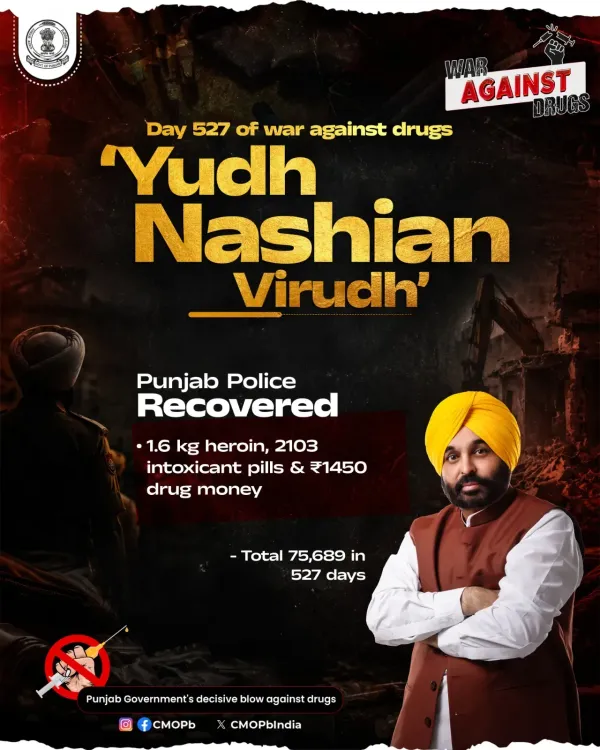
Punjab Police extended its 'Yudh Nashian Virudh' anti-narcotics drive to Day 527 on 11 August 2026, recovering 1.6 kg heroin and 2,103 intoxicant pills, pushing cumulative arrests to 75,689 while convincing 13 more persons to seek de-addiction treatment.
Key Takeaways
Day 527 of the Yudh Nashian Virudh drive was reported by the Chief Minister's Office of Punjab on 11 August 2026 .
Punjab Police recovered 1.6 kg of heroin , 2,103 intoxicant pills , and ₹1,450 in drug money in the latest sweep.
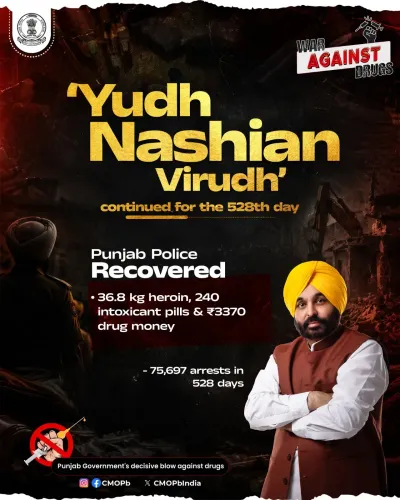
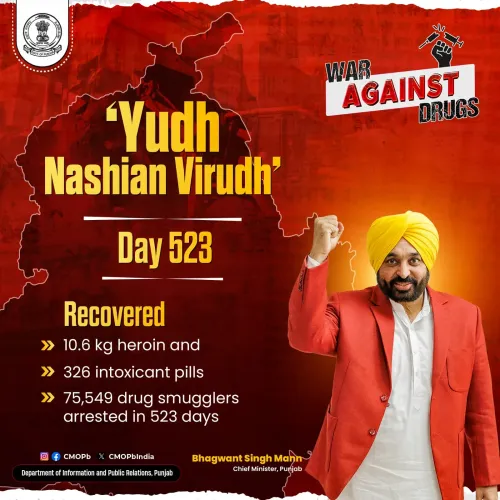
Cumulative drug smuggler arrests under the campaign have reached 75,689 over 527 days.
13 individuals were persuaded to voluntarily enter de-addiction and rehabilitation treatment on this day.
The campaign combines daily enforcement operations with active rehabilitation outreach — a dual-track model central to the AAP government's anti-drug pledge.
Punjab's drug challenge is structurally linked to cross-border trafficking via its international border with Pakistan .
Seventy-five thousand, six hundred and eighty-nine drug smugglers arrested — and counting. On Tuesday, 11 August 2026, the Chief Minister's Office of Punjab confirmed that Punjab Police has sustained its landmark anti-narcotics drive Yudh Nashian Virudh ('War Against Drugs') into its 527th consecutive day, with fresh seizures and rehabilitation referrals added to an already staggering cumulative toll.
Day 527: what the numbers say
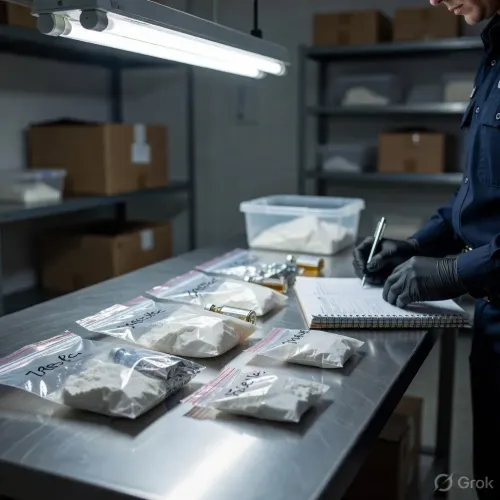
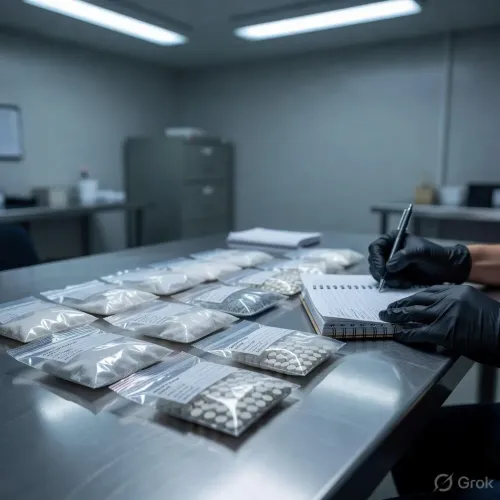
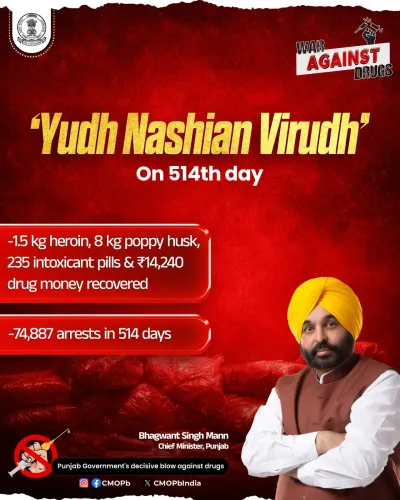
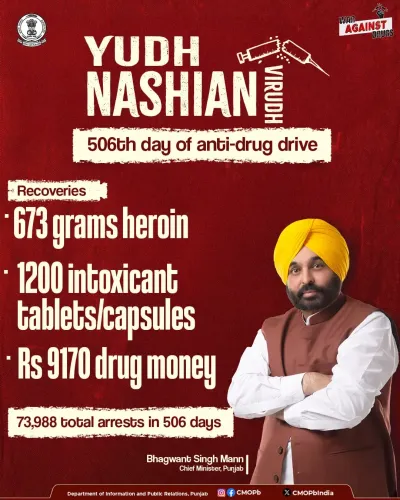
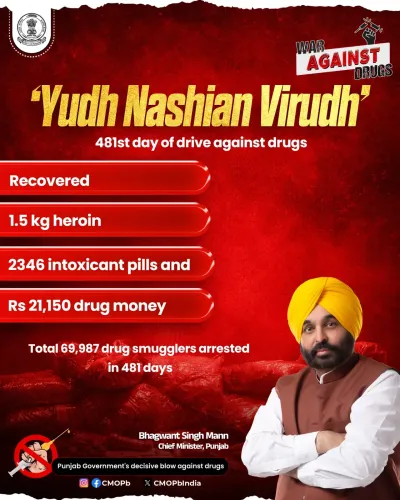
In the latest operational sweep, Punjab Police recovered 1.6 kg of heroin, 2,103 intoxicant pills, and ₹1,450 in drug money from arrested smugglers. The haul is modest by single-day standards, but it is the relentlessness of the cadence — every day, without pause, for a year and a half — that defines this campaign. The cumulative arrest figure now stands at 75,689 drug smugglers over 527 days.
Alongside enforcement, 13 individuals were persuaded on this day alone to voluntarily enter de-addiction and rehabilitation treatment — a quieter but equally deliberate pillar of the operation.
Why Punjab's drug crisis runs so deep
Punjab's narcotics problem is not new, and it is not accidental. The state shares an international border with Pakistan, a corridor that has historically fed cross-border trafficking networks. Successive governments — across party lines — have launched periodic crackdowns, but critics have long argued that enforcement without rehabilitation simply cycles users back to the streets.
The Aam Aadmi Party government of Chief Minister Bhagwant Mann, which took office in March 2022, made drug eradication a centrepiece of its election manifesto. Yudh Nashian Virudh is the operational expression of that commitment — distinguished, at least in design, by its dual-track approach: arrest the supplier, rehabilitate the user.
The rehabilitation count that rarely makes headlines
Enforcement numbers travel fast; rehabilitation numbers rarely do. Yet the CMO's daily updates consistently report how many persons were 'convinced' to seek treatment — a word that implies active outreach by police, not passive referral. Over 527 days, that sustained community-level effort represents a structural attempt to break demand, not just supply. Whether de-addiction infrastructure across Punjab has scaled to match the referral volume is the question that will define the campaign's long-term legacy.
With cumulative seizures and arrest counts set to be updated again tomorrow — as they have been every day for nearly eighteen months — the pressure on trafficking networks along Punjab's western border shows no sign of easing.
Point of View
Betting that visible accountability sustains political capital on an issue that defined its 2022 mandate. The dual enforcement-rehabilitation model is a meaningful structural departure from purely punitive predecessors, but the campaign's true test will be whether de-addiction infrastructure has kept pace with the referral pipeline. At 75,689 arrests over 527 days, the numbers are politically significant; whether they translate into durable reduction in drug prevalence among Punjab's youth remains the harder, slower story to tell.
NationPress
25 Sept 2026
Frequently Asked Questions
What is Yudh Nashian Virudh?
'Yudh Nashian Virudh' means 'War Against Drugs' in Punjabi. It is a statewide anti-narcotics drive run by Punjab Police that combines daily enforcement operations — arrests and seizures — with active outreach to convince drug users to enter de-addiction and rehabilitation treatment.
How many drug smugglers has Punjab Police arrested under this drive?
As of Day 527 of the campaign (11 August 2026), Punjab Police has arrested a cumulative total of 75,689 drug smugglers under the Yudh Nashian Virudh drive.
What drugs were seized on Day 527 of the Punjab anti-drug drive?
On Day 527, Punjab Police recovered 1.6 kg of heroin , 2,103 intoxicant pills , and ₹1,450 in drug money from arrested smugglers.
Who launched the Yudh Nashian Virudh campaign in Punjab?
The campaign is run by Punjab Police under the Aam Aadmi Party government led by Chief Minister Bhagwant Mann , who took office in March 2022 after making drug eradication a core electoral commitment.
Does the Punjab drug drive include rehabilitation along with arrests?
Yes. Alongside enforcement, Punjab Police actively convinces drug users to seek treatment. On Day 527 alone, 13 individuals were persuaded to undergo de-addiction and rehabilitation — a consistent feature of the campaign's daily reporting.