Punjab Police logs Day 528 of 'Yudh Nashian Virudh', arrests cross 75,697
Synopsis
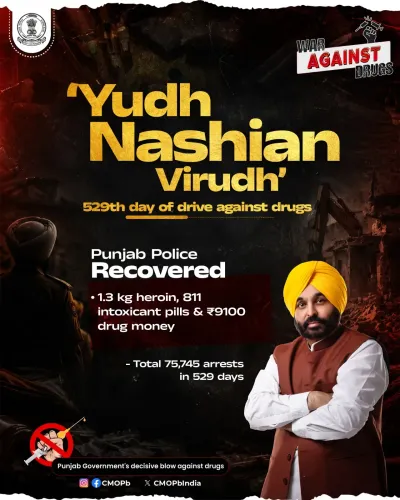
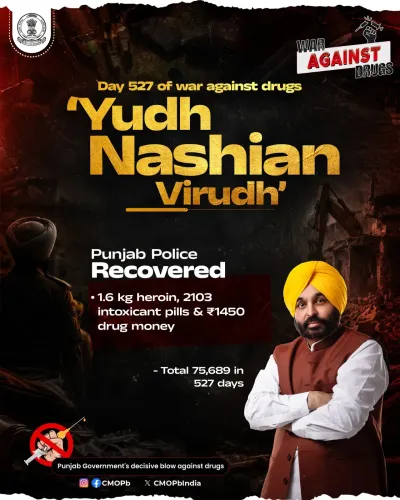
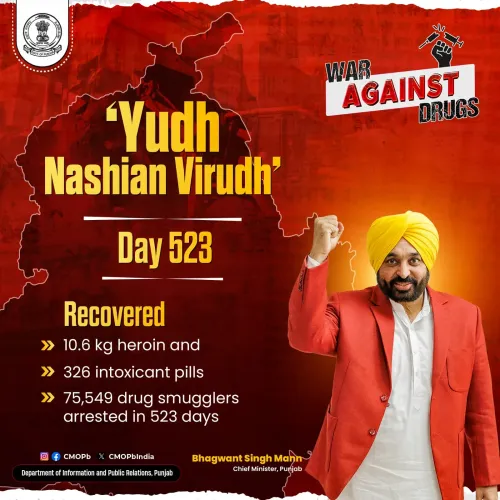
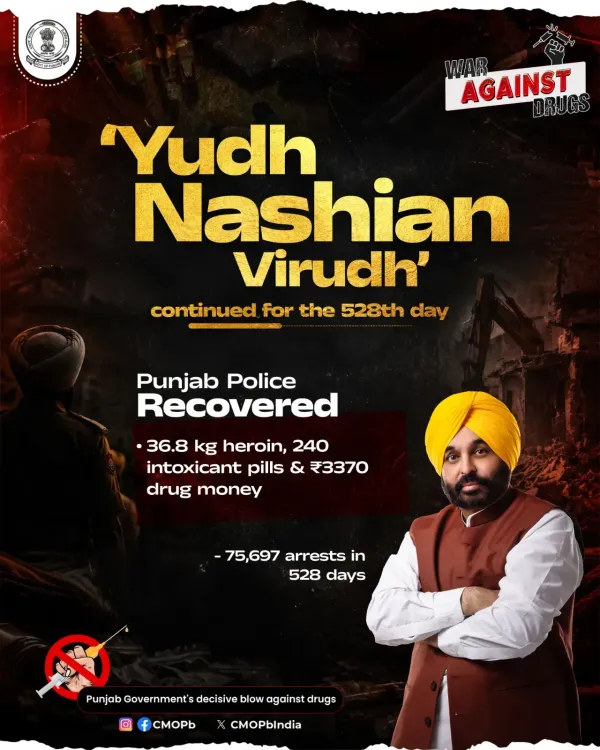
Punjab Police's 'Yudh Nashian Virudh' campaign reached Day 528 on August 12, 2026, with cumulative arrests hitting 75,697 drug smugglers. The latest cycle added 36.8 kg heroin, 240 intoxicant pills, and ₹3,370 in drug money seized, while seven persons were convinced to enter de-addiction treatment.
Key Takeaways
528 consecutive days of the 'Yudh Nashian Virudh' anti-drug drive as of August 12, 2026.
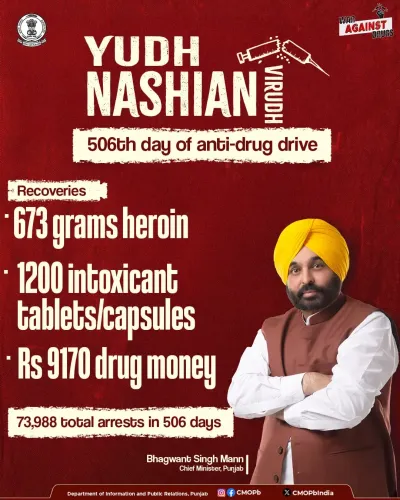
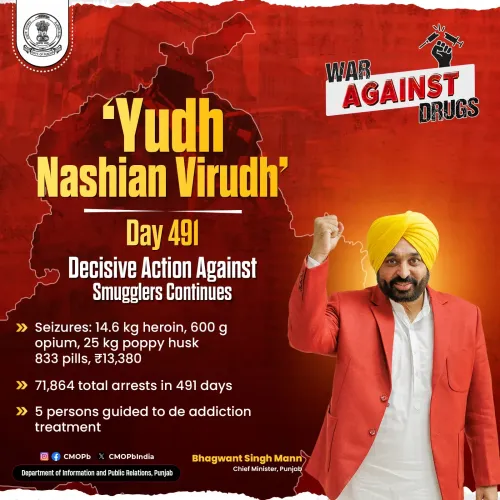
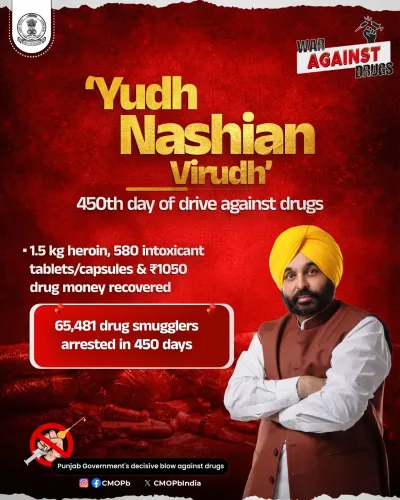
Total drug smugglers arrested since launch: 75,697 .
Latest cycle seizures: 36.8 kg heroin , 240 intoxicant pills , and ₹3,370 drug money .
Seven persons convinced to voluntarily undergo de-addiction and rehabilitation treatment in the latest reporting period.
The campaign combines daily enforcement arrests with rehabilitation counselling as a dual-track governance model.
Launched by the Aam Aadmi Party government under CM Bhagwant Mann after the March 2022 election victory.
Seventy-five thousand, six hundred and ninety-seven drug smugglers arrested. That number — accumulated over 528 consecutive days — is the headline the Chief Minister's Office of Punjab posted on Wednesday, August 12, 2026, as the state's anti-narcotics drive Yudh Nashian Virudh ('War Against Drugs') ground on without pause.
What Day 528 looked like on the ground
In the latest enforcement cycle, Punjab Police recovered 36.8 kg of heroin, 240 intoxicant pills, and ₹3,370 in drug money seized directly from arrested smugglers. The haul is not exceptional by the campaign's own standards — which is precisely the point. The drive is designed to be relentless rather than spectacular, stacking daily seizures into a cumulative pressure campaign against supply networks.
Alongside the enforcement numbers, police reported convincing seven persons to voluntarily enter de-addiction and rehabilitation treatment — a quieter metric that the CMO has consistently flagged alongside arrest tallies since the drive began.
Why Punjab, and why this campaign
Punjab's drug crisis is not a new story. The state's geography — sharing a long border with Pakistan and sitting at the confluence of historic narcotics supply routes — has made it a transit and consumption flashpoint for decades. Successive governments wrestled with the problem, oscillating between crackdowns and rehabilitation pushes, rarely sustaining both simultaneously.
When Chief Minister Bhagwant Mann and the Aam Aadmi Party swept to power in March 2022, the drug question was central to their mandate. Yudh Nashian Virudh was the operational answer: a police-led, daily-reporting campaign that fused arrest quotas with de-addiction counselling targets, and made the numbers public — every single day.
The dual-track model: arrests and rehabilitation
The campaign's architecture is deliberately two-pronged. Enforcement targets the supply side — smugglers, traffickers, and distribution networks. Rehabilitation targets the demand side — addicts who, in the campaign's framing, are victims as much as offenders. Convincing individuals to seek treatment voluntarily, rather than arresting them, is tracked as a separate success metric.
Over 528 days, that dual approach has produced a dataset the government publishes as governance proof-of-concept: cumulative arrests, daily seizure weights, and persons referred to rehabilitation — all released in a single daily post, building a public ledger of accountability.
With the campaign now past its 500-day mark and showing no sign of deceleration, the real question is whether the supply-side pressure is translating into measurable change in Punjab's streets — and whether de-addiction infrastructure is scaling fast enough to absorb the demand the police are generating.
Point of View
But also creates a hostage-to-fortune dynamic: any perceived slowdown becomes newsworthy. The rehabilitation component — seven persons counselled in a single day — remains modest relative to the scale of Punjab's addiction burden, raising the question of whether de-addiction infrastructure investment is keeping pace with the enforcement tempo. For the AAP government, the campaign is simultaneously a law-and-order credential, a public-health initiative, and a daily reminder to voters that a promise made in 2022 is still being kept.
NationPress
26 Sept 2026
Frequently Asked Questions
What is 'Yudh Nashian Virudh' in Punjab?
'Yudh Nashian Virudh' — meaning 'War Against Drugs' in Punjabi — is a sustained anti-narcotics campaign launched by the Bhagwant Mann-led AAP government after winning the March 2022 Punjab elections. It combines daily police enforcement against drug smugglers with de-addiction counselling for users.
How many drug smugglers has Punjab Police arrested under this drive?
As of Day 528 of the campaign (August 12, 2026), the total number of drug smugglers arrested under 'Yudh Nashian Virudh' has reached 75,697 , according to the Chief Minister's Office of Punjab.
How much heroin was seized in the latest Punjab Police drug drive update?
In the most recent enforcement cycle reported on August 12, 2026, Punjab Police recovered 36.8 kg of heroin , along with 240 intoxicant pills and ₹3,370 in drug money from arrested smugglers.
Does the Punjab drug campaign include rehabilitation, not just arrests?
Yes. Alongside arrests and seizures, Punjab Police track the number of persons convinced to voluntarily enter de-addiction and rehabilitation treatment. Seven such persons were referred in the latest reporting cycle.
Why is Punjab particularly affected by drug trafficking?
Punjab's location — sharing a border with Pakistan and sitting on historic narcotics supply routes — has made it a long-standing transit and consumption zone for drugs. The issue has been a central political and social concern for successive state governments.