Punjab Police's 'Yudh Nashian Virudh' hits 75,549 arrests in 523 days
Synopsis
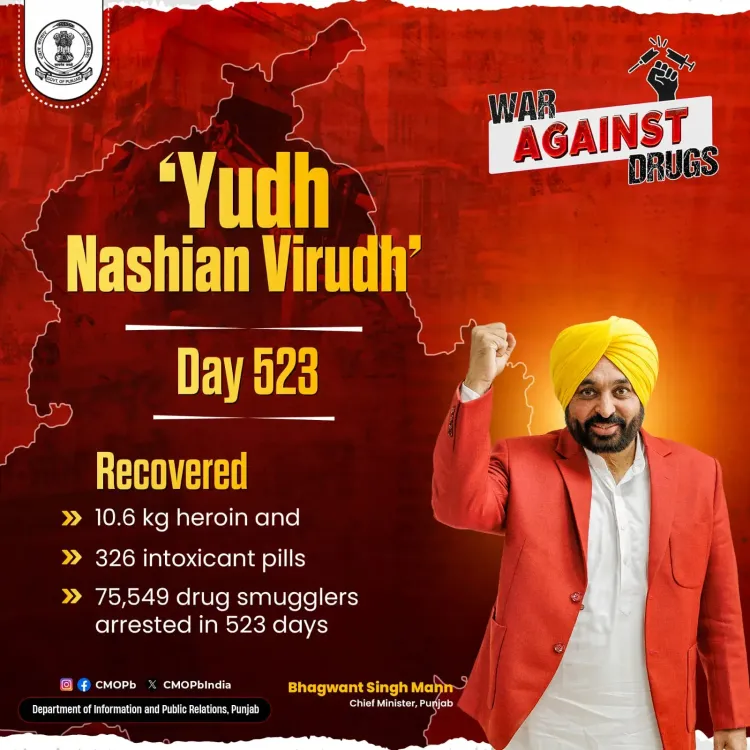
Punjab Police's 'Yudh Nashian Virudh' anti-drug campaign marked its 523rd consecutive day on August 7, 2026, with cumulative arrests reaching 75,549 and fresh seizures of 10.6 kg heroin and 326 intoxicant pills. Seven persons were also referred to de-addiction treatment, reflecting the drive's dual enforcement and rehabilitation approach.
Key Takeaways
523 consecutive days of unbroken operations under the Yudh Nashian Virudh ('War Against Drugs') campaign as of August 7, 2026 .
Cumulative arrests of drug smugglers have reached 75,549 since the campaign's launch.
Latest operational push yielded 10.6 kg of heroin and 326 intoxicant pills seized from arrested smugglers.
Seven persons were persuaded to voluntarily enter de-addiction and rehabilitation treatment as part of the campaign's outreach arm.
The campaign runs a dual-track model: criminal enforcement against suppliers paired with health-oriented rehabilitation referrals for users.
Punjab 's border geography with Pakistan makes it a persistent hub for heroin trafficking, a challenge that has outlasted multiple state governments.
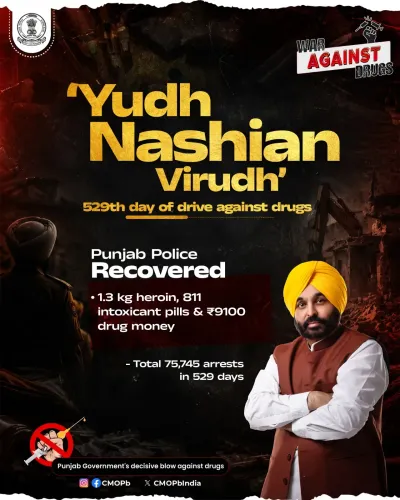
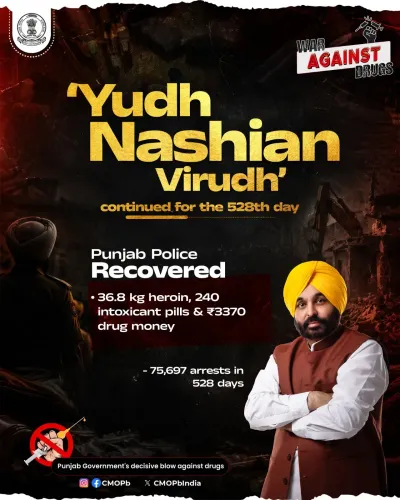
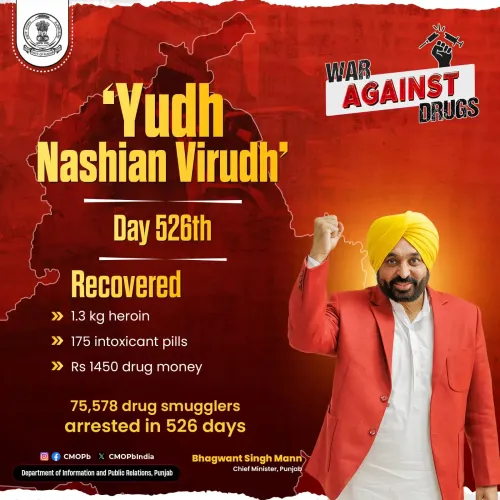
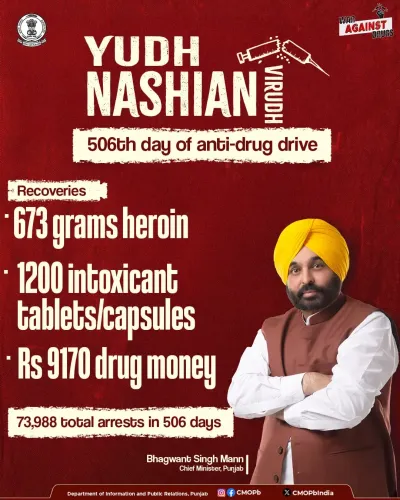
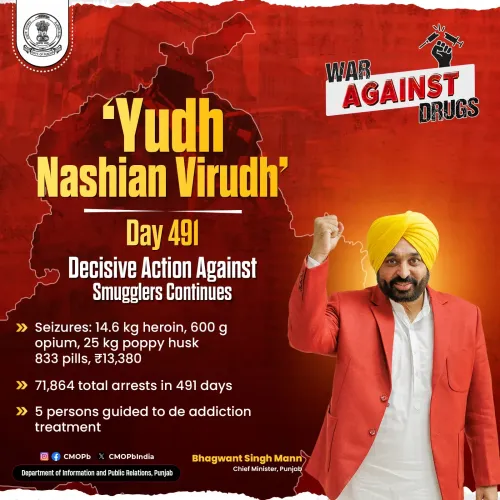
Over five hundred days of relentless pursuit, and Punjab Police is not letting up. On Friday, August 7, 2026, the Chief Minister's Office of Punjab reported that the state's flagship anti-narcotics campaign, Yudh Nashian Virudh ('War Against Drugs'), completed its 523rd consecutive day of operations — with fresh seizures and arrests adding to a cumulative tally that now stands at 75,549 drug smugglers arrested since the drive began.
What the 523rd day's haul looks like
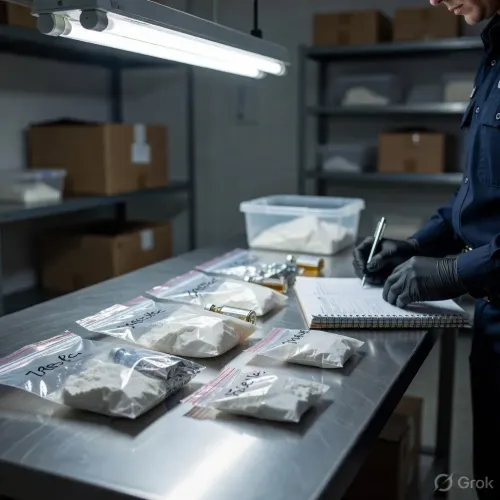
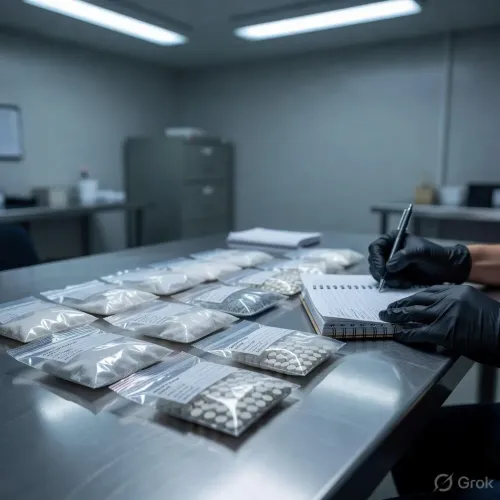
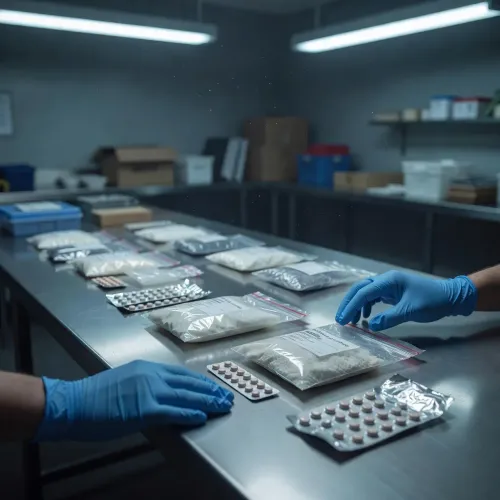
In the latest operational push, police teams arrested fresh batches of drug smugglers and recovered 10.6 kg of heroin and 326 intoxicant pills from their possession. The seizures are consistent with the campaign's focus on dismantling supply chains rather than targeting only street-level users. Heroin, routed through Punjab's porous border with Pakistan, has historically been the most seized narcotic in the state's enforcement operations.
Rehabilitation running alongside enforcement
Enforcement alone is only half the equation. Alongside the arrests, Punjab Police convinced seven persons to voluntarily undergo de-addiction and rehabilitation treatment as part of the campaign's outreach arm. The dual-track model — arresting suppliers while steering users toward treatment — reflects the Bhagwant Mann-led Aam Aadmi Party government's stated approach of treating addiction as a public health problem even as it prosecutes trafficking as a criminal one.
523 days and a state's long reckoning with narcotics
Punjab's struggle with drug trafficking predates the current government by decades. The state's geography — sharing a border with Pakistan and sitting astride established smuggling corridors — has made it a persistent flashpoint. Successive governments since the 2000s have launched police-led anti-narcotics drives, each generating its own round of statistics and promises. What distinguishes the current Yudh Nashian Virudh campaign, launched within the first months of the AAP government's tenure after March 2022, is the unbroken daily cadence of public reporting — a deliberate communication strategy that keeps the numbers visible and the pressure on.
A tally of 75,549 arrests in 523 days averages to roughly 144 arrests every single day. That pace, if sustained, signals either an exceptionally broad enforcement net or a state where the narcotics supply chain runs deep enough to keep feeding it. Probably both.
What the campaign's next phase will reveal
The metrics to watch now are not just arrest counts but conviction rates, rehabilitation outcomes, and whether the seizure volumes trend downward over time — the only indicators that would confirm the supply chain is actually shrinking, not just being disrupted at the margins. Any expansion of government-run de-addiction centres or new coordination frameworks with central agencies will signal whether Punjab is building durable infrastructure or sustaining a headline-driven enforcement sprint.
Five hundred and twenty-three days in, the drive is a statement of political will. Whether it becomes a structural shift in Punjab's narcotics landscape is the question the next phase must answer.
Point of View
Measurable anti-narcotics progress. The 75,549-arrest milestone reinforces the campaign's narrative of relentless pursuit, but analysts will note that arrest volumes alone cannot confirm whether supply is genuinely contracting. The integration of rehabilitation referrals into a police-led operation is a meaningful design choice, signalling an attempt to move beyond pure enforcement optics. The campaign's true test will come when conviction rates, recidivism data, and long-term seizure trends are placed alongside the headline arrest numbers.
NationPress
21 Sept 2026
Frequently Asked Questions
What is Yudh Nashian Virudh in Punjab?
'Yudh Nashian Virudh' means 'War Against Drugs' in Punjabi. It is the Bhagwant Mann -led AAP government's flagship anti-narcotics campaign launched after March 2022 , combining daily police enforcement against drug smugglers with de-addiction and rehabilitation outreach for users.
How many drug smugglers have been arrested in Punjab's anti-drug drive?
As of the campaign's 523rd day on August 7, 2026 , a cumulative total of 75,549 drug smugglers have been arrested under the Yudh Nashian Virudh campaign.
How much heroin was seized in Punjab's latest anti-drug operation?
In the latest operational push reported on August 7, 2026 , Punjab Police recovered 10.6 kg of heroin and 326 intoxicant pills from arrested smugglers.
Does Punjab's anti-drug campaign include rehabilitation?
Yes. Alongside arrests, Punjab Police actively convinces drug users to voluntarily enter de-addiction and rehabilitation centres. On the 523rd day alone, seven persons were referred to treatment as part of this outreach.
Why is Punjab particularly affected by drug trafficking?
Punjab shares a border with Pakistan and sits along established heroin smuggling corridors, making it a persistent entry point for narcotics into India. This geographic reality has driven anti-drug campaigns across successive state governments since the 2000s.