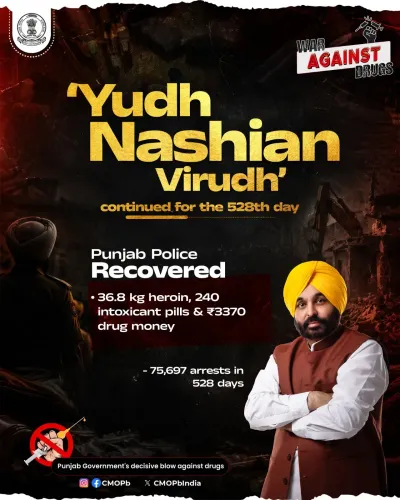
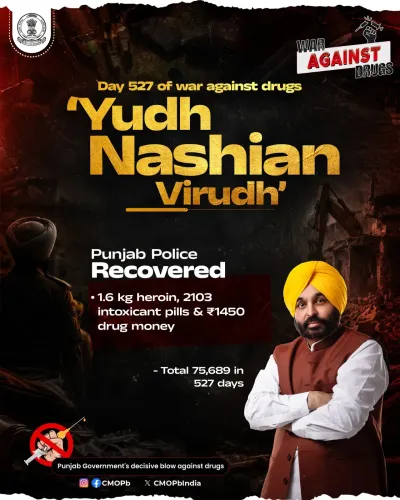
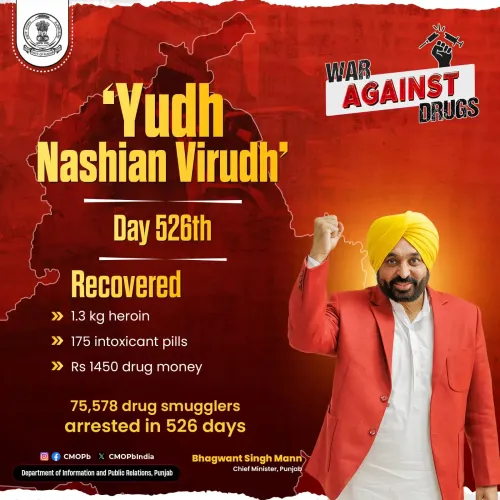
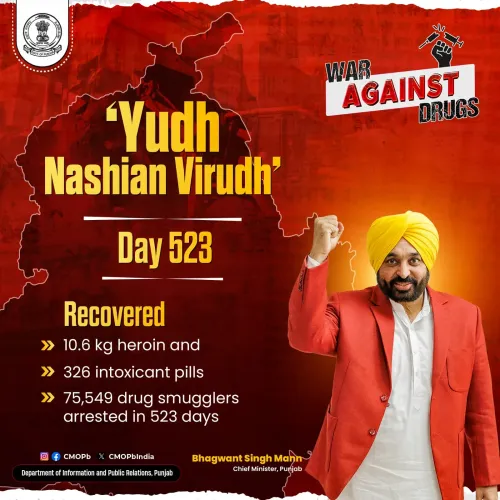
Punjab Police hits Day 536 of Yudh Nashian Virudh, arrests cross 76,000
Synopsis
Punjab Police's Yudh Nashian Virudh anti-drug campaign reached Day 536 on 20 August 2026, recovering 9.7 kg heroin and Rs 13.01 lakh drug money. Total arrests since the drive began now stand at 76,085. Nineteen persons were also referred to de-addiction treatment on the same day.
Key Takeaways
Day 536 of the Yudh Nashian Virudh campaign was reported on 20 August 2026 by the Chief Minister's Office of Punjab.
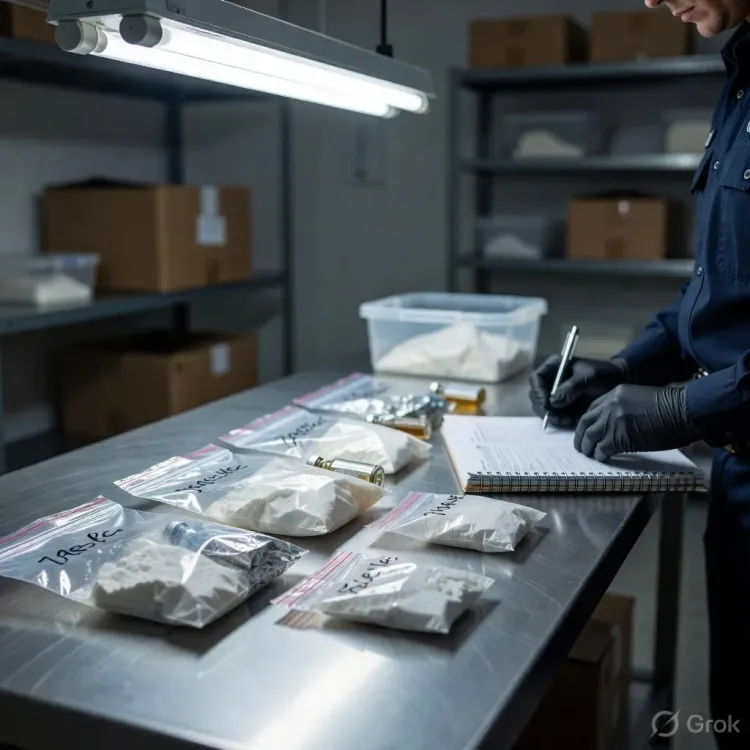
Police recovered 9.7 kg heroin , 500 grams opium , 325 intoxicant pills , and Rs 13.01 lakh in drug money in the latest operational push.
Cumulative arrests since the campaign launched now total 76,085 drug smugglers — averaging roughly 142 arrests per day.
19 persons were convinced to enter de-addiction and rehabilitation treatment on Day 536 alone.
Punjab borders the Golden Crescent region, making it a key transit and destination zone for cross-border heroin trafficking.
The campaign combines daily enforcement operations with a rehabilitation referral component, continuing a cross-party policy approach seen across multiple Punjab administrations.
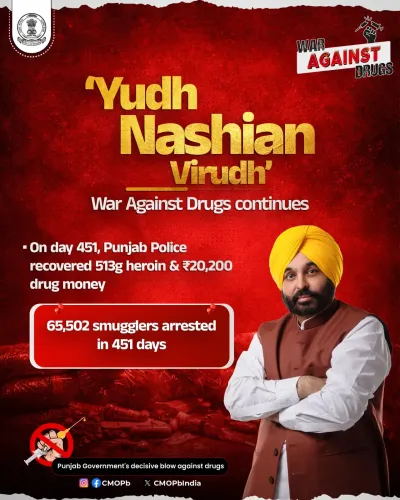
Seventy-six thousand arrests in under eighteen months. That is the headline number behind Punjab Police's relentless anti-narcotics campaign Yudh Nashian Virudh ('War Against Drugs'), which crossed its 536th consecutive day on Thursday, 20 August 2026 — and the daily tally shows no sign of slowing.
The Chief Minister's Office of Punjab confirmed that police teams recovered 9.7 kg heroin, 500 grams opium, and 325 intoxicant pills from drug smugglers arrested in the latest operational push. Seizures also included Rs 13.01 lakh in drug money — cash that would otherwise have fed back into trafficking networks. The cumulative arrest count now stands at 76,085 drug smugglers since the campaign launched.
What 536 days of unbroken operations looks like on the ground
Running a daily enforcement drive for nearly a year and a half demands more than political will — it requires sustained coordination across district units, border posts, and intelligence networks. Punjab's geography makes this especially high-stakes: the state shares a porous border with Pakistan and sits on the edge of the Golden Crescent, the world's most prolific heroin-producing zone spanning Afghanistan, Iran, and Pakistan. Cross-border heroin flows into Punjab have been documented across successive governments and were a defining issue in the 2017 state assembly elections.
The daily seizure model — logging each day's recoveries publicly — functions as both an accountability mechanism and a deterrent signal. It keeps political pressure on the police machinery while giving the government a visible metric to point to.
The rehabilitation push inside the crackdown
Enforcement alone has never been enough to break a drug crisis, and the campaign's architects appear to know it. Alongside the arrests, Punjab Police convinced 19 persons on this single day to voluntarily enter de-addiction and rehabilitation treatment — a quieter but arguably more durable metric than seizure weights.
Punjab has faced documented addiction rates that cut especially deep among rural youth and border-district communities. The dual-track approach — arrest the supplier, rehabilitate the user — reflects a policy design that has evolved across multiple administrations, even as the specific branding and intensity have shifted with each government.
A number that demands context
More than 76,000 arrests in 536 days averages out to roughly 142 arrests every single day. Whether that figure reflects genuine network dismantlement or a volume-driven enforcement culture is a question Punjab's policymakers will need to answer — but the scale is undeniable, and the daily rehabilitation referrals suggest the campaign is at least attempting to address demand alongside supply.
As Punjab Police moves deeper into the second year of Yudh Nashian Virudh, the real test will be whether those 76,000 arrests translate into fractured supply chains — or whether the Golden Crescent simply replenishes faster than any state police force can arrest.
Point of View
000-arrest figure is striking, but the more meaningful long-term metric will be whether supply chains are actually disrupted or merely stressed. The inclusion of daily rehabilitation referrals — 19 on a single day — suggests the administration is aware that enforcement without treatment is a revolving door. Whether the campaign's intensity can be sustained beyond the election cycle, and whether it coordinates effectively with central border agencies, will determine its legacy.
NationPress
5 Oct 2026
Frequently Asked Questions
What is Yudh Nashian Virudh?
Yudh Nashian Virudh, meaning 'War Against Drugs', is an ongoing Punjab Police anti-narcotics campaign that combines daily enforcement operations targeting drug smugglers with rehabilitation referrals for addicts. It has been running continuously since its launch and reached its 536th day on 20 August 2026.
How many drug smugglers have been arrested in Punjab's Yudh Nashian Virudh campaign?
As of Day 536 on 20 August 2026, the total number of drug smugglers arrested under the Yudh Nashian Virudh campaign has reached 76,085, according to the Chief Minister's Office of Punjab.
What drugs were seized on Day 536 of Yudh Nashian Virudh?
On Day 536, Punjab Police recovered 9.7 kg heroin, 500 grams opium, 325 intoxicant pills, and Rs 13.01 lakh in drug money from arrested smugglers.
Why is Punjab particularly affected by drug trafficking?
Punjab shares a border with Pakistan and lies adjacent to the Golden Crescent — the Afghanistan-Iran-Pakistan zone that is a major global source of heroin. This proximity has made the state a key transit and consumption zone for narcotics, a problem documented across multiple state governments.
Does Punjab Police also focus on drug rehabilitation under this campaign?
Yes. Alongside arrests and seizures, Punjab Police actively refers individuals to de-addiction and rehabilitation treatment. On Day 536 alone, 19 persons were convinced to undergo rehabilitation — reflecting a dual enforcement-and-treatment approach built into the campaign's design.