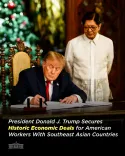
White House Touts Trump's Asia Economic Deals for US Workers
Synopsis
The White House has released a fact-sheet announcing what it calls historic economic deals secured by President Donald J. Trump to benefit American workers and assert U.S. leadership in Asia, extending the administration's bilateral trade strategy into the Indo-Pacific.
Key Takeaways
The White House released a formal fact-sheet on 19 November 2026 announcing 'historic economic deals' in Asia .
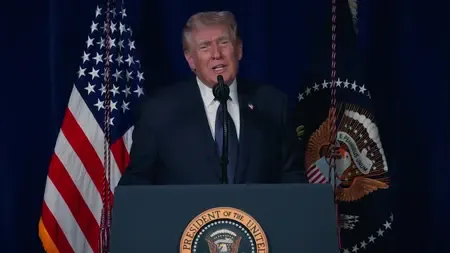
Trump framed the agreements as a win for American workers and U.S. leadership in the region.
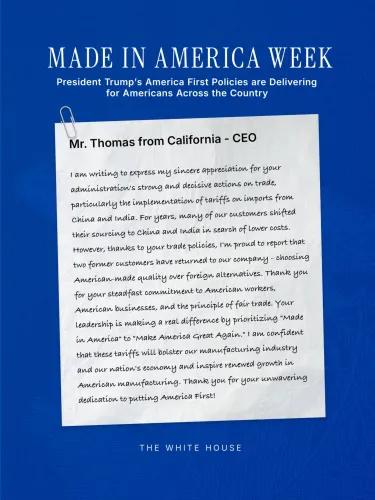
The administration's approach follows its established bilateral deal-making playbook, previously used to replace NAFTA with USMCA in 2018 .
The strategy targets trade-deficit reduction, export growth, and a strategic counterbalance to regional competitors across Asia .
Specific deal terms, congressional review, and regulatory implementation steps are expected in the coming months.
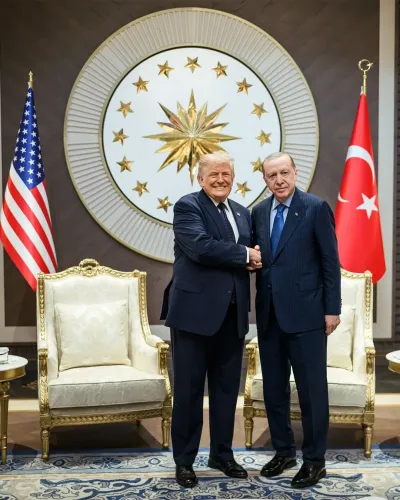
A formal fact-sheet from the White House signals that President Donald J. Trump has secured what the administration describes as 'historic economic deals' aimed at American workers and reinforcing United States leadership across Asia — a sweeping claim that lands at a moment of intense scrutiny over Washington's trade posture in the Indo-Pacific.
The White House shared the announcement on 19 November 2026, directing attention to a detailed fact-sheet outlining the terms of the agreements. The post arrives as the Trump administration continues its signature 'America First' approach to trade — pursuing bilateral deals designed to cut deficits, protect domestic manufacturing jobs, and strategically reposition the United States as the dominant economic partner across Asian markets.
Trump's bilateral trade playbook, applied to Asia
This is not the administration's first swing at reshaping trade architecture through one-on-one deals. In his first term, President Trump replaced NAFTA with the USMCA — signed in 2018 — embedding stronger labor protections and manufacturing incentives directly into the text of a binding agreement. The Asia-focused deals now being touted appear to follow the same logic: specific, enforceable bilateral terms rather than broad multilateral frameworks that the administration has historically viewed as unfavorable to American workers. The broader pattern here is deliberate. By anchoring deals country-by-country across Asia, the administration simultaneously advances U.S. commercial interests and builds a network of economic dependencies that counterbalance the influence of regional competitors. For Asian trading partners, the calculus involves weighing access to the American market against the conditions attached.What American workers stand to gain — and what comes next
The White House's framing of these agreements squarely around 'American workers' is a political signal as much as an economic one. Deals structured to boost U.S. exports in key sectors — manufacturing, energy, agriculture, technology — directly address the voter base that has anchored Trump's political coalition across two terms. Whether the specific terms deliver on that promise will depend on congressional and regulatory implementation steps expected to unfold over the coming months. Analysts watching the Indo-Pacific will be tracking which Asian nations are party to these agreements, what market-access concessions were exchanged, and how the deals interact with existing security and diplomatic frameworks in the region. The fact-sheet release is the opening move; the detail will be in the fine print.Point of View
The announcement raises a pointed question: partnership terms negotiated bilaterally with Washington tend to come with conditions, and the fine print of these Asia deals will reveal just how much leverage each party actually holds. The real test is whether implementation follows the announcement at the pace the White House is projecting.
NationPress
19 Nov 2026
Frequently Asked Questions
What are the Trump Asia economic deals announced in November 2026?
The White House released a fact-sheet on 19 November 2026 describing deals President Trump secured with Asian nations, framed as benefiting American workers and strengthening U.S. leadership in the Indo-Pacific. Specific terms are detailed in the official fact-sheet.
How does Trump's Asia trade strategy work?
The Trump administration pursues bilateral agreements with individual countries rather than multilateral frameworks, aiming to reduce U.S. trade deficits, expand exports in key sectors, and build economic leverage against regional competitors.
What is the America First trade policy?
America First trade policy, central to Trump's presidency, prioritizes deals that protect domestic manufacturing jobs and reduce trade deficits, using bilateral negotiations to secure favorable terms for the United States.
How does the 2026 Asia deal compare to USMCA?
Like USMCA — which replaced NAFTA in 2018 — the Asia deals appear designed to embed binding, specific commitments rather than relying on broad multilateral rules, following the same bilateral dealmaking model Trump used in North America.
How will Trump's Asia deals affect India?
India, as a major Indo-Pacific economy, will be watching the specific terms closely. Bilateral U.S. deals in Asia can reshape regional trade flows and create pressure on other nations to negotiate their own terms with Washington.