Trump Touts Manufacturing Surge, Hiring Boom Across US
Synopsis
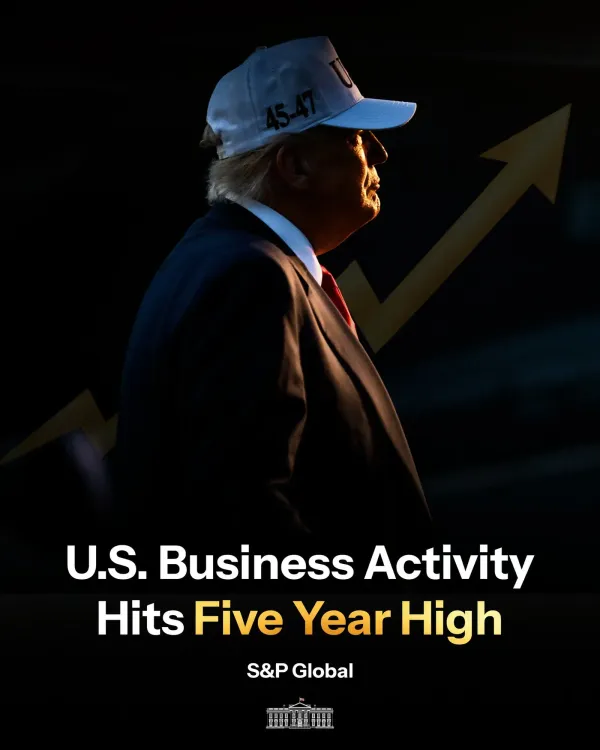
President Trump declared surging US manufacturing, strong demand, and rising hiring in a White House post, reinforcing his America First economic agenda as upcoming jobs data will test the administration's bullish claims.
Key Takeaways
President Trump declared on September 27, 2026 that US manufacturing is growing and demand is 'STRONG.' The statement extends the White House's signature economic narrative of domestic output revival over import dependence.
The administration's economic framework rests on the Tax Cuts and Jobs Act of 2017 , deregulation, and tariffs on foreign goods.
The next Bureau of Labor Statistics employment report and ISM Manufacturing PMI will be the key data tests for these claims.
The messaging doubles as political currency, linking factory-floor performance to the broader 'America First' identity.
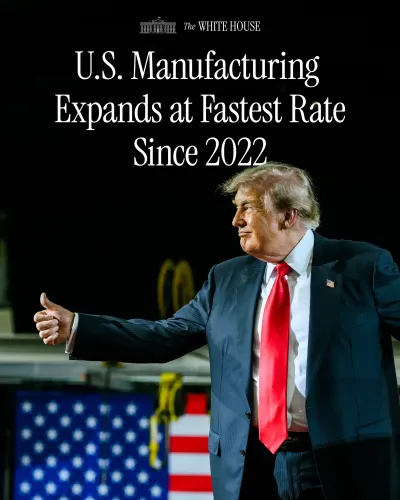
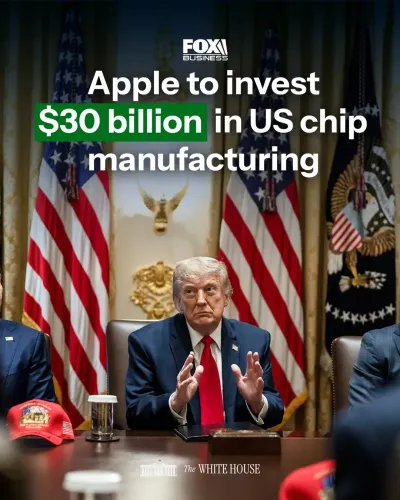
American factory floors are getting louder — and the White House wants the world to know it. President Donald J. Trump declared on Sunday, September 27, 2026, that the United States is seeing 'more orders, more output, and more American workers being hired,' framing a surge in domestic manufacturing as a signature vindication of his economic agenda.
In a post shared by the White House, Trump's statement read: 'Manufacturing is growing, Businesses are expanding, and Demand is STRONG.' The tone was emphatic — every economic indicator capitalised, every line a headline in itself.
The 'America First' Economic Playbook, Still Running
The messaging tracks directly with the administration's long-standing economic architecture. Trump's first term anchored manufacturing revival on three pillars: the Tax Cuts and Jobs Act of 2017, sweeping deregulation across energy and industry, and aggressive tariffs on imported goods — particularly from China — designed to tilt the competitive landscape toward domestic producers. That playbook was always about more than numbers. It was a political identity: the idea that Washington could reverse decades of factory closures and bring industrial jobs back to communities that had watched them disappear. The current rhetoric signals that same identity remains the centrepiece of the administration's economic narrative.What the Data Watch Now Looks Like
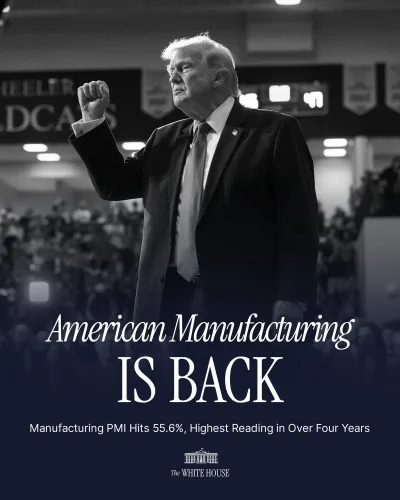
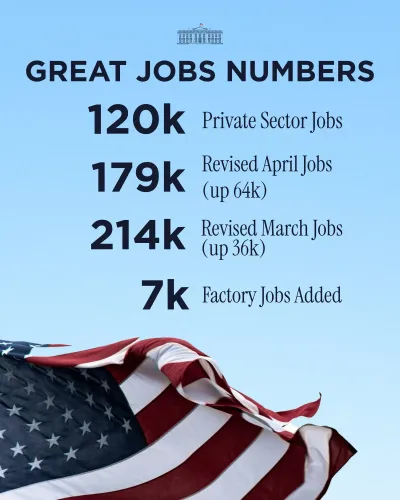
The White House assertion of strong demand and growing output will face its sharpest test in the next release from the Bureau of Labor Statistics — the monthly employment report that tracks real hiring across sectors. Equally telling will be the ISM Manufacturing Purchasing Managers' Index, the benchmark gauge of factory-floor activity: a reading above 50 signals expansion; below 50, contraction. Until those figures are public, the administration's claim remains political framing — confident, combative, and consistent with a White House that views economic messaging as inseparable from electoral momentum. If the numbers bear out the boast, Trump will have a powerful closing argument heading deeper into his second term. If they don't, the capitalised optimism on X will become a ready-made contrast for his critics. The data, as always, will have the final word.Point of View
Tax cuts, and deregulation — has always been as much a cultural promise as an economic one, tying factory-job recovery to a broader narrative of national restoration. The real political risk is that strong rhetoric without matching data hands opponents a sharp contrast; the administration's credibility on this signature issue is now hostage to the next BLS print and ISM reading. For India, a booming US manufacturing sector carries a dual edge: stronger American demand can lift Indian exports, but an 'America First' hiring push also signals continued pressure on global supply chains and offshore production arrangements.
NationPress
27 Sept 2026
Frequently Asked Questions
What did Trump say about US manufacturing in September 2026?
Trump declared that manufacturing is growing, businesses are expanding, and demand is strong, citing more orders, more output, and more American workers being hired.
What is Trump's America First economic policy?
America First economic policy prioritises domestic production through tariffs on imports, corporate tax cuts under the 2017 Tax Cuts and Jobs Act, and deregulation to incentivise US-based hiring and investment.
How is US manufacturing performance measured?
The two key benchmarks are the Bureau of Labor Statistics monthly employment report, which tracks sector-wise hiring, and the ISM Manufacturing PMI — a reading above 50 indicates factory-sector expansion.
How does US manufacturing growth affect India?
Strong US demand can boost Indian exports, but an aggressive domestic-hiring push under America First policies may also pressure global supply chains and offshore manufacturing arrangements that Indian firms participate in.
When was the Tax Cuts and Jobs Act passed under Trump?
The Tax Cuts and Jobs Act was enacted in 2017 during Trump's first term, lowering corporate tax rates to incentivise domestic investment and job creation.