White House Touts Job Growth, Trillions in Investment Under Trump
Synopsis
The White House on June 7, 2026, posted that under President Trump's leadership Americans are working more than ever, trillions in investment have entered the country, and private-sector job growth is surging — continuing the administration's core economic messaging around deregulation and domestic capital attraction.
Key Takeaways
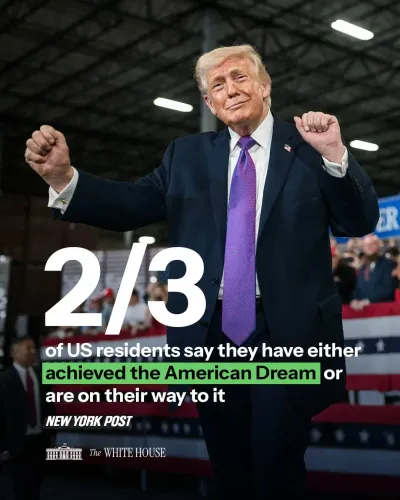
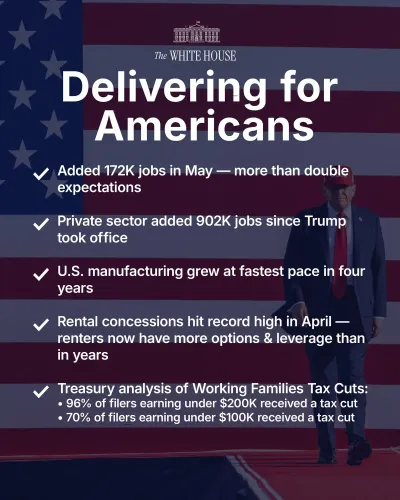
The White House posted on June 7, 2026 , asserting that employment in the United States is at historic highs under President Trump .
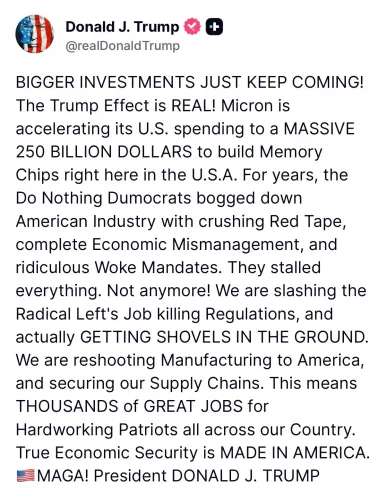
The post claims 'trillions of dollars in investments' are being poured into the country, without specifying a reporting period or data source.
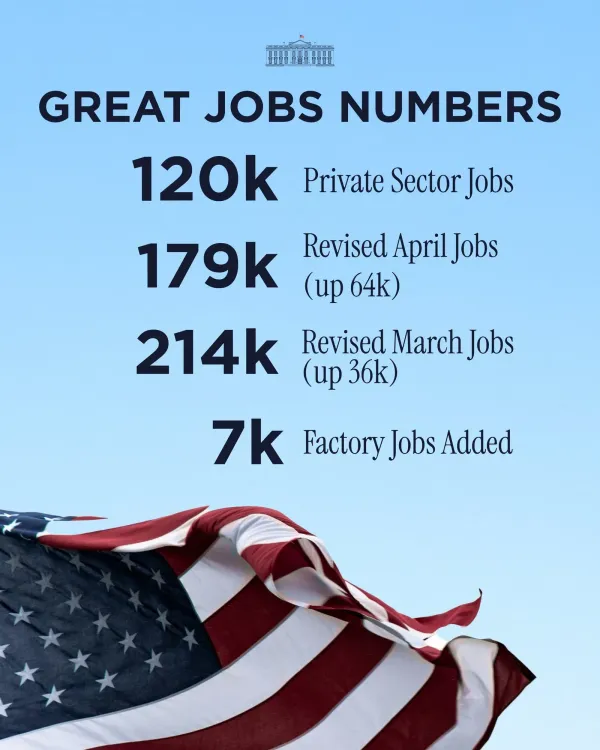
Private-sector job growth was described as being 'through the roof,' consistent with the administration's broader economic messaging.
Trump is in his second, non-consecutive presidential term, which began in January 2025 .
The claims echo the policy priorities of Trump's first term, including the Tax Cuts and Jobs Act of 2017 , which cut the corporate tax rate from 35% to 21% .
Independent verification of the specific figures cited will depend on upcoming Bureau of Labor Statistics data releases.
The White House posted on Sunday, June 7, 2026, claiming that under President Donald Trump's leadership, American employment is at historic highs, private-sector job growth has surged, and trillions of dollars in new investment have flowed into the country.
Context
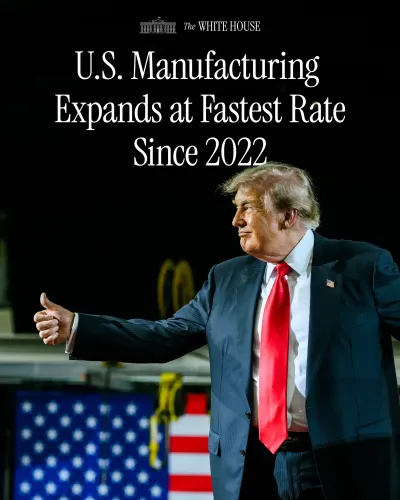
The official White House account stated: 'Under President Trump's leadership, Americans are working more than ever before, trillions of dollars in investments are being poured into our country, and private sector job growth is through the roof.' The post was accompanied by an image and did not specify a reporting period or cite a particular data source for the figures cited.
Trump is currently serving his second, non-consecutive presidential term, which began in January 2025. His administration has consistently framed economic performance — particularly employment levels and inbound capital — as the central measure of policy success.
Policy Backdrop
The claims align with the administration's long-standing emphasis on tax reduction, deregulation, and attracting domestic and foreign investment under an 'America First' framework. The Tax Cuts and Jobs Act of 2017, enacted during Trump's first term, reduced the corporate tax rate from 35 per cent to 21 per cent and was designed to stimulate domestic hiring and capital deployment.
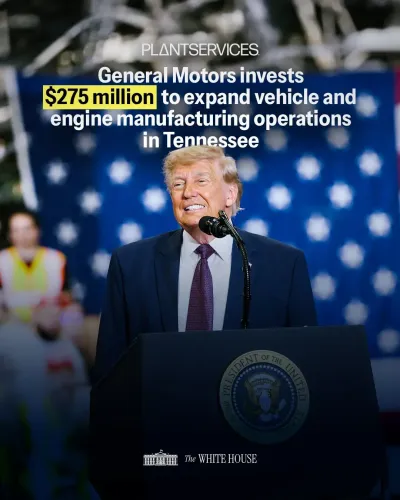
In his second term, the administration has continued to pursue deregulation and to court large-scale private investment commitments from both domestic corporations and international firms. The White House has frequently highlighted such pledges as evidence that its economic model is delivering results.
Stakeholders and Impact
The primary beneficiaries cited in the administration's framing are American workers and private sector employers. Elevated employment levels, if sustained, would reduce unemployment claims, expand consumer spending, and increase federal tax revenues — all of which carry downstream effects for social programmes and the federal deficit.
For Indian businesses and policymakers, the trajectory of the US economy carries significant weight. A buoyant American labour market typically supports stronger import demand, which can benefit Indian exporters in sectors such as pharmaceuticals, information technology, and textiles. Conversely, a strong dollar environment linked to robust US growth can put pressure on the Indian rupee.
What's Next
The Bureau of Labor Statistics releases monthly employment data that will either corroborate or complicate the White House's characterisation of the jobs market. Analysts and opposition figures are likely to scrutinise the next payroll report for the specific metrics — such as wage growth, labour force participation, and the composition of job gains — that underpin the administration's broad claims.
Further administration statements on investment totals, regulatory rollbacks, or trade policy developments are expected to follow as the White House continues to build its economic narrative ahead of the congressional cycle. How those numbers hold up against independent data will shape the political resonance of these claims through the remainder of 2026.
Point of View
Affirmative claims timed outside any specific data release, which maximises positive framing while minimising exposure to immediate fact-checking. The administration is clearly building toward a mid-term political argument that its deregulation-and-investment model has delivered tangible results for ordinary workers. For international observers, the absence of specific figures or a cited reporting period is notable; the strength of the claim will ultimately rest on whether forthcoming Bureau of Labor Statistics data supports the 'more than ever before' characterisation. The post fits a consistent pattern in which the Trump White House uses social media as a primary instrument for shaping economic perception ahead of official data cycles.
NationPress
24 Sept 2026
Frequently Asked Questions
What did the White House say about the US economy on June 7, 2026?
The White House posted that under President Trump's leadership, Americans are working more than ever before, trillions of dollars in investments are being poured into the country, and private-sector job growth is 'through the roof.' No specific data source or reporting period was cited in the post.
Is Donald Trump the current US President in 2026?
Yes. Donald Trump is serving his second, non-consecutive presidential term, which began in January 2025 , making him the 47th President of the United States.
What is the Trump administration's economic policy approach?
The Trump administration's economic approach centres on tax reduction, deregulation, and attracting inbound investment under an 'America First' framework. The Tax Cuts and Jobs Act of 2017 , passed during his first term, cut the corporate tax rate from 35 per cent to 21 per cent as a key pillar of this strategy.
How does US job growth affect India?
A strong US labour market generally supports higher American consumer spending, which can boost demand for Indian exports in sectors such as pharmaceuticals, IT services, and textiles. However, a robust US economy can also strengthen the dollar, placing downward pressure on the Indian rupee.
Where can I find official US employment data to verify these claims?
The Bureau of Labor Statistics (BLS) publishes monthly non-farm payroll and unemployment reports that provide the official, independently compiled picture of US employment trends. These releases are the primary benchmark against which White House economic claims are measured.