White House Claims Trump Delivering More Jobs, Real Results
Synopsis
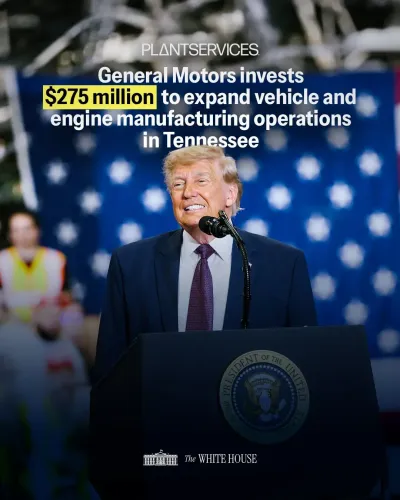
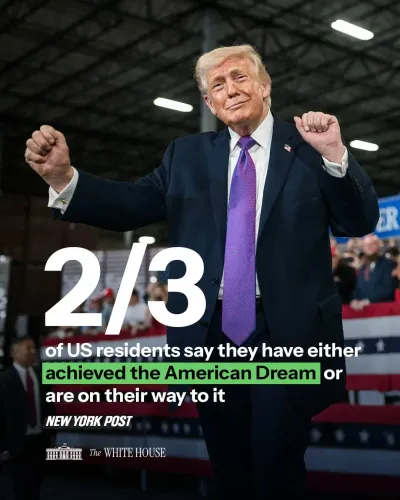
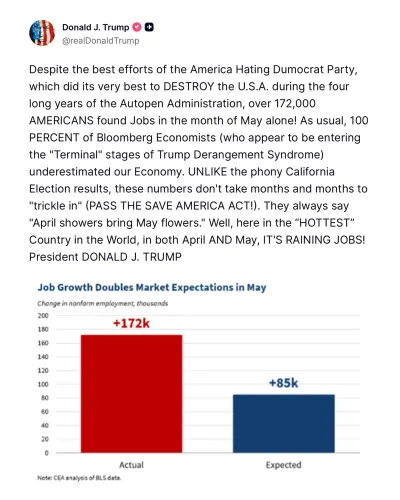
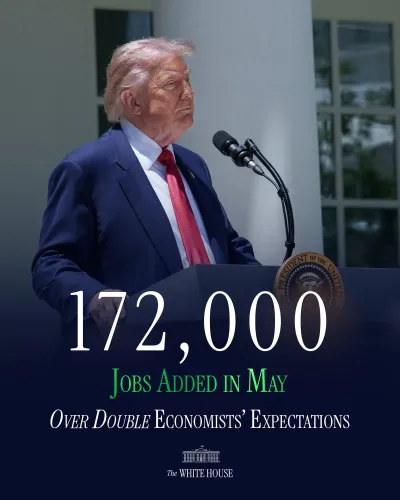
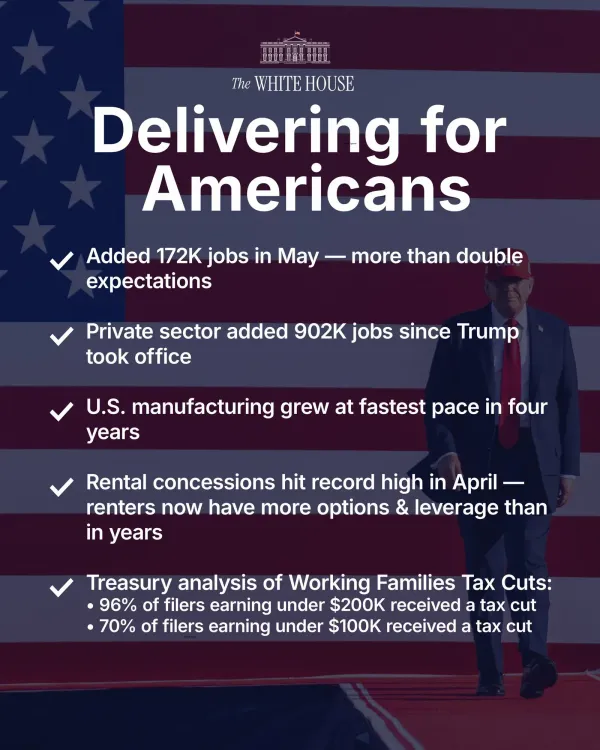
The White House on June 8, 2026, posted on X claiming President Donald J. Trump is delivering more jobs and real economic results for Americans, promising further gains ahead. The message aligns with a long-standing White House practice of tying monthly labour-market data to administration policy achievements.
Key Takeaways
The White House posted on June 8, 2026 , claiming President Donald J.
Trump is delivering job growth and real economic results.
The post signals further economic announcements, stating 'there's much more to come.' The messaging follows a recurring White House pattern of timing employment-related posts around Bureau of Labor Statistics monthly data releases.
The Trump administration's economic agenda includes the Tax Cuts and Jobs Act (2017) and executive orders requiring agencies to cut two regulations for every new one introduced.
U.S. labour-market trends have downstream effects on Indian IT exports , the Indian rupee , and the broader India-U.S. trade relationship.
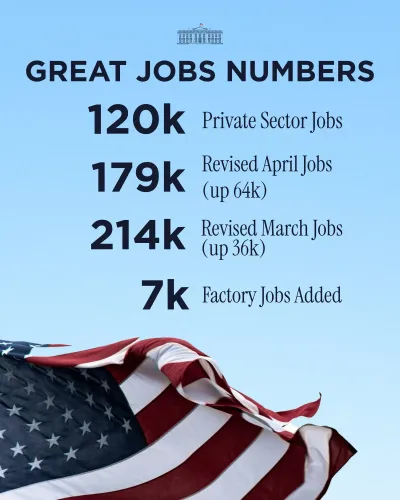
No specific job numbers were cited in the post; verification of figures will depend on forthcoming BLS Employment Situation data.
The White House, the official communications account of the Executive Office of the President of the United States, posted on X on Monday, June 8, 2026, asserting that President Donald J. Trump is delivering job growth and tangible economic results for Americans, with a promise of more to come.
Context
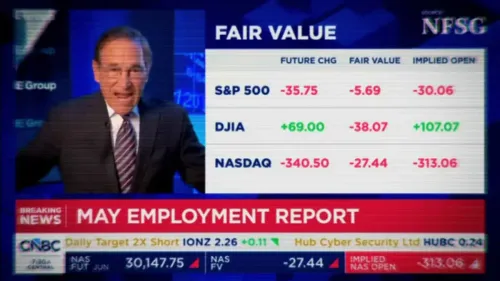
The post, which reads 'More Jobs. Real results. President Donald J. Trump is delivering for Americans, and there's much more to come,' follows a pattern of White House communications that tie labour-market milestones to administration policy. Such posts are typically timed around monthly employment data releases by the Bureau of Labor Statistics (BLS), which publishes its Employment Situation report on a fixed schedule each month.
The messaging frames job creation as a direct outcome of the Trump administration's economic agenda, a communications approach the White House has consistently used to signal policy effectiveness to a broad public audience.
Policy Backdrop
The Trump administration's economic platform has centred on tax reform, deregulation, and trade policy adjustments aimed at stimulating domestic employment. The landmark Tax Cuts and Jobs Act, enacted in December 2017, lowered corporate tax rates with the stated goal of encouraging business investment and hiring across sectors.
Alongside this, executive orders on regulatory reform directed federal agencies to eliminate two existing regulations for every new one introduced, reducing compliance burdens on employers. Proponents argue these measures create a more business-friendly environment that translates into job creation; critics have questioned whether such gains are sustained or distributed equitably across income groups.
The current post does not cite specific employment figures, but the White House's broader communications record shows a recurring practice of linking monthly BLS data to administration priorities — a pattern that mirrors messaging from the 2017–2019 period of Trump's first term.
Stakeholders and Impact
The primary stakeholders in any jobs-focused policy announcement are the American workforce and domestic employers, particularly in sectors sensitive to regulatory and tax conditions such as manufacturing, energy, and small business. For Indian observers, the U.S. labour market carries significance given the large Indian-American professional community and India's deep trade and technology ties with the United States.
A strengthening U.S. job market can influence Federal Reserve interest-rate decisions, which in turn affect global capital flows, the dollar's strength, and emerging-market currencies including the Indian rupee. American employment trends also shape demand for Indian IT services and goods exported to the U.S., making the White House's economic narrative relevant beyond American borders.
What's Next
The White House's phrase 'much more to come' signals that further economic announcements — potentially on tax policy, deregulation, or trade agreements — are expected in the near term. Analysts and markets will watch the next BLS Employment Situation report closely to assess whether the administration's claims are supported by fresh data.
Any follow-up executive action on regulatory rollback or investment incentives would test whether the administration can sustain the job-growth narrative through the remainder of 2026. The trajectory of these announcements will also be a key indicator of the White House's economic messaging strategy heading into the next political cycle.
Point of View
The messaging stays flexible — it can be amplified if BLS numbers are strong and quietly archived if they disappoint. The phrase 'much more to come' is also deliberate forward-loading, keeping the media cycle open and expectations primed. For India, the subtext matters: a buoyant U.S. economy under a trade-assertive administration is a double-edged signal — good for Indian export demand, but potentially complicated if 'more jobs' is paired with further 'America First' trade barriers.
NationPress
21 Sept 2026
Frequently Asked Questions
What did the White House post about jobs on June 8 2026?
The White House posted on X on June 8, 2026, stating that President Donald J. Trump is delivering 'more jobs' and 'real results' for Americans, with a promise that more is to come. No specific job figures were included in the post.
What is Trump's economic policy for job creation?
The Trump administration's economic agenda for job creation centres on the Tax Cuts and Jobs Act, which lowered corporate tax rates, and executive orders requiring federal agencies to eliminate two existing regulations for every new one introduced, aimed at reducing costs for employers and stimulating hiring.
How does the US jobs report affect India?
Strong U.S. employment data can influence Federal Reserve interest-rate decisions, which affect the value of the dollar and the Indian rupee. It also shapes American demand for Indian IT services and goods, making U.S. labour-market trends economically significant for India.
When is the next Bureau of Labor Statistics jobs report?
The Bureau of Labor Statistics releases its Employment Situation report monthly on a fixed schedule. The next report following the June 8, 2026, White House post will be the key data point analysts watch to assess the administration's job-growth claims.
Why does the White House post about jobs on social media?
U.S. presidents and their communications offices routinely use official social media accounts to tie monthly labour-market statistics to administration priorities. This practice helps shape public perception of economic policy effectiveness and is a standard feature of modern presidential communications.