Bihar Panchayat polls to be held only after delimitation: CM Samrat Choudhary
Synopsis
Bihar's Panchayat elections are on hold — and CM Samrat Choudhary has made it official. With a delimitation exercise underway using a 7,500-population benchmark, the boundaries for Mukhiya, Sarpanch, Panchayat Samiti, and Zila Parishad seats are set to be redrawn before a single vote is cast. The reshuffle could redraw electoral calculations for thousands of aspirants across the state.
Key Takeaways
Bihar CM Samrat Choudhary announced on 21 September 2026 that Panchayat Raj elections will only be held after the delimitation exercise is completed.
The delimitation is being carried out using a population benchmark of 7,500 per Panchayat.
New Panchayats may be created, and existing ones reorganised — affecting seats for Mukhiya , Sarpanch , Panchayat Samiti , and Zila Parishad members.
Choudhary cited his own village — population ~20,000 — currently merged with three others into a single Panchayat, as a case for reorganisation.
The State Election Commission has already commenced the delimitation process following a formal request.
Choudhary also claimed Bihar's Sarpanch office structure is unique to the state and not found elsewhere in India.
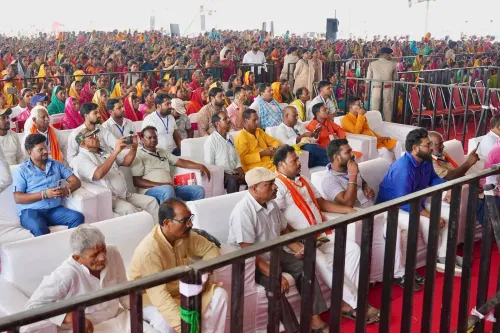
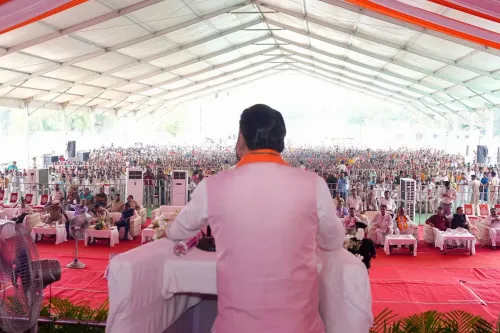
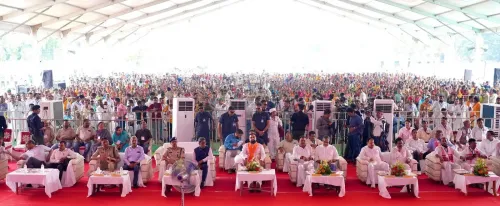
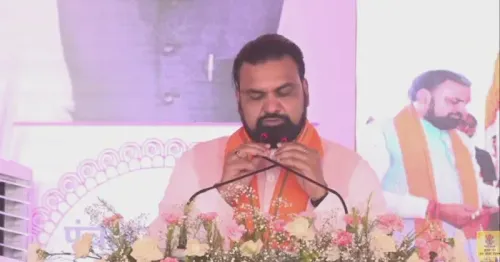
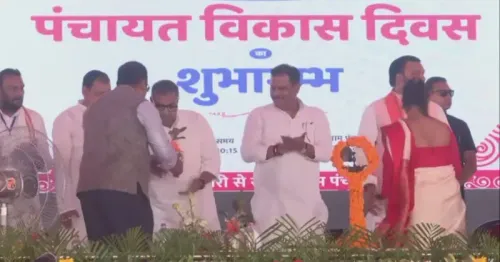
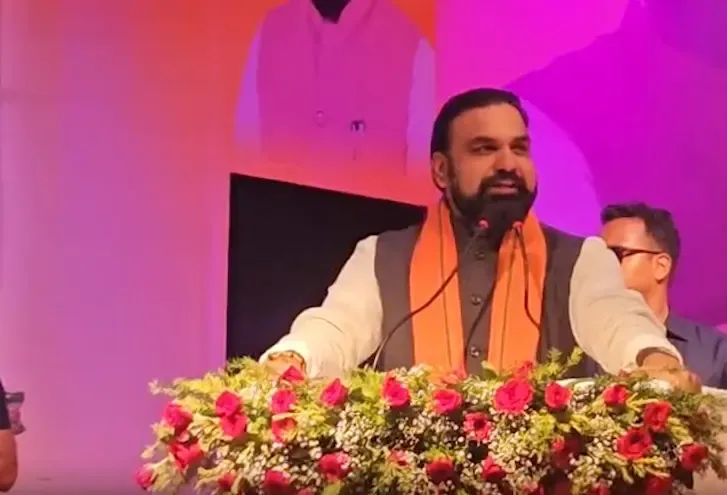
Bihar Chief Minister Samrat Choudhary on Monday, 21 September 2026, declared that Panchayat Raj elections in Bihar will not be held until the ongoing delimitation exercise is fully completed, a process that is set to redraw local administrative and electoral boundaries across the state. The announcement was made at the 'Gram Sansad Bihar Chapter' programme in Patna.
Delimitation First, Elections Later
Choudhary confirmed that the redrawing of Panchayat boundaries is currently underway, and no election-related process will commence before it concludes. He said the exercise is being carried out using a population benchmark of 7,500, and Panchayat boundaries will be reorganised on that basis. The Chief Minister noted that a request for delimitation had already been submitted to the State Election Commission, which has since initiated the process.
To illustrate the need for reorganisation, Choudhary cited his own village, which has a population of around 20,000 but is currently clubbed with three other villages to form a single Panchayat — an arrangement he described as administratively unwieldy.
What the Delimitation Could Change
The exercise is expected to have far-reaching consequences for local governance structures. Some villages may be shifted from one Panchayat to another, entirely new Panchayats could be created, and existing ones may be reorganised. These changes are likely to significantly alter the electoral landscape for candidates aspiring to contest posts such as Mukhiya, Sarpanch, Panchayat Samiti member, and Zila Parishad member. Prospective candidates have been advised that detailed election strategies should be formulated only after final boundaries are established.
The Significance of Grassroots Democracy
Addressing elected representatives and aspirants at the programme, Choudhary underscored the pivotal role of the Mukhiya in the administrative hierarchy. He noted that while figures such as the Prime Minister, Chief Minister, or District Magistrate are widely perceived as the most powerful, the Mukhiya carries exceptional responsibility at the grassroots level. He observed that local elections tend to be more fiercely contested, with personal relationships, community ties, and social dynamics playing a decisive role in ward member and Mukhiya races. He also noted that voters often guard their choices closely, sometimes even from family members.
Resource Constraints and Representative Accountability
Choudhary acknowledged that government resources are finite at every level. While he said he would ideally want the Centre to provide Bihar with all the funds it requires, he conceded this was not practically feasible. He extended a similar caution to Zila Parishad and Panchayat-level representatives, emphasising that elected officials must operate within available means and remain accountable to the electorate that puts them in power.
Bihar's Unique Sarpanch Office
In an aside on Bihar's Panchayati Raj structure, Choudhary also claimed that the office of Sarpanch, as it exists in Bihar, is unique to the state and does not have a precise equivalent in other states across India. The precise electoral landscape for all posts will become clearer only once the delimitation exercise reaches its conclusion.
Point of View
With no firm electoral calendar. The 7,500-population benchmark could lead to a significant increase in the number of Panchayats — and thus seats — which is both an administrative reform and a political opportunity for the ruling dispensation to shape new electoral units. Bihar's Panchayati Raj system has historically been a launchpad for state-level political careers, and boundary changes of this scale routinely alter factional equations within parties. The process deserves close scrutiny for transparency in how new Panchayat compositions are determined and whether the timeline is kept insulated from electoral considerations.
NationPress
21 Sept 2026
Frequently Asked Questions
Why are Bihar Panchayat elections being delayed?
Bihar Chief Minister Samrat Choudhary has said elections will not be held until the ongoing delimitation exercise — which redraws Panchayat boundaries using a 7,500-population benchmark — is fully completed. The State Election Commission has already begun the process, but no election schedule will be announced until boundaries are finalised.
What is the Bihar Panchayat delimitation exercise?
It is a process of reorganising Panchayat boundaries across Bihar based on a population benchmark of 7,500. Some villages may be shifted between Panchayats, new Panchayats may be created, and existing ones may be merged or split. The aim is to make local administrative units more manageable in size and population.
Which electoral posts will be affected by the delimitation?
The delimitation is expected to alter the boundaries and electoral composition for Mukhiya, Sarpanch, Panchayat Samiti member, and Zila Parishad member seats. Aspiring candidates have been advised to wait for final boundary notification before firming up their election strategies.
When will Bihar Panchayat elections take place?
No specific date has been announced. CM Choudhary stated that the election process will begin only after the delimitation exercise is completed, meaning the timeline depends on how quickly the State Election Commission finalises the new Panchayat boundaries.
What did CM Choudhary say about the role of the Mukhiya?
Choudhary said the Mukhiya plays a uniquely important role at the grassroots level — arguably more impactful on daily life than higher-ranking officials. He noted that local elections are highly competitive, driven by personal relationships and social dynamics, and that voters often keep their choices private even from close family members.