Kishan Reddy Launches 9th Critical Mineral Auctions, MIDPAS-EKAM App
Synopsis
Union Minister G. Kishan Reddy on November 5 launched the 9th Critical Mineral Auction tranche, 3rd Exploration License tranche, the MIDPAS-EKAM mobile app, and the ANVESH dashboard — a combined bid to accelerate domestic mineral sourcing and digitalise India's mining governance.
Key Takeaways
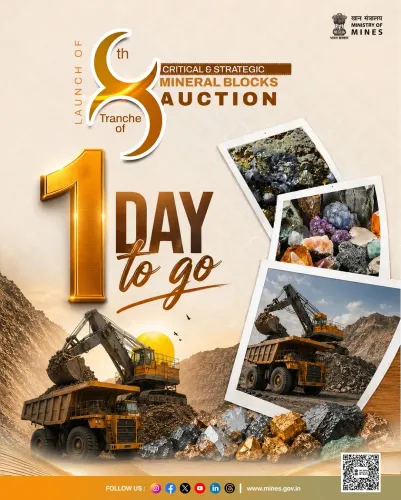
The 9th Tranche of Critical Mineral Auctions and 3rd Tranche of Exploration License Block Auctions were launched on November 5, 2026 .
The MIDPAS-EKAM mobile app introduces digital governance and field-level data access to the mining sector.
The ANVESH dashboard provides aggregated, real-time mineral data to aid data-driven decision-making.
The launches are grounded in the Mines and Minerals (Development and Regulation) Amendment Act, 2023 , which created a dedicated auction route for critical and strategic minerals.
Goa Chief Minister Dr.
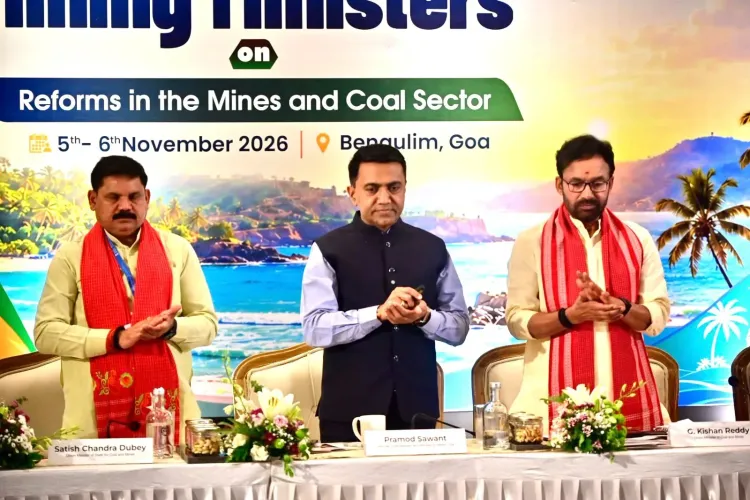
Pramod Sawant and MoS Satish Dubey were present, reflecting cross-federal participation.
The initiative directly targets India's import dependence on critical minerals, particularly from China , to support clean energy and high-tech manufacturing goals.
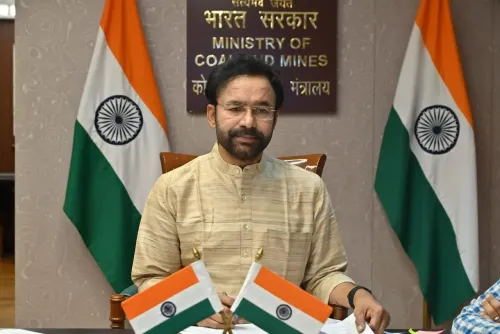
India's mining sector got a significant digital and strategic push on Thursday, November 5, 2026, as Union Coal and Mines Minister G. Kishan Reddy launched a clutch of initiatives designed to deepen domestic mineral exploration and bring data-driven governance to the sector — moves that directly address the country's vulnerability to critical mineral import dependence.
Four launches, one strategic intent
The event saw the simultaneous rollout of four distinct initiatives: the 9th Tranche of Critical Mineral Auctions, the 3rd Tranche of Exploration License Block Auctions, the MIDPAS-EKAM mobile application, and the ANVESH dashboard. Each addresses a different pressure point — supply-side access, exploration incentives, field-level digital governance, and real-time data visibility — but together they form a single coherent push to accelerate the pace at which India can find, bid for, and govern its mineral wealth.
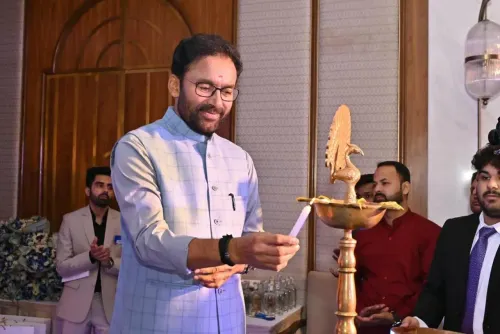
Goa Chief Minister Dr. Pramod Sawant, Minister of State for Coal and Mines Satish Dubey, ministers from several state governments, and senior central government officials were present at the launch, signalling the cross-federal coordination the initiative demands.
Why critical minerals, why now
The word 'critical' carries precise policy weight here. Minerals such as lithium, cobalt, graphite, and rare earths are the foundational inputs for electric vehicles, solar panels, and advanced electronics — and India currently imports a substantial share of them, with China dominating global supply chains. The Mines and Minerals (Development and Regulation) Amendment Act, 2023 created a dedicated auction route for critical and strategic minerals precisely to accelerate domestic sourcing. The 9th tranche of auctions is the latest step in that legislative architecture, with each successive round intended to draw deeper private sector interest into blocks that were previously locked from competition.
India has now run multiple auction cycles since the 2023 amendment — a cadence that signals institutional commitment, not a one-off drive. The question the market will answer is bidder appetite: whether companies see enough geological data confidence and regulatory predictability to commit capital to exploration and extraction at scale.
MIDPAS-EKAM and ANVESH: governance enters the field
The two digital tools may prove as consequential as the auctions themselves. The MIDPAS-EKAM mobile app is designed to bring digital governance and data access directly to field-level mining operations — a layer of transparency that has historically been difficult to enforce across India's geographically dispersed mining landscape. The ANVESH dashboard targets decision-makers with aggregated, real-time mineral data, aiming to shift planning from anecdotal to analytical.
Faster clearances, reduced information asymmetry, and a verifiable audit trail are the practical outcomes these tools are designed to deliver. Whether state governments — the entities that actually administer most mining licences — adopt the platforms at pace will determine how quickly the efficiency gains show up on the ground.
The Viksit Bharat framing
Minister Reddy explicitly tied the launches to Prime Minister Narendra Modi's Viksit Bharat (Developed India) vision, describing the goal as building 'a resilient, technology-driven and self-reliant mining sector.' That framing is not incidental — it places the mining push inside the larger Atmanirbhar Bharat supply-chain sovereignty argument, where domestic mineral security is positioned as a prerequisite for India's clean energy and manufacturing ambitions.
India is racing to lock in mineral supply before global competition for the same resources intensifies further. Every auction tranche that closes is a block of that future secured — or left open to chance.
Point of View
And central digital platforms only deliver value if sub-national adoption follows. Cumulatively, these moves position India's mineral strategy as a sustained, multi-year infrastructure build rather than a reactive response to any single supply shock.
NationPress
6 Nov 2026
Frequently Asked Questions
What is the 9th Tranche of Critical Mineral Auctions in India?
It is the ninth successive round of government-run auctions for mineral blocks containing critical minerals — such as lithium, cobalt, and rare earths — conducted under the framework created by the Mines and Minerals (Development and Regulation) Amendment Act, 2023. Each tranche opens new blocks to competitive bidding by mining companies.
What is the MIDPAS-EKAM mobile app?
MIDPAS-EKAM is a new mobile application launched by the Ministry of Mines to bring digital governance, data access, and transparency to field-level mining operations across India.
What does the ANVESH dashboard do?
The ANVESH dashboard is a data platform designed to give government planners and officials real-time, aggregated information on mineral exploration activity, supporting data-driven decision-making in the mining sector.
Why is India accelerating critical mineral auctions?
India is heavily import-dependent for minerals essential to electric vehicles, solar panels, and electronics, with China dominating global supply. Domestic auctions aim to reduce that dependence, support clean energy goals, and strengthen supply-chain sovereignty under the Viksit Bharat vision.
Who attended the critical mineral auction launch on November 5, 2026?
Union Minister G. Kishan Reddy presided over the event. Goa Chief Minister Dr. Pramod Sawant, Minister of State for Coal and Mines Satish Dubey, ministers from various state governments, and senior central government officials were also present.