Kishan Reddy Launches 8th Tranche of Critical Mineral Auctions at India Mining Week 2026

Synopsis
Union Mines Minister G. Kishan Reddy launched the 8th Tranche of e-Auction of 20 Critical and Strategic Mineral Blocks at the India Mining Week 2026 Curtain Raiser on July 16, advancing India's push to secure domestic supply chains and attract global mining investment.
Key Takeaways
Union Coal and Mines Minister G.
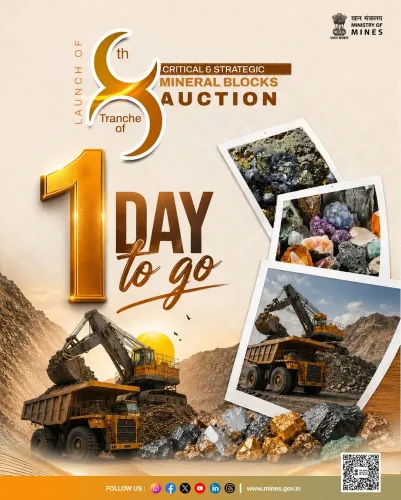
Kishan Reddy launched the 8th Tranche of e-Auction of 20 Critical and Strategic Mineral Blocks on July 16, 2026 .
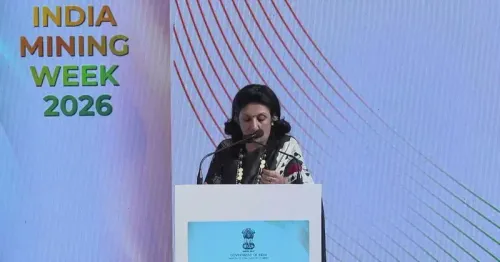
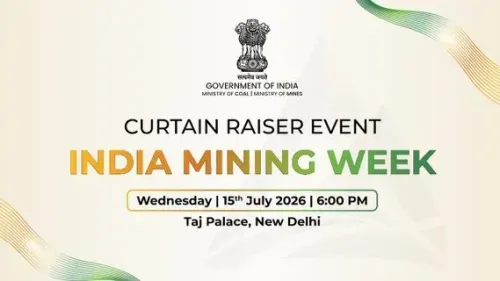
The launch took place at the Curtain Raiser of India Mining Week 2026 , the government's flagship mining investment showcase.
The auction programme is rooted in the Mines and Minerals (Development and Regulation) Amendment Act, 2023 , which opened 12 restricted critical minerals to commercial mining.
India's strategy targets reduced dependence on China -dominated supply chains for lithium, cobalt, nickel, and rare earths critical to EVs and clean energy.
The e-auction format uses a transparent digital mechanism to allocate mineral blocks, a key confidence signal for domestic and global investors.
Award of successful bidders from the 8th Tranche and further policy announcements during the full India Mining Week are the immediate next milestones.
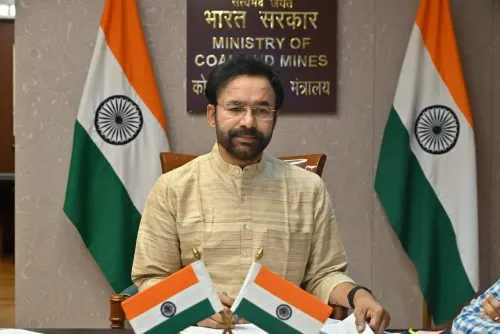
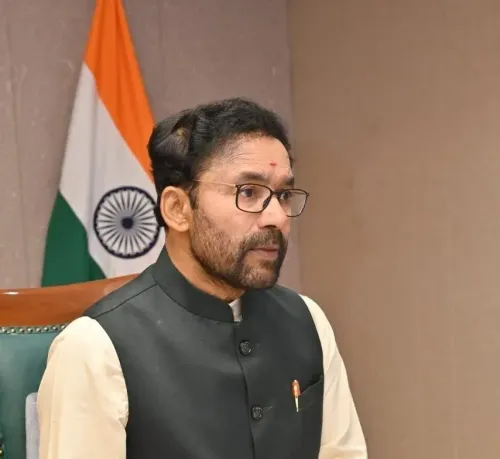
Union Coal and Mines Minister G. Kishan Reddy on Thursday, July 16, 2026, launched the 8th Tranche of e-Auction of 20 Critical and Strategic Mineral Blocks at the Curtain Raiser event of India Mining Week 2026, marking a significant step in the country's push to secure domestic supply chains for critical minerals and attract global mining investment.
Posting on X, the Minister said India is 'shaping the future of mining through bold reforms, innovation, and global partnerships,' adding that the auction launch would strengthen 'India's critical mineral security and investment ecosystem.' He described India Mining Week 2026 as a platform to showcase India's emergence as a 'transparent, technology-driven, and sustainable global mining destination.'
Context
The e-auction of critical and strategic mineral blocks is a transparent electronic mechanism introduced by the Ministry of Mines to allocate mineral blocks to private investors, replacing earlier discretionary allocation methods. The 8th Tranche covers 20 blocks containing critical and strategic minerals, continuing an incremental pipeline of auctions that began with the first tranche in late 2023.
India Mining Week 2026 is the government's flagship platform to promote the reformed mining sector, demonstrate technology adoption, and court global capital. The Curtain Raiser event served as the formal pre-launch, with the main week-long showcase to follow.
Policy Backdrop
The auction programme draws its legal foundation from the Mines and Minerals (Development and Regulation) Amendment Act, 2023, which enabled commercial mining of 12 previously restricted critical minerals, opening the sector to private and foreign participation for the first time. Successive tranches since then have been designed to signal policy stability and expand the investable pipeline.
India's broader strategic motivation is reducing import dependence on China-dominated global supply chains for minerals such as lithium, cobalt, nickel, and rare earths — materials essential for electric vehicles, batteries, defence electronics, and clean energy infrastructure. New Delhi has also aligned itself with the Minerals Security Partnership, a grouping of like-minded nations working to diversify critical mineral supply chains.
Stakeholders and Impact
The primary beneficiaries of an expanded auction pipeline are domestic and international mining investors, alongside downstream industries including electric vehicle manufacturers and battery cell producers who depend on assured mineral supply to meet production targets. Successful block awards from the 8th Tranche could reduce India's vulnerability to supply shocks in globally traded critical minerals.
The digital e-auction format is designed to improve transparency and reduce the scope for discretionary decision-making, a reform that has been cited by investors as a key confidence-building measure in the Indian mining sector.
What's Next
Attention will now turn to the full India Mining Week 2026 programme, where the government is expected to showcase investment opportunities, technology partnerships, and sustainability frameworks to global stakeholders. The award of successful bidders from the 8th Tranche and any follow-up policy announcements during the week will be closely watched by the mining and clean-energy investment community.
If bidding for the 20 blocks draws strong participation, it would validate the government's strategy of using successive tranches to build a credible, competitive auction market — and could accelerate the timeline for domestic production of minerals currently imported at significant cost.
Point of View
Signals regulatory consistency, and expands the investable pipeline for critical minerals. By anchoring the launch to India Mining Week 2026, the government is consciously packaging domestic policy milestones for an international investor audience, reinforcing the message that India is an alternative to China-linked supply chains. For Minister Kishan Reddy, the event also serves a political function — demonstrating tangible reform momentum in a sector that sits at the intersection of economic security and the energy transition. The real test will come when bidding outcomes are revealed: strong participation would validate the strategy, while thin interest would prompt questions about block quality and fiscal terms.
NationPress
15 Oct 2026
Frequently Asked Questions
What is the 8th Tranche of e-Auction of Critical Mineral Blocks in India?
It is the eighth round of transparent electronic auctions conducted by India's Ministry of Mines to allocate critical and strategic mineral blocks to private investors, covering 20 blocks launched on July 16, 2026.
What is India Mining Week 2026?
India Mining Week 2026 is the government's flagship event to promote the reformed Indian mining sector, attract global investment, and showcase technology and sustainability initiatives in mining.
Why is India auctioning critical mineral blocks?
India is auctioning critical mineral blocks to reduce dependence on China-dominated global supply chains for materials like lithium, cobalt, nickel, and rare earths, which are essential for electric vehicles, batteries, and clean energy.
What law enabled India's critical mineral auctions?
The Mines and Minerals (Development and Regulation) Amendment Act, 2023 enabled commercial mining of 12 previously restricted critical minerals, providing the legal basis for the auction programme.
Who is G. Kishan Reddy?
G. Kishan Reddy is India's Union Minister of Coal and Mines and also serves as the BJP's Telangana state president. He launched the 8th Tranche of critical mineral block auctions on July 16, 2026.