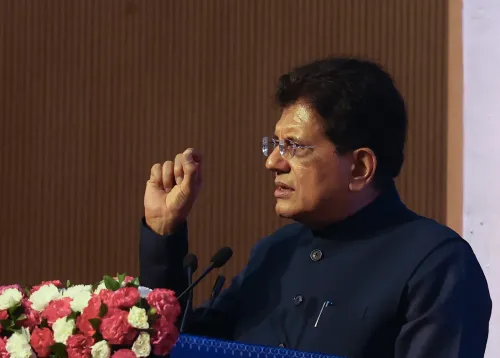
Kishan Reddy highlights 12 years of critical minerals push
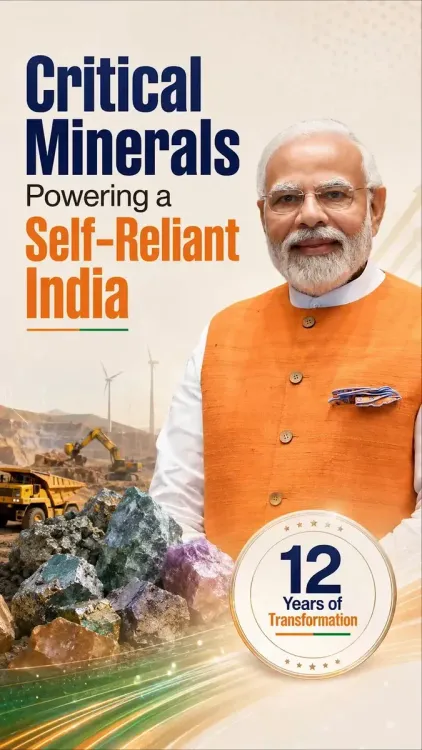
Synopsis
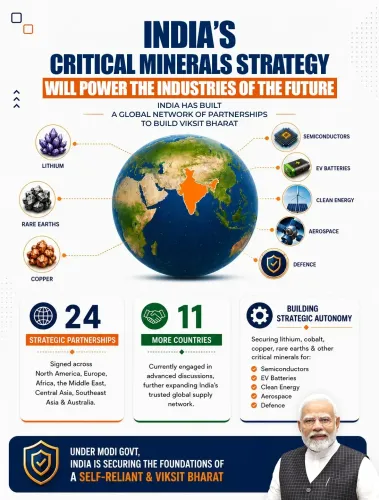
Union Minister G. Kishan Reddy has outlined the Modi government's twelve-year critical minerals record: 46 blocks auctioned, 550-plus exploration projects, a ₹16,300 crore National Critical Mineral Mission, and five lithium blocks secured in Argentina to anchor India's clean energy supply chain.
Key Takeaways
46 critical mineral blocks have been auctioned by the Modi government over the past twelve years.
More than 550 exploration projects have been undertaken to map and develop India's critical mineral base.
The ₹16,300 crore National Critical Mineral Mission is the flagship scheme driving this transformation.
India has secured five lithium blocks in Argentina to build resilient overseas supply chains for battery materials.
The MMDR Amendment Act 2023 enabled private and competitive auction of lithium and other strategic minerals for the first time.
The initiative supports India's net-zero 2070 goals and the broader Atmanirbhar Bharat framework.
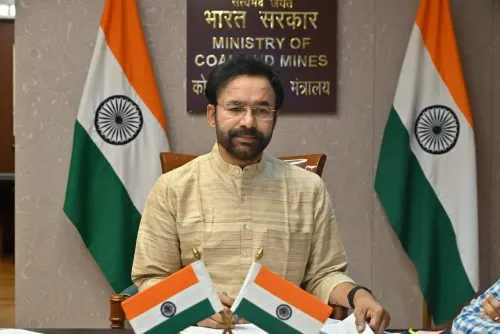
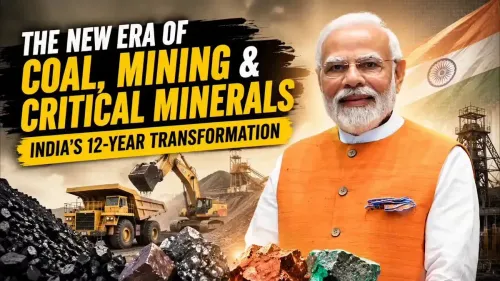
Union Coal and Mines Minister G. Kishan Reddy on Monday, June 8, 2026, highlighted the Narendra Modi government's twelve-year record on critical minerals, citing block auctions, exploration drives, and a flagship national mission as evidence of a strategic push toward a self-reliant clean energy economy.
Context
In his post, the minister stated that 46 critical mineral blocks have been auctioned and more than 550 exploration projects have been undertaken since 2014. He also pointed to the ₹16,300 crore National Critical Mineral Mission as the centrepiece of this effort, describing it as 'accelerating this transformation' toward clean energy self-reliance.
The post additionally noted that India has secured five lithium blocks in Argentina, framing the overseas acquisition as a step toward building 'resilient supply chains' to support the nation's electric mobility and clean energy ambitions.
Policy Backdrop
The push on critical minerals gained formal legislative footing with the Mines and Minerals (Development and Regulation) Amendment Act, 2023, which opened the auction route for lithium and other strategic minerals previously reserved for public-sector entities. That same year, the government notified a list of 30 critical minerals to guide exploration and supply-chain planning.
The National Critical Mineral Mission sits at the intersection of several broader policy frameworks, including the Atmanirbhar Bharat initiative and India's net-zero 2070 climate roadmap. Production Linked Incentive schemes for advanced chemistry cells are designed to create downstream demand for the minerals being sourced through these upstream efforts.
Argentina, which holds some of the world's largest lithium reserves as part of the so-called 'Lithium Triangle', has become a key destination for Indian public-sector mineral diplomacy. Securing exploration rights there is part of a broader strategy to reduce dependence on concentrated suppliers, particularly China, for battery-grade materials.
Stakeholders and Impact
The minerals targeted by these policies — lithium, cobalt, nickel, and others — are essential inputs for electric vehicle batteries and renewable energy storage systems. Domestic EV manufacturers and renewable energy developers stand to benefit most directly from a more secure and cost-competitive supply of these materials.
Mining companies, both public and private, are positioned to participate in further auction rounds as the government expands the pipeline of auctionable blocks. Analysts have noted that the pace at which auctioned blocks move to actual production will be a key test of how effectively the policy translates into industrial output.
What's Next
Attention will now turn to the operational progress of the five Argentina lithium blocks and whether further auction rounds are notified by the Ministry of Mines in the near term. The trajectory of the National Critical Mineral Mission's disbursement and the speed of exploration-to-extraction conversion will determine how quickly India's critical minerals ambitions materialise on the ground.
As global competition for battery materials intensifies ahead of major clean energy capacity additions worldwide, India's ability to convert policy frameworks and overseas agreements into reliable supply will be closely watched by both industry and strategic planners.
Point of View
Arriving as global competition for battery materials sharpens ahead of large-scale clean energy buildouts. By combining domestic metrics — block auctions, exploration projects, a multi-thousand-crore mission — with the Argentina lithium acquisition, the communication signals both industrial ambition and strategic diversification away from China-dominated supply chains. The framing aligns with the BJP's Atmanirbhar Bharat brand, positioning resource security as an extension of economic sovereignty. Whether the policy milestones cited translate into actual production volumes will ultimately determine the credibility of the clean energy self-reliance claim.
NationPress
22 Oct 2026
Frequently Asked Questions
What is the National Critical Mineral Mission India?
The National Critical Mineral Mission is a central government scheme with an outlay of ₹16,300 crore aimed at expanding exploration, mining, and processing of minerals essential for electric vehicles and renewable energy, such as lithium, cobalt, and nickel.
How many critical mineral blocks has India auctioned?
According to Union Minister G. Kishan Reddy , the Modi government has auctioned 46 critical mineral blocks over the past twelve years as part of its clean energy supply chain strategy.
Why did India acquire lithium blocks in Argentina?
India secured five lithium blocks in Argentina to build resilient overseas supply chains for battery-grade lithium, reducing dependence on concentrated suppliers and supporting the country's electric mobility and clean energy ambitions.
What law enabled India to auction critical minerals like lithium?
The Mines and Minerals (Development and Regulation) Amendment Act, 2023 opened the competitive auction route for lithium and other strategic minerals that were previously reserved exclusively for public-sector entities.
How does India's critical minerals push connect to its net-zero goals?
India's critical minerals strategy is designed to secure domestic and overseas supply of materials needed for EV batteries and renewable energy storage, directly supporting the country's net-zero 2070 climate target and the Atmanirbhar Bharat self-reliance framework.