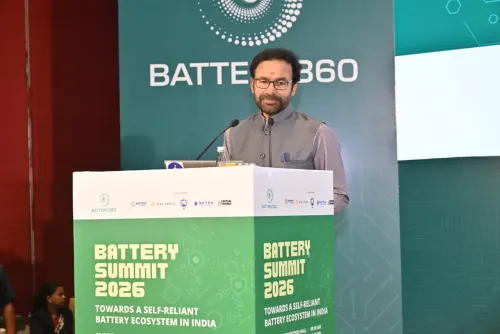
Kishan Reddy Addresses Battery Summit 2026 on Critical Minerals
Synopsis
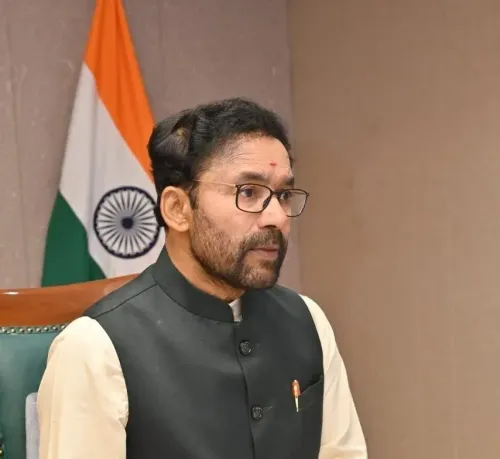
Union Coal and Mines Minister G. Kishan Reddy addressed the Battery Summit 2026 plenary in New Delhi on June 16, highlighting India's National Critical Mineral Mission and its integrated focus on exploration, mining, processing, recycling, and clean energy innovation.
Key Takeaways
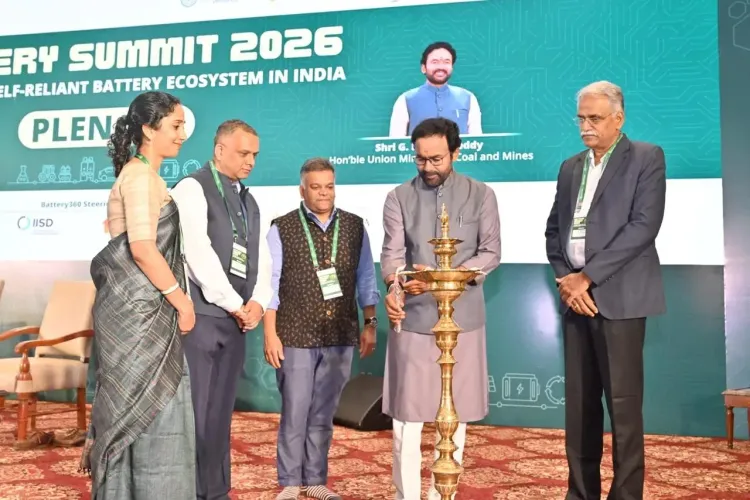
Kishan Reddy addressed the Plenary Session of Battery Summit 2026 in New Delhi on June 16, 2026 .
The minister highlighted India's opportunities in critical minerals, battery manufacturing, recycling, and clean energy technologies.
The National Critical Mineral Mission covers the full value chain: exploration, mining, processing, recycling, and innovation.
The Mines and Minerals (Development and Regulation) Amendment Act, 2023 notified 30 critical minerals and enabled their commercial auctioning.
Khanij Bidesh India Ltd (incorporated 2019 ) acquires overseas lithium, cobalt, and other strategic mineral assets to reduce import dependence.
The Production Linked Incentive scheme for Advanced Chemistry Cells (approved 2021 ) supports domestic battery manufacturing capacity.
Union Coal and Mines Minister G. Kishan Reddy addressed the Plenary Session of the Battery Summit 2026 in New Delhi on Tuesday, June 16, 2026, highlighting India's expanding opportunities across the critical minerals and clean energy value chain. The minister underscored the government's commitment to strengthening domestic capabilities in battery manufacturing, mineral recycling, and clean energy technologies under the framework of the National Critical Mineral Mission.
Context
Speaking at the plenary session, Kishan Reddy stated that the government is 'strengthening the entire critical minerals value chain through the National Critical Mineral Mission, with a focus on exploration, mining, processing, recycling, and innovation.' The remarks came at an industry event dedicated to battery technologies and the minerals that underpin India's clean energy ambitions. The minister credited the direction of the initiative to Prime Minister Narendra Modi.
The Battery Summit 2026 brought together stakeholders from mining, electric vehicle manufacturing, and battery recycling sectors, reflecting the convergence of industrial and policy interest in securing India's clean energy supply chains.
Policy Backdrop
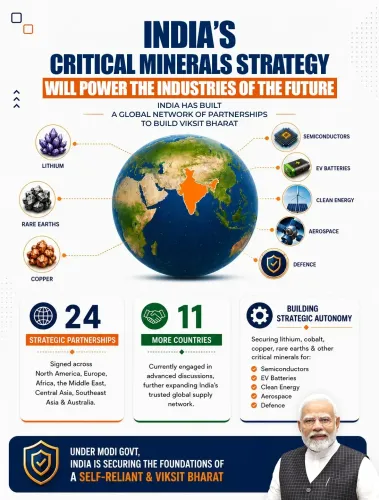
The National Critical Mineral Mission forms the centrepiece of India's strategy to reduce import dependence in minerals essential for batteries and renewable energy infrastructure. The mission spans the full value chain — from geological exploration and domestic mining to processing, recycling, and technological innovation.
The policy lineage is substantial. The Mines and Minerals (Development and Regulation) Amendment Act, 2023 formally notified 30 critical minerals and enabled their commercial auctioning to accelerate domestic production. Before that, Khanij Bidesh India Ltd was incorporated in 2019 to acquire overseas mineral assets — including lithium and cobalt — to hedge against global supply disruptions. The Production Linked Incentive scheme for Advanced Chemistry Cells, approved in 2021, was designed to seed domestic battery manufacturing capacity, complementing the upstream mining push.
Together, these measures reflect a deliberate Atmanirbhar Bharat approach to critical minerals, addressing each node of the supply chain rather than treating them in isolation.
Stakeholders and Impact
The constituencies most directly affected by the mission's progress include domestic mining companies eyeing newly auctionable critical mineral blocks, electric vehicle manufacturers seeking reliable and affordable battery inputs, and battery recyclers whose role in recovering minerals from spent cells is increasingly central to the circular economy ambition embedded in the mission.
India's dependence on imports for key minerals such as lithium and cobalt has long been flagged as a strategic vulnerability, particularly as EV adoption accelerates and renewable energy capacity expands. The government's integrated approach — combining domestic exploration, overseas acquisitions, and recycling incentives — is aimed at distributing this risk across multiple supply sources.
What's Next
Industry observers are watching for the results of forthcoming critical mineral block auctions, which will test whether the legislative framework put in place by the 2023 amendment translates into active exploration and production. Updates to the recycling policy framework under the National Critical Mineral Mission are also anticipated as the government moves from mission design to implementation.
With global supply chains for battery-grade minerals remaining contested — and major economies competing to lock in long-term supply — the pace and outcomes of India's domestic auction programme will be a key indicator of how effectively the country is converting policy intent into mineral security.
Point of View
Implementation-stage programme rather than a policy aspiration. Anchoring the narrative to Prime Minister Modi's leadership also serves a political function, reinforcing the BJP's ownership of the Atmanirbhar Bharat industrial agenda ahead of any forthcoming auction milestones. The real test, however, will be whether block auctions and recycling frameworks produce measurable output — a gap that stakeholders at events like this summit are increasingly pressing the government to close.
NationPress
15 Sept 2026
Frequently Asked Questions
What is the National Critical Mineral Mission?
The National Critical Mineral Mission is a central government initiative that covers the entire value chain for critical minerals in India, including exploration, mining, processing, recycling, and innovation, aimed at reducing the country's import dependence for clean energy and battery applications.
What did Kishan Reddy say at Battery Summit 2026?
At the Battery Summit 2026 plenary in New Delhi on June 16, 2026, Union Minister G. Kishan Reddy highlighted India's growing opportunities in critical minerals, battery manufacturing, recycling, and clean energy technologies, and outlined the government's work to strengthen the critical minerals value chain through the National Critical Mineral Mission.
Which minerals are notified as critical minerals in India?
The Mines and Minerals (Development and Regulation) Amendment Act, 2023 notified 30 critical minerals in India and enabled their commercial auctioning to accelerate domestic exploration and production.
What is Khanij Bidesh India Ltd?
Khanij Bidesh India Ltd is a government-incorporated entity set up in 2019 to acquire overseas mineral assets, particularly lithium and cobalt, to secure India's supply of strategic minerals needed for batteries and clean energy technologies.
What is the PLI scheme for Advanced Chemistry Cells?
The Production Linked Incentive scheme for Advanced Chemistry Cells, approved in 2021, is a government programme designed to build domestic battery manufacturing capacity in India, complementing upstream critical mineral mining and exploration efforts.