Kishan Reddy Addresses Battery Summit 2026 Plenary in Delhi
Synopsis
Union Coal and Mines Minister G. Kishan Reddy addressed the Battery Summit 2026 Plenary in New Delhi on June 16, 2026, reflecting the government's strategy to link domestic critical mineral mining with India's battery manufacturing and EV transition goals.
Key Takeaways
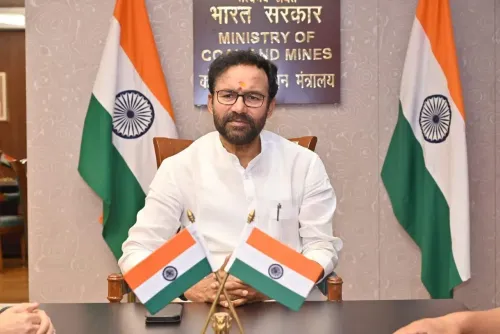
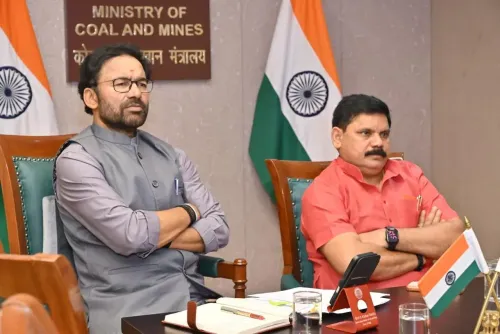
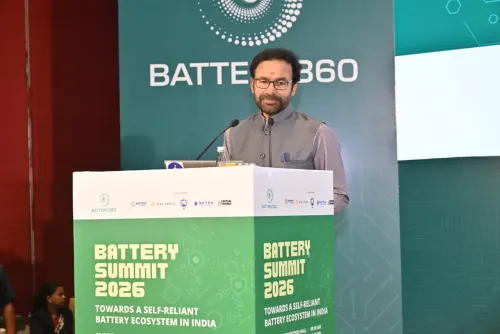
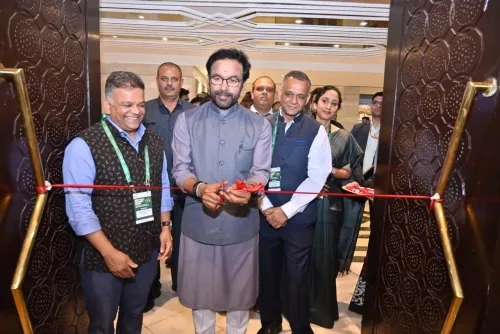
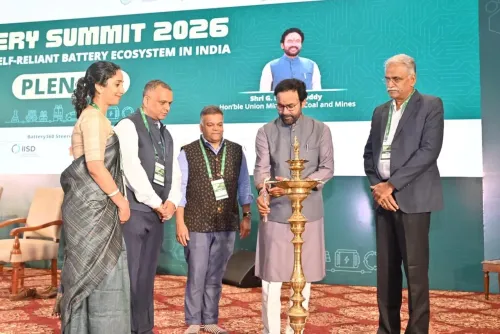
Kishan Reddy , Union Minister of Coal and Mines, addressed the Plenary Session of Battery Summit 2026 in New Delhi on June 16, 2026 .
The PLI scheme for Advanced Chemistry Cells , approved in 2021 , targets 50 GWh of domestic battery manufacturing capacity.
The Mines and Minerals Amendment Act, 2023 enabled auctions of critical minerals including lithium, cobalt, and nickel — key battery inputs.
The Ministry of Coal and Mines frames both coal and non-coal mining as enablers of India's energy transition and EV value chain.
Key stakeholders — EV manufacturers, battery producers, and mining companies — are watching for new auction timelines and domestic content norms.
Upcoming critical mineral block auctions and potential battery recycling guidelines are the immediate policy signals to watch.
Union Coal and Mines Minister G. Kishan Reddy addressed the Plenary Session of Battery Summit 2026 in New Delhi on Tuesday, June 16, 2026, underscoring the central government's push to align domestic mining policy with India's fast-expanding battery and electric vehicle ecosystem.
Context
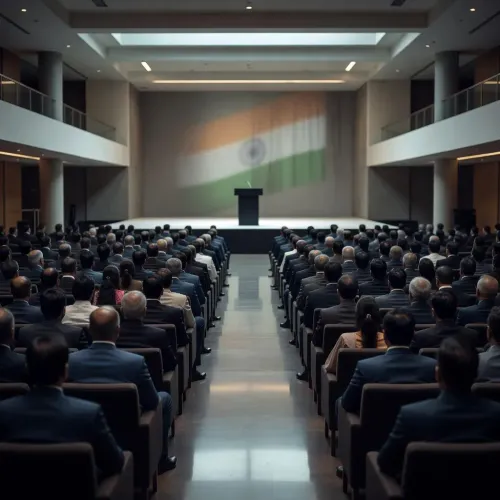
The Battery Summit 2026 brought together policymakers, industry leaders, and technology stakeholders to deliberate on battery manufacturing, critical mineral supply chains, and India's energy transition roadmap. Kishan Reddy's participation as a plenary speaker signals the Ministry of Coal and Mines' increasingly prominent role in the country's clean-energy ambitions.
India's battery sector sits at the intersection of mining and manufacturing policy — two domains that fall squarely within the minister's portfolio. His address is expected to have covered the government's strategy for linking domestic mineral extraction to battery cell production.
Policy Backdrop
The Union Cabinet approved the Production Linked Incentive (PLI) scheme for Advanced Chemistry Cells in 2021, committing public funds to catalyse domestic battery manufacturing and reduce dependence on imports. The scheme targets 50 GWh of domestic cell manufacturing capacity.
Complementing this, the Mines and Minerals (Development and Regulation) Amendment Act, 2023 introduced dedicated provisions for the auction of critical and strategic minerals — including lithium, cobalt, and nickel — the core inputs for modern battery chemistries. Successive Union Budgets since 2021 have deepened this policy architecture, prioritising exploration and block auctions to build a vertically integrated EV value chain on Indian soil.
The Ministry of Coal and Mines has framed both its coal and non-coal mining mandates as complementary enablers of the energy transition, positioning mineral-rich states as future supply anchors for the battery industry.
Stakeholders and Impact
The summit's audience — spanning EV manufacturers, battery producers, and mining companies — stands to be directly shaped by any policy signals the minister may have offered. Domestic battery makers are keenly watching the pace of critical mineral block auctions and the evolution of domestic content requirements that could tilt procurement in their favour.
For Telangana, where Kishan Reddy also serves as BJP state president, the summit carries added political salience: the state has significant mineral assets and an emerging manufacturing corridor that could benefit from central policy nudges on battery supply chains.
Global battery chemistry trends — particularly the shift toward lithium iron phosphate cells and sodium-ion alternatives — have intensified the urgency for India to secure raw material access, making forums like Battery Summit 2026 a key arena for shaping industry consensus.
What's Next
Attention will now turn to the outcomes of upcoming critical mineral block auctions and any fresh guidelines on battery recycling or domestic content norms that the ministry may issue in the months ahead. The government's ability to translate summit-level policy intent into auction timelines and investor-ready frameworks will determine how quickly India can close the gap with established battery manufacturing hubs in China, South Korea, and the United States.
As India races toward its 2030 EV adoption targets, the convergence of mining reform and manufacturing incentives — with ministers like Kishan Reddy at the interface — will be a defining variable in whether the country builds a self-sufficient battery value chain or remains reliant on imported cells.
Point of View
Not merely a legacy fossil-fuel administrator. By positioning critical mineral auctions alongside the PLI for Advanced Chemistry Cells, the government is attempting a rare feat of vertical integration — from mine to battery pack — that few democracies have managed at scale. The minister's dual role as BJP's Telangana president adds a regional dimension: mineral-rich Telangana has a direct stake in how central policy shapes the geography of India's battery supply chain. Whether the summit translates into accelerated auction calendars or tighter domestic content rules will be the real test of this policy ambition.
NationPress
15 Sept 2026
Frequently Asked Questions
What is Battery Summit 2026?
Battery Summit 2026 is a major industry and policy conclave held in New Delhi that brings together government officials, EV manufacturers, battery producers, and mining companies to deliberate on battery technology, critical mineral supply chains, and India's energy transition strategy.
Why is the Coal and Mines Minister speaking at a battery summit?
India's battery manufacturing ecosystem depends on critical minerals such as lithium, cobalt, and nickel that fall under the Ministry of Coal and Mines' purview. The ministry oversees critical mineral block auctions and exploration policy, making it a key enabler of the domestic battery value chain.
What is India's PLI scheme for Advanced Chemistry Cells?
The Production Linked Incentive scheme for Advanced Chemistry Cells was approved by the Union Cabinet in 2021 to incentivise domestic manufacturing of advanced battery cells, targeting 50 GWh of capacity and reducing India's dependence on imported batteries.
What did the Mines and Minerals Amendment Act 2023 change?
The Mines and Minerals (Development and Regulation) Amendment Act, 2023 introduced specific provisions for the auction of critical and strategic minerals — including lithium, cobalt, and nickel — to accelerate domestic supply of key inputs for batteries and electronics.
What should we watch after Battery Summit 2026?
Key developments to monitor include the pace and outcomes of upcoming critical mineral block auctions, any new domestic content requirements for battery cells, and potential guidelines on battery recycling that the Ministry of Coal and Mines may issue.