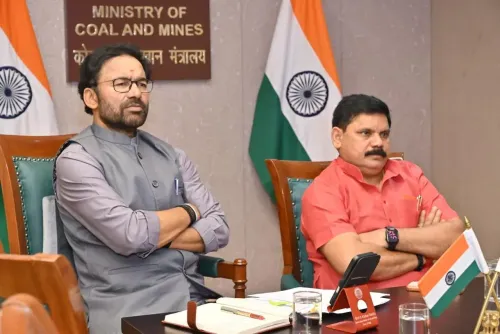
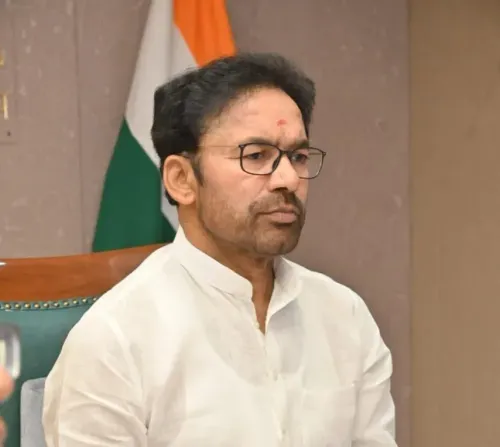
Kishan Reddy Reviews Coal Ministry's Key Projects and Output
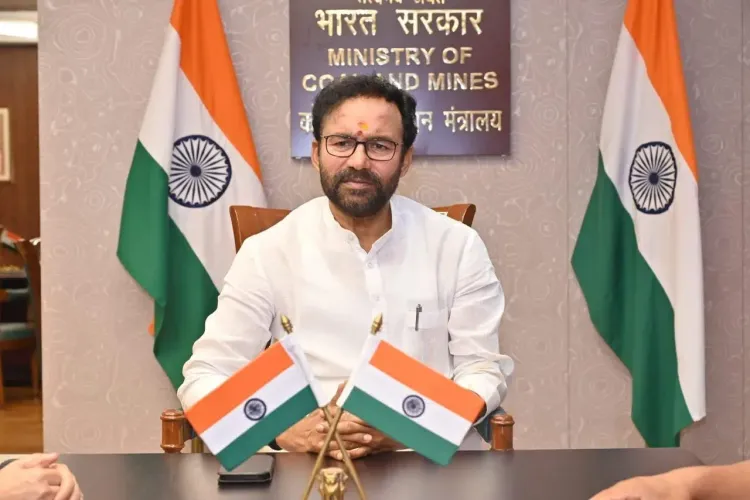
Synopsis
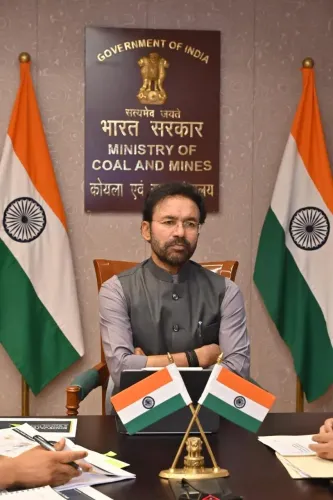
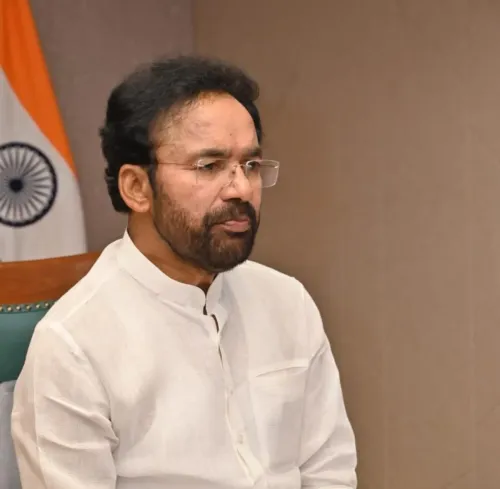
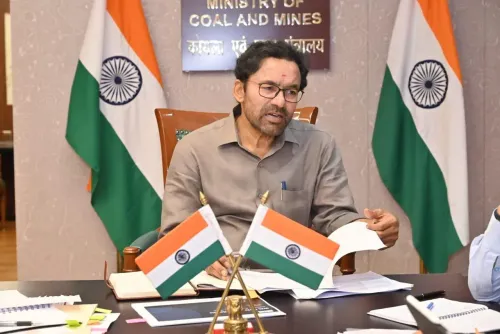
Union Coal and Mines Minister G. Kishan Reddy on 21 July 2026 chaired a high-level review with senior Ministry of Coal officials, assessing progress on key projects and examining measures to boost production, dispatch, and operational efficiency across India's coal sector.
Key Takeaways
Kishan Reddy , Union Minister of Coal and Mines, chaired a review meeting with senior Ministry of Coal officials on 21 July 2026 .
The meeting assessed progress on key initiatives and ongoing projects in the coal sector.
Coal production, dispatch performance, and operational efficiency measures were the core agenda items.
High-level review meetings are a standard accountability mechanism used to track metrics across Coal India subsidiaries and captive mines.
India's coal governance has been progressively reformed since 2015 , including the opening of commercial mining to the private sector in 2020 .
Power utilities and mining companies are the primary stakeholders affected by efficiency and dispatch outcomes from such reviews.
Union Coal and Mines Minister G. Kishan Reddy chaired a review meeting with senior officials of the Ministry of Coal on Tuesday, 21 July 2026, assessing the progress of key initiatives and ongoing projects across the sector. The minister reviewed coal production and dispatch figures while examining measures to further enhance operational efficiency at mines and allied infrastructure.
Context
Posting on X, Kishan Reddy stated that the meeting focused on evaluating 'coal production, dispatch, and measures to further enhance operational efficiency.' The session involved senior bureaucrats of the ministry, signalling a structured, top-down accountability exercise within the coal governance framework. Such high-level reviews are a standard instrument used by the ministry to track performance metrics across Coal India Limited subsidiaries and captive mine operators.
The minister also tagged the official @CoalMinistry handle, indicating the communication carries institutional weight beyond a personal update.
Policy Backdrop
India's coal governance has undergone significant structural change over the past decade. The Coal Mines (Special Provisions) Act, 2015 enabled transparent re-allocation of coal blocks following a Supreme Court order cancelling earlier allocations. A further milestone came in 2020, when commercial coal mining was opened to private sector participation under the Atmanirbhar Bharat reform package, broadening the field of operators beyond the state-owned monopoly.
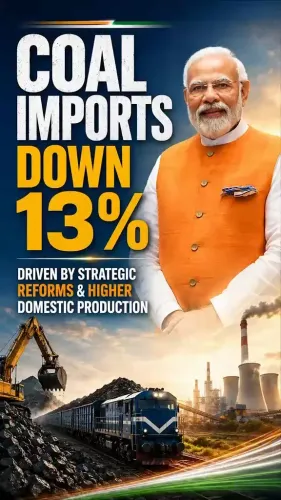
Successive governments have prioritised raising domestic coal output as a core energy-security strategy, aiming to curb dependence on thermal-coal imports and ensure reliable base-load power generation for an economy with growing electricity demand. Operational efficiency — covering mine productivity, rail evacuation, and dispatch logistics — sits at the centre of this strategy.
Stakeholders and Impact
Coal India Limited and its subsidiaries, private commercial mine operators, and captive mine holders are the primary entities whose performance would have come under scrutiny in such a review. Downstream, power utilities that depend on domestic coal supply for thermal generation are directly affected by any improvements or shortfalls in production and dispatch timelines.
Sustained efficiency gains at the mining and logistics stage translate into lower input costs for electricity generators, with downstream benefits for industrial consumers and household electricity tariffs. Import substitution through higher domestic output also has implications for India's current account and foreign exchange expenditure on energy.
What's Next
The ministry's monthly coal production and offtake data releases will be the immediate indicator of whether review-level directives are translating into measurable output gains. Observers will also watch for any follow-up policy adjustments on mine evacuation infrastructure — particularly rail siding capacity and first-mile connectivity — which have historically been cited as bottlenecks limiting dispatch efficiency.
With India's power demand continuing to rise, the pressure on the Ministry of Coal to deliver consistent production growth and supply reliability is expected to intensify through the remainder of 2026.
Point of View
While routine in format, reflects the sustained institutional pressure on the Ministry of Coal to deliver on India's energy-security imperatives as domestic power demand climbs. For Kishan Reddy, who holds the dual role of Union Minister and BJP Telangana state president, visible ministerial activity in a resource-critical portfolio carries both governance and political weight. The emphasis on 'operational efficiency' signals that the ministry's current focus has shifted from structural reform — largely completed through the 2015 and 2020 legislative changes — toward execution and logistics optimisation. Progress on mine evacuation infrastructure and dispatch reliability will be the real test of whether these reviews produce measurable outcomes.
NationPress
21 Oct 2026
Frequently Asked Questions
Why did Kishan Reddy hold a review meeting with the Ministry of Coal?
Union Coal and Mines Minister G. Kishan Reddy held the meeting to assess the progress of key initiatives and ongoing projects, with a focus on coal production, dispatch, and improving operational efficiency across the sector.
What is the Ministry of Coal responsible for in India?
The Ministry of Coal is the central government body responsible for policy on exploration, production, and allocation of India's coal resources, overseeing entities such as Coal India Limited and regulating captive and commercial mines.
How has India's coal sector been reformed in recent years?
Major reforms include the Coal Mines (Special Provisions) Act of 2015, which enabled transparent re-allocation of cancelled coal blocks, and the 2020 decision under Atmanirbhar Bharat to open commercial coal mining to private sector participation.
Who are the main stakeholders affected by coal ministry decisions?
The primary stakeholders are coal mining companies including Coal India Limited subsidiaries, private commercial mine operators, captive mine holders, and power utilities that rely on domestic coal for thermal electricity generation.
What should we watch for after this coal ministry review?
Key indicators to watch include the ministry's monthly coal production and offtake data, and any policy announcements on mine evacuation infrastructure such as rail siding capacity and first-mile connectivity improvements.