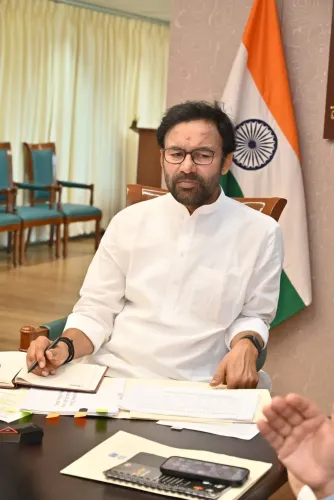
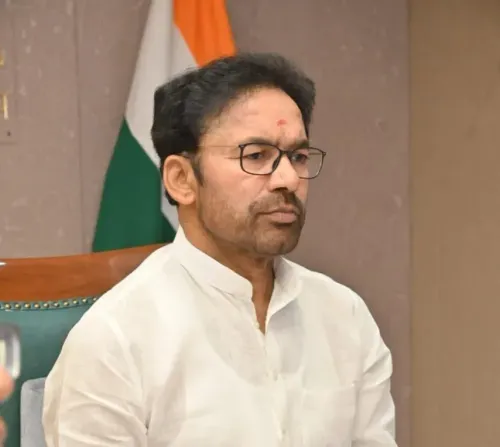
Kishan Reddy Chairs Coal Ministry Review on Output and Dispatch
Synopsis
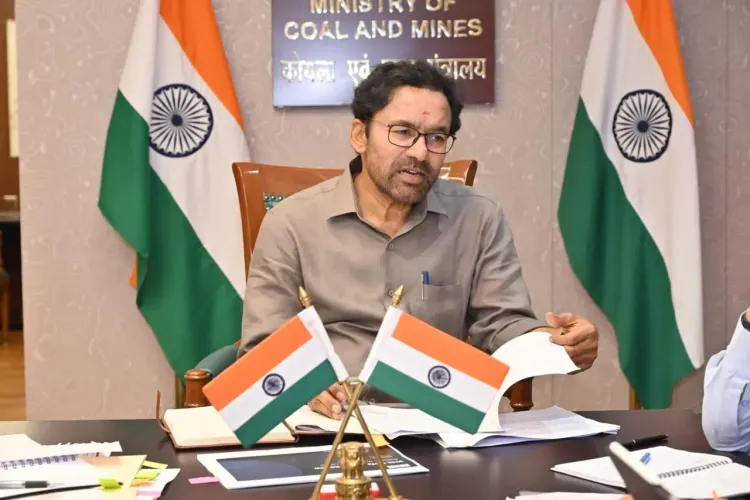
Union Coal and Mines Minister G. Kishan Reddy chaired a high-level review with Ministry of Coal officials in New Delhi on 25 June 2026, focusing on production targets, dispatch performance, and strategies to strengthen India's domestic energy supply chain.
Key Takeaways
Kishan Reddy , Union Minister of Coal and Mines, chaired a review meeting with senior Ministry of Coal officials in New Delhi on 25 June 2026 .
The meeting covered coal production levels, dispatch performance, ongoing sector initiatives, and operational efficiency strategies.
The review is part of routine ministerial monitoring to track progress against annual production and dispatch targets.
Key downstream stakeholders include thermal power plants , coal-bearing states such as Jharkhand , Chhattisgarh , and Odisha , and both public and private mining companies.
India's coal sector was opened to commercial private mining in 2020 , a reform aimed at reducing import dependence and boosting domestic output.
Next quarterly production and dispatch data from the ministry will indicate whether efficiency measures are delivering results.
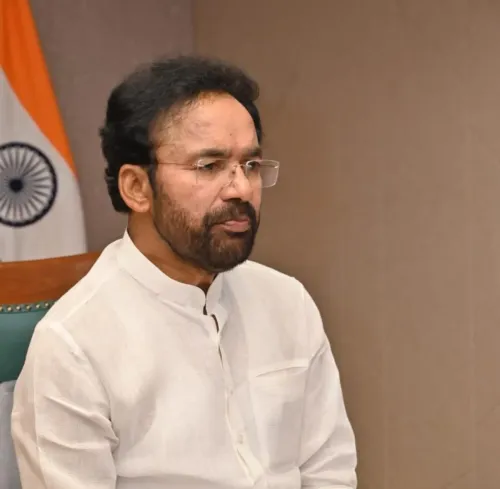
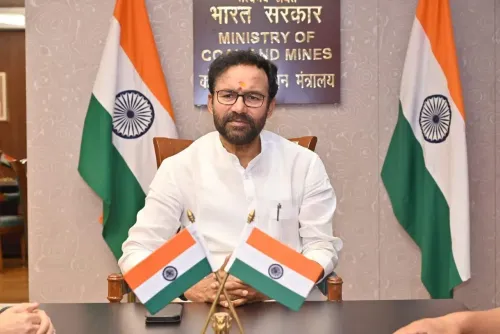
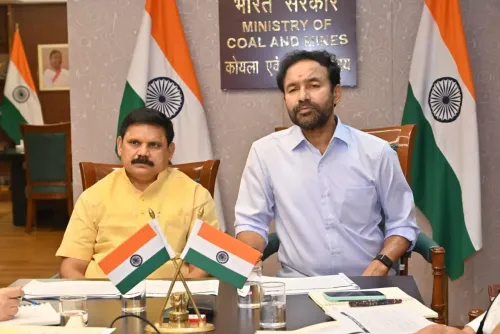
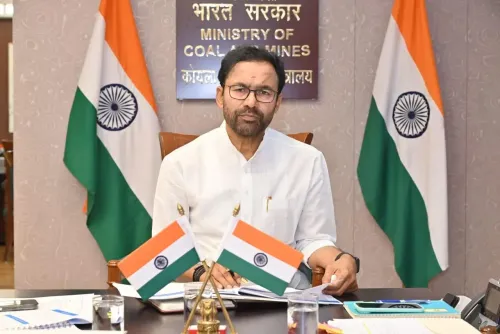
Union Coal and Mines Minister G. Kishan Reddy chaired a review meeting with senior officials of the Ministry of Coal in New Delhi on Thursday, 25 June 2026, examining coal production, dispatch performance, ongoing initiatives, and strategies to improve operational efficiency and ensure a stable energy supply for the country.
Context
The minister convened the meeting at the ministry headquarters, bringing together senior officials to take stock of where coal output and logistics stand against national targets. Posting on X, Reddy stated that discussions covered 'coal production, dispatch, ongoing initiatives, and strategies to enhance operational efficiency and ensure a reliable energy supply for the nation.'
The Ministry of Coal is the nodal body for policy formulation, coal block allocation, and regulation of production and dispatch across India's vast coal sector, which remains the backbone of the country's base-load power generation.
Policy Backdrop
India's coal governance has undergone significant structural changes over the past decade. The Coal Mines (Special Provisions) Act, 2015 re-allocated cancelled coal blocks and introduced transparency through competitive auctions, ending decades of opaque allocation.
In 2020, the government opened commercial coal mining to private players, injecting competition and aiming to scale up domestic output. Both reforms are part of a broader push to reduce India's dependence on imported coal and align the sector with Atmanirbhar Bharat goals in energy self-sufficiency.
Review meetings of this nature form part of routine ministerial monitoring, used to assess progress against annual production and dispatch targets and to identify operational bottlenecks before they affect power supply chains.
Stakeholders and Impact
Thermal power plants across India are the most immediate downstream stakeholders, as coal stock levels at generating stations directly determine grid stability and electricity availability for households and industry. Any improvement in dispatch efficiency translates quickly into reduced power deficits.
Coal-bearing states — including Jharkhand, Chhattisgarh, Odisha, and Madhya Pradesh — also have a direct stake, since royalties and surface rent from coal extraction are significant revenue streams for state governments. Coal mining companies, both public-sector and private, are expected to align their operational plans with any directives emerging from such reviews.
Reddy, who also serves as BJP Telangana state president, brings a dual perspective to the role — overseeing national coal policy while remaining attuned to energy needs in a southern state that is a significant power consumer.
What's Next
The ministry is expected to release its next set of quarterly production and dispatch statistics, which will indicate whether the efficiency measures discussed in the meeting are translating into measurable gains. Follow-up policy directives on operational reforms — particularly around logistics and washery capacity — will be closely watched by the sector.
As India's power demand continues to grow with rising industrial activity and summer cooling loads, consistent coal supply remains a critical variable in the country's energy security calculus. The outcome of meetings like this one will shape whether domestic production can keep pace without a renewed reliance on costly imports.
Point of View
Who holds both a national portfolio and a state party presidency, demonstrating hands-on oversight of a critical infrastructure ministry reinforces his political standing. The meeting fits into a longer arc of energy nationalism — successive governments have treated coal self-sufficiency as a strategic imperative, and routine reviews are the administrative sinew that holds that ambition together.
NationPress
24 Sept 2026
Frequently Asked Questions
What was discussed in G. Kishan Reddy's coal ministry review meeting on 25 June 2026?
The meeting covered coal production performance, dispatch logistics, ongoing ministry initiatives, and strategies to enhance operational efficiency and ensure a reliable energy supply across India.
Who is G. Kishan Reddy?
G. Kishan Reddy is the Union Minister of Coal and Mines in the Government of India and also serves as the BJP Telangana state president . He is responsible for national coal policy, block allocations, and production oversight.
Why are coal ministry review meetings important for India?
India relies heavily on coal for base-load electricity generation. Review meetings allow the minister and senior officials to track production and dispatch against targets, identify bottlenecks, and issue corrective directives before supply gaps affect power plants.
How has India's coal sector changed in recent years?
Two landmark reforms reshaped the sector: the Coal Mines (Special Provisions) Act, 2015 introduced transparent auction-based block allocation, and a 2020 policy opened commercial coal mining to private companies, increasing competition and domestic output capacity.
Which states are most affected by coal ministry decisions?
Coal-bearing states — primarily Jharkhand , Chhattisgarh , Odisha , and Madhya Pradesh — are most directly affected, as coal royalties form a significant part of their revenues and mining activity drives local employment.