Kishan Reddy calls on industry, start-ups to build India's battery ecosystem
Synopsis
Union Mines Minister G. Kishan Reddy has called on industry, innovators, researchers, and start-ups to co-build India's next-generation battery and critical minerals ecosystem, deepening a policy drive spanning domestic auctions, overseas acquisitions, and manufacturing incentives aimed at reducing dependence on Chinese processing capacity.
Key Takeaways
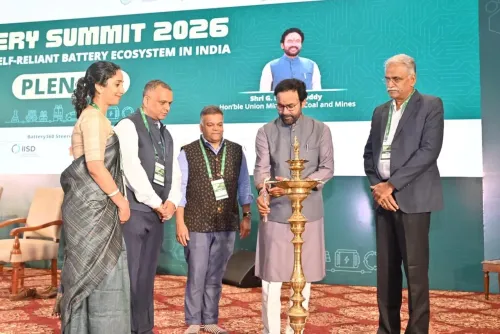
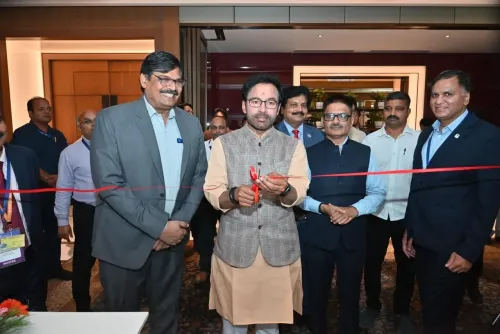
Kishan Reddy , Union Coal and Mines Minister, on June 16, 2026 appealed to industry, innovators, researchers, and start-ups to partner in India's battery and critical minerals ecosystem.
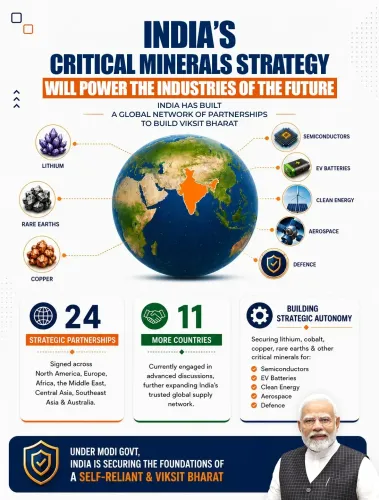
India's critical minerals policy traces back to the Mines and Minerals (Development and Regulation) Amendment Act, 2021 , which listed 24 critical minerals and enabled private exploration.
The National Critical Mineral Mission announced in Union Budget 2024-25 focuses on exploration, recycling, and processing infrastructure.
The PLI Scheme for ACC Batteries (approved 2021 ) aims to build domestic manufacturing capacity for electric vehicle and storage batteries.
KABIL , a PSU joint venture formed in 2019 , is pursuing overseas acquisitions of lithium, cobalt, and other critical mineral assets.
The next round of critical mineral block auctions and new public-private partnership guidelines for battery-grade refining are the immediate policy milestones to watch.
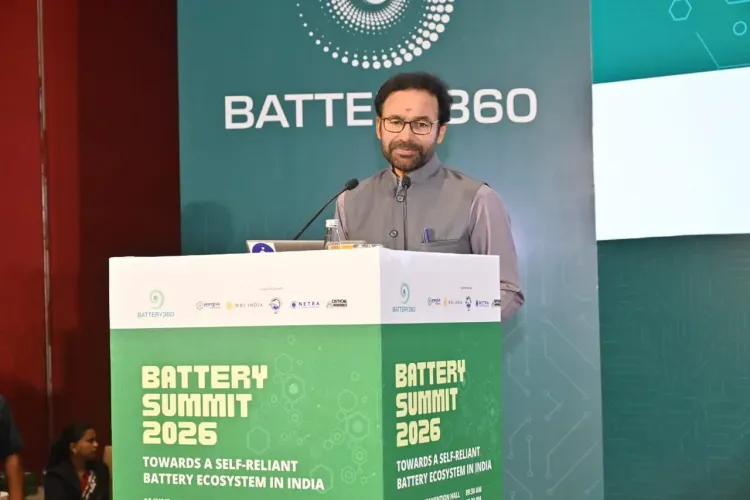
Union Coal and Mines Minister G. Kishan Reddy on Tuesday, June 16, 2026, called upon industry leaders, innovators, researchers, and start-ups to join hands in developing India's next-generation battery and critical minerals ecosystem, signalling the government's intent to deepen private-sector participation in a sector it considers strategically vital.
Context
In a post on X, Kishan Reddy stated that he had reached out to key stakeholders — spanning industry, innovation, research, and early-stage ventures — to partner in building the country's battery and critical minerals value chain. The appeal reflects a broader government push to reduce India's dependence on imported battery technology and mineral processing, particularly from China, which currently dominates global refining capacity for lithium, cobalt, and rare-earth elements.
The minister's outreach comes at a time when India is simultaneously pursuing domestic mineral auctions, overseas asset acquisitions, and manufacturing incentives to create an end-to-end supply chain for advanced batteries used in electric vehicles and grid storage.
Policy Backdrop
The institutional groundwork for this push dates to the Mines and Minerals (Development and Regulation) Amendment Act, 2021, which first enumerated 24 critical minerals and opened the door to private-sector exploration. A first tranche of critical mineral block auctions — covering lithium, graphite, manganese, and rare-earth bearing areas — was conducted in late 2023.
The Union Budget 2024-25 formalised this agenda through the National Critical Mineral Mission, designed to accelerate exploration, recycling, and processing infrastructure across the country. Separately, the Production Linked Incentive (PLI) Scheme for Advanced Chemistry Cell (ACC) Batteries, approved in 2021, is intended to build domestic manufacturing capacity for the cells that power electric vehicles and energy storage systems.
On the overseas front, Khanij Bidesh India Ltd (KABIL), a public-sector joint venture formed in 2019, is mandated to acquire lithium, cobalt, and other critical mineral assets abroad, providing an upstream hedge against supply-chain disruptions.
Stakeholders and Impact
The minister's call is directed at a wide coalition: established EV battery manufacturers, mineral exploration start-ups, and academic and research institutions. Start-ups in battery chemistry, recycling technology, and mineral processing stand to benefit from any new public-private partnership frameworks that may follow such engagement.
For India's EV sector, securing a reliable domestic supply of battery-grade materials is critical to meeting the government's 2030 electric-mobility targets and its longer-term 2070 net-zero commitment. Vertical integration — from raw mineral extraction through cell manufacturing — is seen as the only durable path to price competitiveness and energy security.
What's Next
Attention will now turn to the results of the next round of critical mineral block auctions under the Ministry of Mines, as well as any new policy guidelines for battery-grade refining and recycling facilities that could emerge from the public-private dialogue the minister has initiated. Whether the government translates this stakeholder outreach into concrete partnership frameworks — with funding, regulatory fast-tracks, or co-investment mechanisms — will determine the pace at which India's battery supply chain matures.
Point of View
Innovation, and research must be co-opted. Coming after the National Critical Mineral Mission and successive auction tranches, this outreach suggests the next policy phase will likely involve structured public-private co-investment frameworks. The speed at which the Ministry of Mines converts stakeholder interest into binding partnerships will be a key indicator of whether India can meaningfully close the gap with Chinese processing dominance before its 2030 EV targets come due.
NationPress
15 Sept 2026
Frequently Asked Questions
What did Kishan Reddy say about India's battery ecosystem?
Union Mines Minister G. Kishan Reddy called upon industry leaders, innovators, researchers, and start-ups to partner in building India's next-generation battery and critical minerals ecosystem, as stated in his post on June 16, 2026.
What is India's National Critical Mineral Mission?
The National Critical Mineral Mission was announced in the Union Budget 2024-25 to accelerate mineral exploration, recycling, and processing infrastructure in India, reducing dependence on foreign — particularly Chinese — supply chains.
What is KABIL and what does it do?
Khanij Bidesh India Ltd (KABIL) is a public-sector joint venture formed in 2019 to acquire lithium, cobalt, and other critical mineral assets overseas, providing India with an upstream supply-chain hedge.
What is the PLI scheme for ACC batteries?
The Production Linked Incentive (PLI) Scheme for Advanced Chemistry Cell (ACC) Batteries, approved in 2021, provides financial incentives to manufacturers to build domestic capacity for the battery cells used in electric vehicles and energy storage systems.
Why is India focused on critical minerals?
India is building a domestic critical minerals supply chain to reduce dependence on Chinese processing capacity, meet its 2030 electric-mobility targets, and work toward its 2070 net-zero climate commitment.