Kishan Reddy flags 1 bn tonne coal output, 212 block auctions

Synopsis
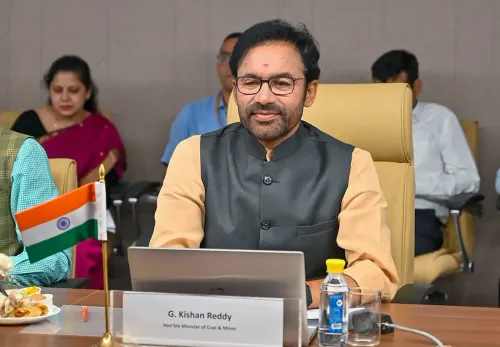
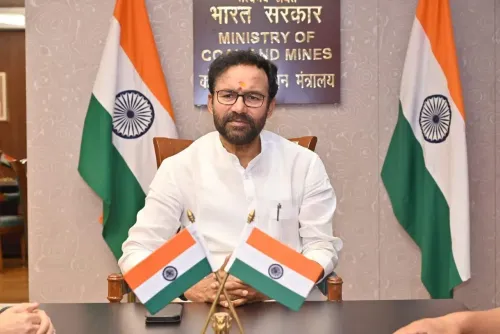
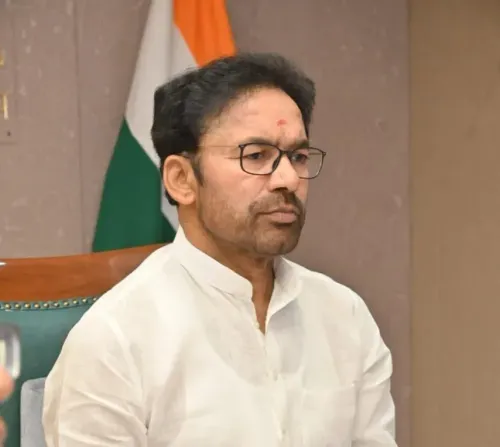
Union Coal and Mines Minister G. Kishan Reddy on 9 June 2026 cited India crossing 1 billion tonnes of coal output for the second consecutive year, a record 212 mineral block auctions in FY 2025-26, and lithium acquisitions in Argentina as markers of the sector's transformation under PM Modi.
Key Takeaways
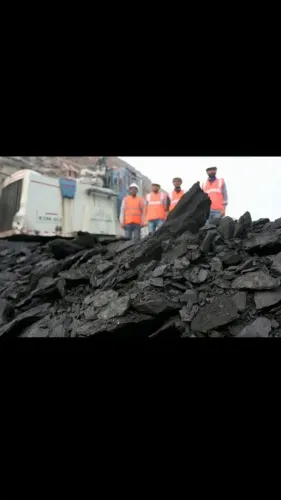
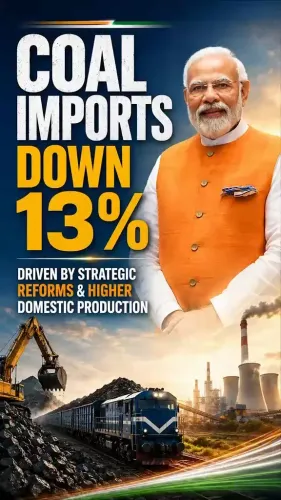
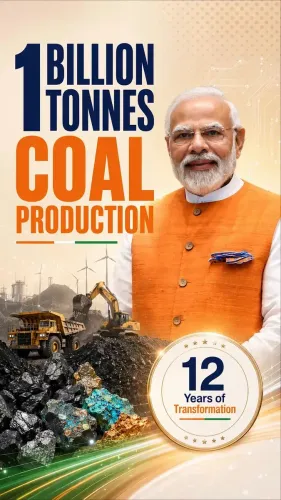
India crossed the 1 billion tonne coal production mark for the second consecutive year , reducing thermal-coal import dependence.
A record 212 mineral blocks were auctioned in FY 2025–26 , reflecting the shift from discretionary allocation to transparent auctions.
46 critical mineral blocks have been auctioned domestically, alongside strategic lithium block acquisitions in Argentina .
Digital tools — including AI-driven surveillance and unified mining portals — have been deployed for 24/7 governance of the sector.
The Jharia Master Plan and First Mile Connectivity initiative represent the sustainability and community-welfare dimensions of current mining policy.
These milestones are being framed under the #12yearsoftransformation narrative ahead of the Viksit Bharat 2047 roadmap.
Union Coal and Mines Minister G. Kishan Reddy on Tuesday, 9 June 2026 highlighted a series of milestones in India's coal and mining sectors, citing record production figures, a surge in mineral block auctions, and steps to secure critical minerals as part of the government's Atmanirbhar Bharat push.
Context
In his post, Kishan Reddy stated that India had crossed the 'historic 1 billion tonne coal production mark for the second consecutive year,' a development he described as 'drastically slashing import dependence.' He also cited a record 212 mineral blocks auctioned in FY 2025–26 alone, framing the shift as a move from 'discretionary allocation to absolute transparency.' The post was tagged #12yearsoftransformation, aligning the milestones with the BJP-led government's tenure.
Policy Backdrop
The auction-based mineral allocation framework traces its origins to the MMDR Amendment Act of 2015, which replaced the earlier administrative-discretion model after a Supreme Court order cancelled prior allocations. The Commercial Coal Mining Policy of 2020 further opened coal blocks to private players beyond captive use, while the National Mineral Policy 2019 emphasised exploration and reduced import reliance. These reforms collectively underpin the production and auction numbers cited by the minister.
On the critical minerals front, the government announced a Critical Minerals Mission framework in 2023 to accelerate domestic and overseas acquisition of lithium, cobalt, and rare earths. Kishan Reddy referenced the auction of 46 critical mineral blocks and 'strategic lithium block acquisitions in Argentina' — where Indian public-sector firms have pursued lithium brine assets to secure raw materials for electric vehicles and renewable energy storage.
Stakeholders and Impact
The coal output milestone directly affects power and steel industries, which are the primary consumers of domestic coal. Sustained domestic production at this scale reduces the foreign-exchange burden of thermal-coal imports, a recurring concern for energy-sector planners. The minister also pointed to the Jharia Master Plan — a long-running rehabilitation and fire-control project for the Jharia coalfields — as evidence of community-first governance in legacy mining zones.
On digital governance, the post highlighted 'unified digital mining portals, AI-driven surveillance, and analytics dashboards ensuring 24/7 transparency.' The First Mile Connectivity initiative, aimed at shifting coal transport from road to rail and conveyor systems, was cited as a sustainable logistics measure that also reduces emissions and road wear in mining belts.
What's Next
The next tranches of critical-mineral and coal-block auctions are expected in FY 2026–27, with parliamentary attention likely on any new mining legislation and state-level royalty revisions. The government's overseas lithium strategy — particularly in Argentina — will be watched as a barometer of India's readiness to compete globally for battery-supply-chain assets. Progress on the Jharia Master Plan and the broader Viksit Bharat 2047 resource-security roadmap will remain key benchmarks for the ministry's performance.
Point of View
And its framing around 'transparency' and 'record auctions' is a direct counter-narrative to legacy criticism of opaque coal-block allocation. The 1-billion-tonne production claim, if sustained, would represent a structural shift in India's energy self-sufficiency calculus, reducing the current-account pressure from coal imports. The pivot to critical minerals — particularly the Argentina lithium play — signals that the ministry is repositioning itself from a legacy fossil-fuel administrator to a stakeholder in the clean-energy supply chain, a politically significant rebranding. How quickly these auction numbers translate into operational mines and actual output will determine whether the transformation narrative holds through the next electoral cycle.
NationPress
21 Sept 2026
Frequently Asked Questions
Has India really produced 1 billion tonnes of coal in a year?
Union Coal and Mines Minister G. Kishan Reddy stated on 9 June 2026 that India crossed the 1 billion tonne coal production mark for the second consecutive year, though independent verification of the FY 2025-26 figure is pending official data release.
What is the significance of auctioning 212 mineral blocks in one year?
The 212 mineral block auctions cited for FY 2025-26 would be a record under the post-2015 auction regime, which replaced discretionary allocation after the Supreme Court cancelled earlier coal-block allotments for lack of transparency.
Why is India acquiring lithium blocks in Argentina?
India is securing lithium brine assets in Argentina to build a domestic supply chain for electric vehicle batteries and renewable energy storage, reducing dependence on imports from a small number of supplier countries.
What is the Jharia Master Plan?
The Jharia Master Plan is a long-running government project to rehabilitate communities and control underground coal fires in the Jharia coalfields of Jharkhand, addressing decades of environmental and safety damage.
What is First Mile Connectivity in coal mining?
First Mile Connectivity is a Ministry of Coal initiative to shift coal transport from road to rail and conveyor systems near mine heads, reducing dust, road damage, and logistics costs while cutting carbon emissions.