Turkish Airlines flight TK407 turns back to Istanbul amid Ukraine drone barrage near Moscow
Synopsis
A Turkish Airlines Airbus A330 turned back mid-flight to Moscow as Ukraine unleashed one of its largest-ever drone barrages — over 1,600 intercepted nationwide, roughly 450 near Moscow alone. With 35 Turkish flights cancelled and Lavrov threatening a 'very short' war if Western troops enter Ukraine, Sunday's events mark a sharp escalation on both the military and diplomatic fronts.
Key Takeaways
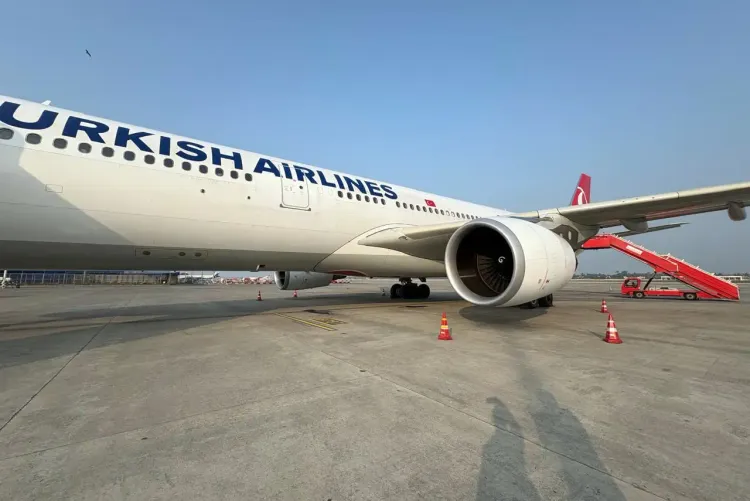
Turkish Airlines flight TK407 (Airbus A330-300) turned back to Istanbul on 20 September after approaching Moscow during a major Ukrainian drone attack.
At least 35 Turkish-operated flights to and from Vnukovo International Airport were delayed or cancelled.
Moscow Mayor Sergei Sobyanin confirmed Russian air defences intercepted more than 1,600 drones since Saturday, including approximately 450 near Moscow.
Russian air defence systems reportedly downed 5,706 Ukrainian drones and 44 guided aerial bombs over the week, according to the Russian Defence Ministry.
Russian Foreign Minister Sergei Lavrov warned on Wednesday that deployment of Western troops in Ukraine would be treated as a declaration of direct war.
Lavrov said Moscow remains open to diplomatic settlement but only on terms fulfilling Russia's stated objectives.
A Turkish Airlines flight from Istanbul to Moscow was forced to turn back on Sunday, 20 September after approaching the Russian capital during a large-scale Ukrainian drone attack, according to flight-tracking data and Turkish media reports. The incident underscores the growing aviation disruption caused by the intensifying air war over Russian territory.
What Happened to Flight TK407
Turkish Airlines flight TK407, operated by an Airbus A330-300, departed Istanbul at 2:22 am local time on Sunday (2322 GMT Saturday) bound for Moscow's Vnukovo International Airport. After entering Russian airspace and nearing Moscow, the aircraft reversed course and eventually landed back in Istanbul. The airline has not issued a detailed public statement on the diversion.
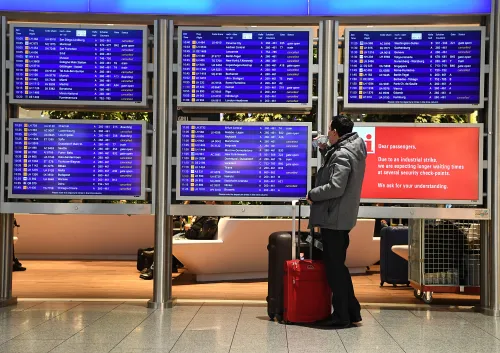
The disruption extended well beyond a single flight. At least 35 Turkish-operated flights to and from Vnukovo were delayed or cancelled on Sunday, according to reports. Vnukovo serves as one of Moscow's primary commercial aviation hubs, and closures there cascade rapidly across connecting routes.
Scale of the Drone Attack
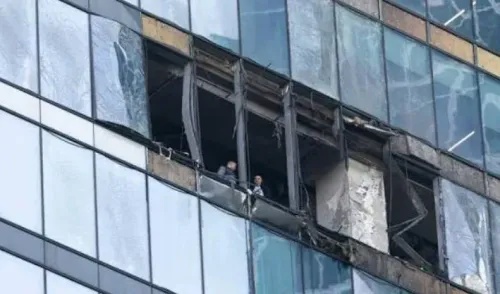
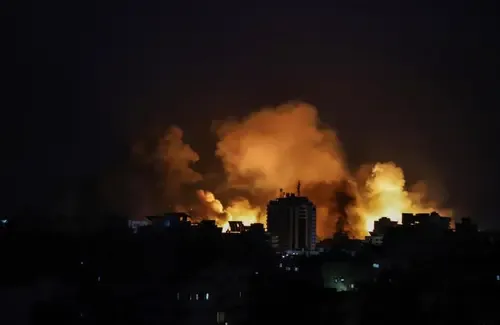
Moscow Mayor Sergei Sobyanin confirmed that Russian air defences had intercepted more than 1,600 drones across the country since Saturday, with approximately 450 of those targeting approaches to Moscow. The scale of the assault represents one of the largest single overnight drone campaigns of the conflict so far.
Russian air defence systems reportedly shot down 44 guided aerial bombs, eight HIMARS rockets, two Neptune long-range guided missiles, and 5,706 Ukrainian drones over the course of the week, according to the Russian Defence Ministry.
Russia's Counter-Strikes and Claimed Targets
The Russian Defence Ministry said on Friday that Russian forces had conducted two massive and five group strikes against Ukrainian targets over the preceding week, seizing ten settlements. Claimed targets included defence, metallurgical, motor and electronic enterprises, military logistics and distribution centres, fuel-power, railway and road infrastructure, drone manufacturing workshops, ammunition and fuel depots, and ports, as well as what Moscow described as temporary deployment areas for Ukrainian armed forces and foreign mercenaries.
On the maritime front, the ministry claimed hits on 12 Ukrainian dry cargo ships, two sea ferries, one tanker, and one tugboat.
Lavrov's Warning on Western Troop Deployment
The aerial escalation came alongside sharp diplomatic remarks from Russian Foreign Minister Sergei Lavrov. Speaking at the International Festival of Youth in Yekaterinburg on Wednesday, Lavrov said Russia would regard the deployment of Western troops on Ukrainian territory as a declaration of direct war.
'Let me emphasise that we have no interest in getting involved in this, but if Europe, which talks every day about preparing for war against Russia, attacks the Russian Federation, that will be a completely different war, and it will be very short,' Lavrov said.
Lavrov added that Moscow remains open to a diplomatic settlement, including in the trilateral format the United States had again proposed, but insisted that any resolution must fulfil Russia's stated objectives and 'eliminate the root causes' of the conflict — framing that critics argue rules out meaningful compromise.
What This Means for Aviation and the Conflict
The diversion of TK407 is a visible indicator of how the Ukraine-Russia war is reshaping civilian aviation. Turkey occupies a rare position as a country that has maintained active flights between Moscow and Istanbul throughout the conflict, making its disruptions particularly notable. Airlines from most European countries and the United States have avoided Russian airspace entirely since 2022.
With drone campaigns of this scale now targeting the Moscow perimeter, pressure on remaining carriers operating Russian routes is likely to intensify in the coming days.
Point of View
Lavrov's 'very short war' remark is calibrated escalatory language, not a departure from script — but its deployment at a youth festival suggests Moscow is now broadcasting deterrence domestically as much as diplomatically. The drone numbers (1,600-plus intercepted in one overnight period) deserve scrutiny: interception tallies from either side in this conflict have historically been difficult to verify independently, and the figures serve political as well as military purposes.
NationPress
21 Sept 2026
Frequently Asked Questions
Why did the Turkish Airlines flight to Moscow turn back?
Turkish Airlines flight TK407 turned back to Istanbul on 20 September after approaching Moscow during a large-scale Ukrainian drone attack on the Russian capital. Flight-tracking data and Turkish media reports confirmed the diversion, though the airline did not immediately issue a detailed public explanation.
How many drones did Russia intercept near Moscow?
Moscow Mayor Sergei Sobyanin said Russian air defences intercepted approximately 450 drones approaching Moscow, out of more than 1,600 intercepted across the country since Saturday. It is among the largest single overnight drone campaigns reported during the conflict.
How many Turkish flights were affected at Vnukovo?
At least 35 Turkish-operated flights to and from Moscow's Vnukovo International Airport were delayed or cancelled as a result of the drone attack, according to reports. Vnukovo is one of Moscow's main commercial hubs, making disruptions there significant for regional connectivity.
What did Russian Foreign Minister Lavrov say about Western troops in Ukraine?
Lavrov said at the International Festival of Youth in Yekaterinburg on Wednesday that Russia would treat any deployment of Western troops on Ukrainian territory as a declaration of direct war, warning it would result in a 'very short' conflict. He also said Moscow remains open to diplomacy but only on terms that fulfil Russia's stated objectives.
Why does the Turkish Airlines disruption matter beyond aviation?
Turkey has maintained one of the few remaining civilian air bridges between a NATO-adjacent hub and Russia throughout the conflict. Disruptions on this route reflect how drone warfare has reached Moscow's immediate airspace perimeter — a development with implications for both conflict escalation and international aviation risk assessments.