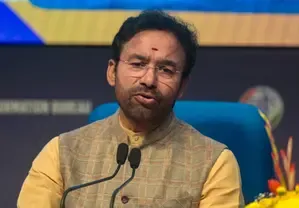
Coal Minister Kishan Reddy: India Now World's 2nd-Largest Coal Producer
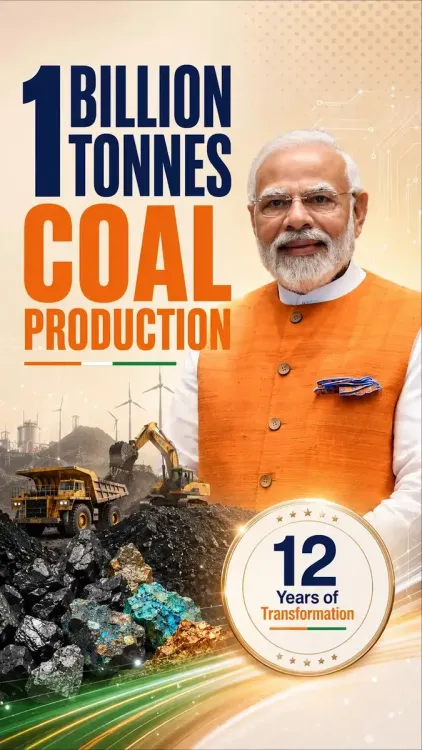
Synopsis
Union Coal and Mines Minister G. Kishan Reddy announced on June 8, 2026 that India has produced over 1 billion tonnes of coal for two consecutive years, making it the world's second-largest coal producer. He credited 12 years of Modi government reforms — including e-auctions, commercial mining, and private participation — for ending policy paralysis in the sector.
Key Takeaways
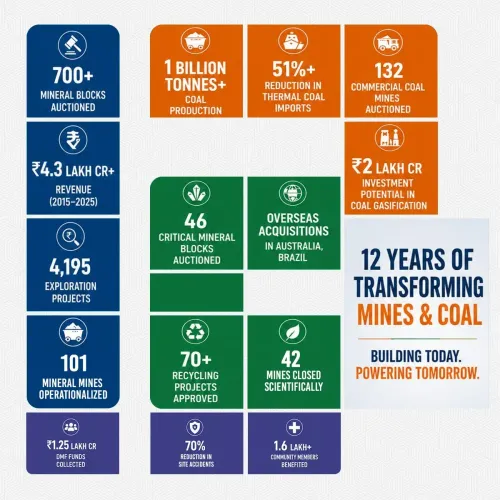
India has produced over 1 billion tonnes of coal for two consecutive years , according to Coal and Mines Minister G.
India is now ranked the world's second-largest coal producer .
Coal production has risen from roughly 565 million tonnes in 2013-14 to the billion-tonne level under the Modi government .
The Coal Mines (Special Provisions) Act, 2015 introduced transparent e-auctions after 204 coal block allocations were cancelled by the Supreme Court in 2014.
Commercial coal mining was launched in 2020 , ending Coal India Limited's near-monopoly and opening the sector to private players.
The minister cited the mantra of Reform, Perform, Transform alongside technological innovation and worker welfare as drivers of the sector's growth.
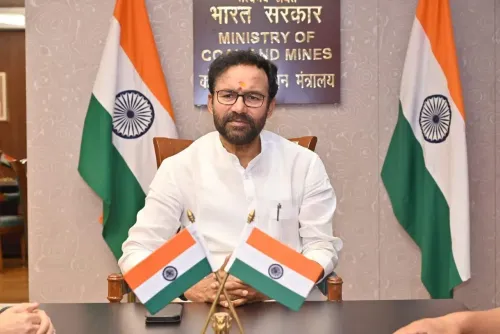
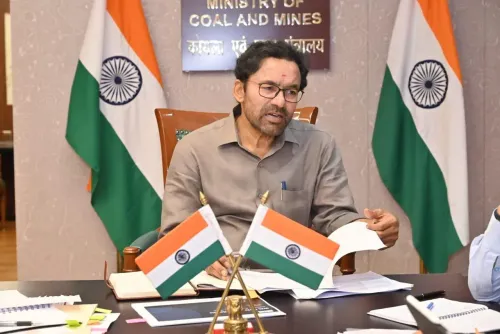
Union Coal and Mines Minister G. Kishan Reddy on Monday, June 8, 2026, declared that India has achieved the historic milestone of producing over 1 billion tonnes of coal for two consecutive years, positioning the country as the world's second-largest coal producer. The minister credited the transformation to the Narendra Modi government's 12-year reform agenda, which he said ended what he described as 'policy paralysis and inefficiency' in the sector.
Context
In his post on X, Kishan Reddy stated that the Modi government has driven the coal sector through the mantra of Reform, Perform, Transform, citing technological innovation and worker welfare as the twin engines of growth. He tagged the Ministry of Coal in the post, signalling it as an official communication aligned with the ministry's messaging. The billion-tonne production benchmark, if sustained, marks a structural shift for a country that was long a net coal importer despite holding the world's fourth-largest coal reserves.
Policy Backdrop
The current production surge is rooted in a series of legislative and policy interventions spanning over a decade. Following the Supreme Court's 2014 cancellation of 204 coal block allocations, the government enacted the Coal Mines (Special Provisions) Act, 2015, which replaced discretionary allotments with transparent e-auctions. In 2018, 100 new coal blocks were approved for commercial mining, and in 2020, commercial coal mining was formally launched, ending the near-monopoly of Coal India Limited and opening the sector to private participation for the first time.
Production has climbed sharply over this period — from roughly 565 million tonnes in 2013-14 to the billion-tonne threshold in recent years. The Atmanirbhar Bharat (self-reliant India) framework has provided the ideological scaffolding for treating higher domestic output as a strategic imperative, reducing dependence on expensive coal imports.
Stakeholders and Impact
Thermal power utilities are among the most direct beneficiaries, as higher domestic availability reduces fuel-cost volatility and import bills. State governments, which receive royalties and tax revenues from mining operations, also gain from expanded output. For coal mining workers, the minister's reference to 'worker welfare' points to ongoing initiatives around wages, safety, and social security under the reformed mining framework, though specific scheme outcomes vary by region.
The push for private commercial mining has, however, drawn scrutiny from labour unions concerned about job security and from environmental groups flagging the pace of forest land diversion for new blocks. These tensions are part of the broader debate over India's coal-to-clean-energy transition timeline.
What's Next
Attention will now turn to the results of upcoming commercial coal block auctions and whether the Union Budget or the Coal Ministry's next annual report sets revised production or import-reduction targets. The government's ability to sustain the billion-tonne output level while simultaneously scaling renewable energy capacity will be a key test of its 'Reform, Perform, Transform' narrative. Any announcement on new block allocations or worker welfare schemes in the coming months will be closely watched by industry and state governments alike.
Point of View
Perform, Transform' mantra and contrasting current output with the pre-2014 period of 'policy paralysis,' the minister is staking out ground for both the coal sector's legacy and the party's broader Atmanirbhar Bharat pitch. The timing — mid-2026 — suggests the government is building a pre-budget or mid-term policy record ahead of state election cycles. The billion-tonne claim, if independently verified for two consecutive years, would represent a structurally significant shift in India's energy security posture, though it also deepens the tension with the country's climate commitments under the Paris Agreement.
NationPress
23 Oct 2026
Frequently Asked Questions
Is India now the world's second-largest coal producer?
According to Union Coal and Mines Minister G. Kishan Reddy, India has emerged as the world's second-largest coal producer after achieving over 1 billion tonnes of production for two consecutive years.
When did India first produce 1 billion tonnes of coal?
The minister's post states India has achieved the billion-tonne milestone for two consecutive years, though the specific fiscal years have not been officially confirmed in this announcement.
What is commercial coal mining in India?
Commercial coal mining, launched in 2020, ended Coal India Limited's near-monopoly by allowing private companies to mine and sell coal commercially — a major structural reform in the sector.
What were the key coal sector reforms under the Modi government?
Key reforms include the Coal Mines (Special Provisions) Act of 2015 introducing e-auctions after the Supreme Court cancelled 204 coal block allocations, approval of 100 new blocks in 2018, and the launch of commercial coal mining in 2020.
How has India's coal production changed since 2014?
India's coal production has grown from roughly 565 million tonnes in 2013-14 to over 1 billion tonnes in recent years, driven by policy reforms, private participation, and expanded block auctions.