CM Fadnavis Chairs GPR Review, Targets Aug 15 Service Overhaul
Synopsis
Chief Minister Devendra Fadnavis chaired a GPR review at Sahyadri Guest House, Mumbai, directing all departments to restructure services on Aaple Sarkar 2.0 by 14 August 2026 — with citizens set to experience the overhaul from Independence Day 2026.
Key Takeaways
CM Devendra Fadnavis chaired a Governance Process Reengineering (GPR) review at Sahyadri Guest House, Mumbai on 25 May 2026 .
Out of 1,222 services reviewed , 723 citizen-relevant services have been finalised; further consolidation is expected post-integration.
All departments directed to complete restructuring of Aaple Sarkar 2.0 services by 14 August 2026 , with public launch on 15 August 2026 .
The Revenue Department is leading simplification efforts, with the CM noting its transformation equals 40–50% of the overall reform agenda.
A uniform service-delivery framework for local self-government bodies is to be developed as the next priority.
Each department asked to create a dedicated communication strategy using hyperlocal digital platforms to inform citizens of governance changes.
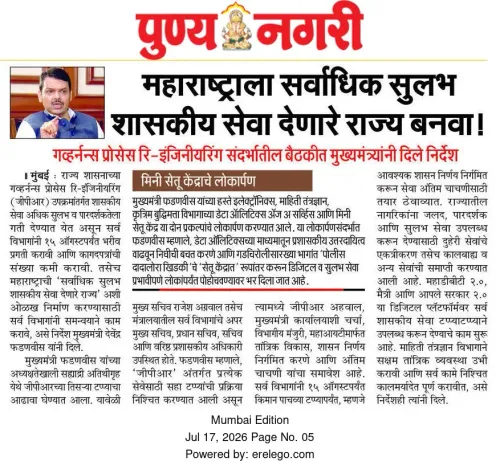
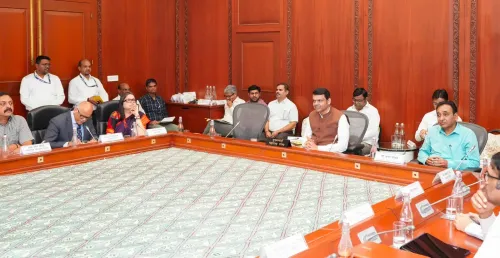
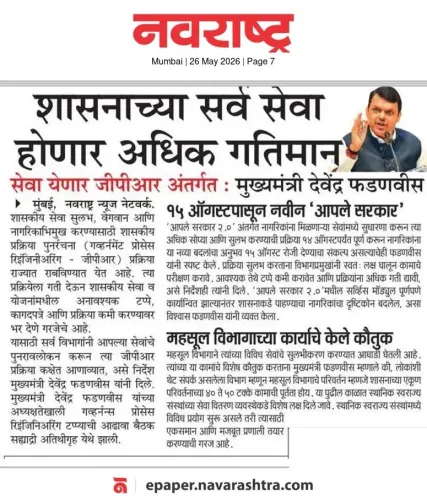
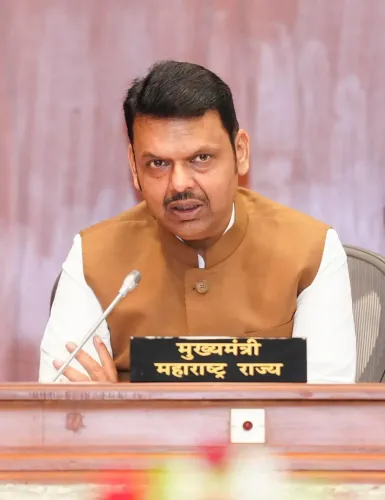
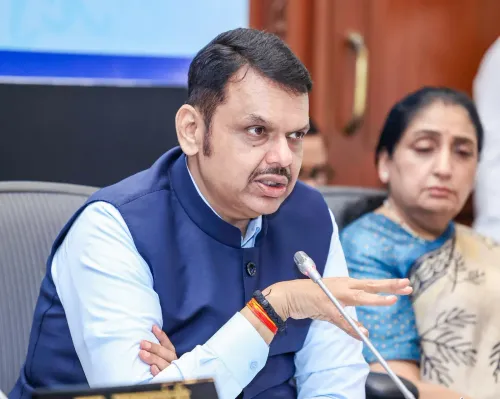
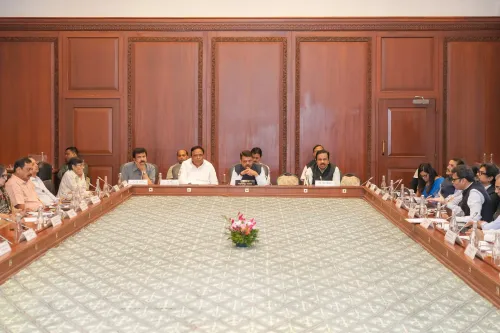
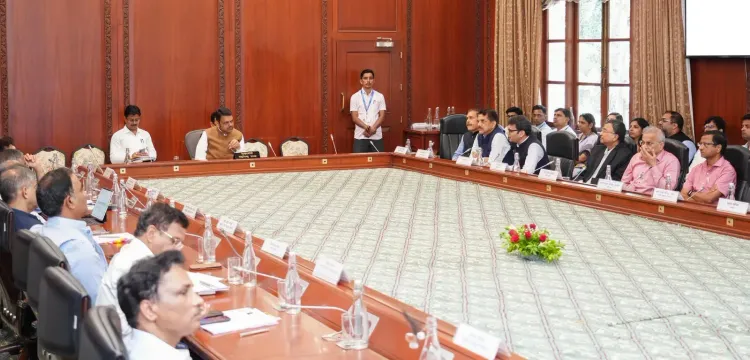
The Chief Minister's Office of Maharashtra announced on Monday, 25 May 2026 that Chief Minister Devendra Fadnavis chaired a review meeting on the Governance Process Reengineering (GPR) initiative at Sahyadri Guest House, Mumbai, directing all state departments to bring their services under the GPR framework to make government delivery simpler, faster, and more citizen-centric.
Context
The CMO's post, in Marathi, announced: 'शासकीय सेवा होणार अधिक सुलभ, वेगवान आणि लोकाभिमुख' ('Government services will become more accessible, faster, and people-oriented'). At the meeting, CM Fadnavis stated that the state government has decided to prioritise quality over quantity of services. He noted that out of 1,222 services reviewed, 723 citizen-relevant services have been finalised — with the number set to reduce further as integration progresses.
The CM directed that the restructuring of services on the 'Aaple Sarkar 2.0' portal be completed by 14 August 2026, with citizens experiencing the new system from Independence Day, 15 August 2026.
Policy Backdrop
Maharashtra launched the original Aaple Sarkar portal around 2015 to consolidate online delivery of state services, and promoted self-attestation of documents from the same year to reduce bureaucratic burden. The current GPR drive builds directly on those foundations, extending process reengineering into a more systematic, department-wide exercise.
CM Fadnavis highlighted that the earlier self-certification ('Swayampramanpatra') reform had already saved citizens time by eliminating unnecessary attestation requirements and placing accountability directly on the applicant. GPR is designed to institutionalise such gains across all departments. He also called for department heads to personally monitor process simplification, reduce procedural steps wherever possible, and accelerate service delivery timelines.
The Revenue Department was cited as a frontrunner in simplification efforts. The CM noted that transforming the Revenue Department — which has the most direct public contact — amounts to completing 40 to 50 per cent of the government's overall reform agenda.
Stakeholders and Impact
Citizens across Maharashtra stand to benefit from reduced paperwork, fewer procedural steps, and faster service turnaround on the integrated Aaple Sarkar 2.0 portal. The reform is also expected to ease workloads within the administration by standardising and streamlining internal processes.
CM Fadnavis directed special attention toward local self-government bodies, noting that while experiments are under way at the local level, a uniform and robust service-delivery system needs to be developed for urban and rural local bodies. He also asked each department to formulate a dedicated communication strategy using hyperlocal digital platforms — citing 'Public App' as an example — to ensure citizens are informed of governance improvements.
The meeting was attended by Archana Vyas, India Office Director of the Gates Foundation; Arnav Kapoor, Deputy Director (Policy, Communications and Philanthropic Partnerships) at the Gates Foundation; Gaurav Goyal, Founder and CEO of Samagra; Joy Bandekar, Group President (Strategy and Planning) at InShorts; and senior state government officials.
What's Next
The immediate deadline is 14 August 2026 for completing the restructuring of services on Aaple Sarkar 2.0, with a public rollout timed to Independence Day 2026. Subsequent review meetings are expected to track department-wise GPR targets and progress on building a unified service-delivery architecture for local bodies.
The Gates Foundation's presence at the review signals continued external technical partnership in Maharashtra's governance reform process — a model that could inform how other states approach similar e-governance consolidation drives.
Point of View
The CM is leveraging symbolic national significance to drive bureaucratic compliance — a tactic that carries reputational risk if timelines slip. The presence of the Gates Foundation and Samagra at a state-level review meeting underscores Maharashtra's reliance on philanthropic and civil-society technical expertise to supplement in-house administrative capacity, a pattern increasingly visible in BJP-governed states. The emphasis on quality over quantity of services — reducing 1,222 to 723 — marks a meaningful philosophical shift from the earlier era of portal-building where service count was itself a metric of governance ambition.
NationPress
12 Oct 2026
Frequently Asked Questions
What is Government Process Reengineering (GPR) in Maharashtra?
GPR, or Government Process Reengineering, is Maharashtra's initiative to review and restructure government services by eliminating unnecessary steps, documents, and procedures — making services faster, simpler, and more citizen-friendly. CM Fadnavis chaired a review of this process on 25 May 2026.
What is Aaple Sarkar 2.0?
Aaple Sarkar 2.0 is Maharashtra's upgraded integrated online portal for citizen services, building on the original Aaple Sarkar platform launched around 2015. The state government is restructuring all eligible services on this portal as part of the GPR initiative, with a deadline of 14 August 2026.
When will the new government services be available to Maharashtra citizens?
CM Fadnavis has set 15 August 2026 — Independence Day — as the target date for citizens to experience the restructured services on Aaple Sarkar 2.0, with the backend work to be completed by 14 August 2026.
Why is the Revenue Department important to Maharashtra's governance reform?
The Revenue Department has the most direct contact with citizens among all state departments. CM Fadnavis stated that reforming the Revenue Department alone amounts to completing 40 to 50 per cent of the government's overall service-delivery transformation agenda.
What role does the Gates Foundation play in Maharashtra's governance reforms?
The Gates Foundation's India office representatives, including India Director Archana Vyas, attended the GPR review meeting on 25 May 2026, indicating an ongoing technical and policy partnership supporting Maharashtra's administrative reform efforts.