CM Fadnavis Chairs Governance Process Re-engineering Review
Synopsis
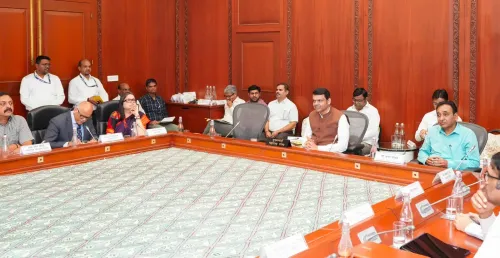
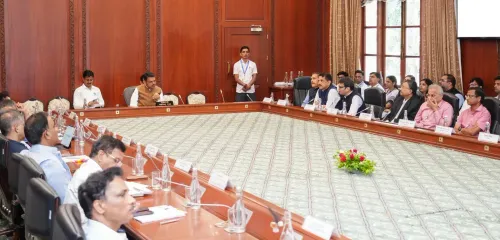
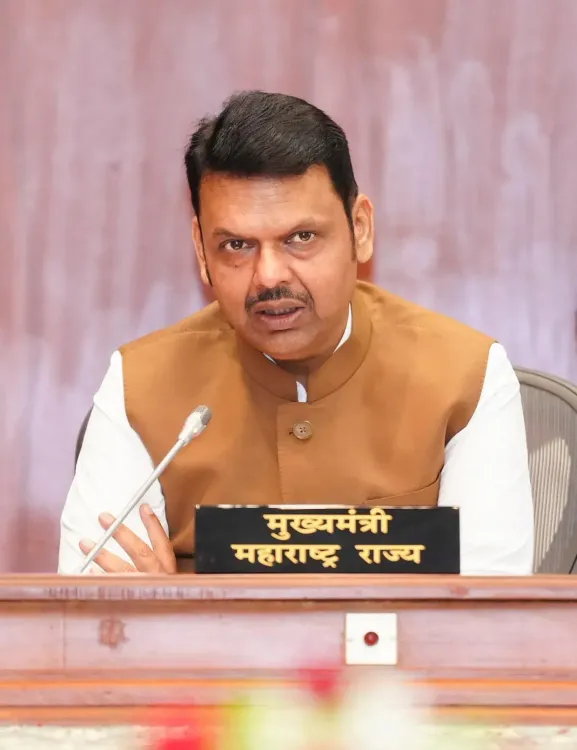
Chief Minister Devendra Fadnavis on 25 May 2026 chaired a review meeting on Maharashtra's Governance Process Re-engineering phase at Sahyadri Guest House, Mumbai, with senior representatives from the Gates Foundation, Samagra and Inshorts in attendance.
Key Takeaways
CM Devendra Fadnavis chaired a Governance Process Re-engineering (GPR) review meeting on 25 May 2026 at Sahyadri Guest House, Mumbai .
Archna Vyas (India Office Director) and Arnav Kapur (Deputy Director, Policy) from the Gates Foundation attended the meeting.
Gaurav Goel , Founder and CEO of governance advisory firm Samagra , was present alongside senior government officials.
Joy Bandekar , Group President — Strategy and Planning at Inshorts , also participated, indicating a technology and communications dimension to the initiative.
The GPR exercise builds on Maharashtra's e-governance legacy from 2014–2019 and aligns with the national Digital India framework.
The review signals an ongoing reform phase, with potential pilot projects and department-level process changes expected to follow.
The Chief Minister's Office of Maharashtra announced on Monday, 25 May 2026 that Chief Minister Devendra Fadnavis chaired a review meeting on the Governance Process Re-engineering (GPR) phase at Sahyadri Guest House, Mumbai, at 12:45 pm. The meeting brought together senior representatives from the Gates Foundation, governance advisory firm Samagra, and digital media company Inshorts alongside senior government officials.
Context
The CMO's post, published in English, Marathi and Hindi, confirmed the presence of Archna Vyas, India Office Director at the Gates Foundation; Arnav Kapur, Deputy Director for Policy, Communications and Philanthropic Partnerships at the Gates Foundation; Gaurav Goel, Founder and CEO of Samagra; and Joy Bandekar, Group President — Strategy and Planning at Inshorts. The multilingual announcement signals the state government's intent to communicate the initiative broadly across Maharashtra's linguistic communities.
The term 'Governance Process Re-engineering' refers to a structured effort to redesign administrative workflows, eliminate procedural bottlenecks and digitise legacy systems in government departments. The phrase 'गव्हर्नन्स प्रोसेस रिइंजिनिअरिंग' (Governance Process Re-engineering) used in the Marathi version of the post reflects direct adoption of the concept into official state communication.
Policy Backdrop
Maharashtra has a track record of administrative reform stretching back to Fadnavis's first term (2014–2019), when the state implemented several e-governance and process simplification measures under its State e-Governance Policy. Those efforts drew on the framework set by the National e-Governance Plan (2006) and were later reinforced by the Digital India programme launched in 2015, which encouraged states to re-engineer citizen-facing services.
The Gates Foundation has been active in India since the early 2000s, partnering with state governments on health, sanitation and governance programmes. Samagra, founded by Gaurav Goel, has established a reputation for assisting Indian states in redesigning public-service delivery systems, introducing data-driven performance metrics and digitising revenue, health and education workflows. The involvement of Inshorts — a technology and digital-media company — points to a potential communication or outreach dimension within the GPR initiative.
Stakeholders and Impact
The primary beneficiaries of a successful GPR rollout would be Maharashtra's citizens, who interact with state departments for services ranging from land records and certificates to health and welfare schemes. Reduced processing times and streamlined workflows directly affect the ease of accessing government services across the state's 36 districts.
The presence of a global philanthropic organisation alongside a specialised governance advisory firm and a technology company reflects a broader pattern seen across several Indian states, where governments have formed multi-sector partnerships to supplement in-house reform capacity. Such collaborations typically involve process mapping, identification of high-impact reform areas, and design of pilot projects before scaled implementation.
What's Next
The review meeting marks a checkpoint in an ongoing GPR phase rather than a launch event, suggesting that preparatory work is already under way. Observers will watch for announcements of specific process changes, pilot projects in selected departments, and any budget provisions or policy orders that give the recommendations legislative or administrative backing.
If the GPR exercise follows the trajectory of similar state-level initiatives, the next visible steps are likely to include inter-departmental consultations, citizen-feedback mechanisms, and a phased rollout of digitised processes — with Maharashtra's scale making the outcome a potential reference point for governance reform across India.
Point of View
A specialised advisory firm and a technology company — reflects a deliberate strategy of supplementing bureaucratic capacity with external expertise, a model that has gained traction in reform-oriented state governments over the past decade. The meeting's composition suggests the Maharashtra government is treating GPR not merely as a digitisation exercise but as a structural redesign of administrative workflows, which carries greater long-term impact on service delivery. Coming at a time when several large states are competing to improve ease-of-living metrics, Maharashtra's engagement with well-regarded partners like Samagra and the Gates Foundation adds institutional credibility to the effort. The key test will be whether the review translates into time-bound, measurable outcomes rather than remaining a high-profile consultative exercise.
NationPress
10 Oct 2026
Frequently Asked Questions
What is Governance Process Re-engineering in Maharashtra?
Governance Process Re-engineering (GPR) in Maharashtra refers to a structured initiative to redesign administrative workflows, eliminate procedural delays and digitise government processes to improve public service delivery across state departments.
Who attended the GPR review meeting chaired by CM Fadnavis?
The meeting on 25 May 2026 was attended by Archna Vyas and Arnav Kapur from the Gates Foundation, Gaurav Goel of Samagra, Joy Bandekar of Inshorts, and senior Maharashtra government officials.
What is Samagra and what role does it play in governance reform?
Samagra is a governance advisory organisation founded by Gaurav Goel that works with Indian state governments on process re-engineering, data systems and improving delivery of public services.
What is the Gates Foundation's involvement in Maharashtra governance?
The Bill and Melinda Gates Foundation has partnered with Indian state governments since the early 2000s on health, sanitation and governance programmes, and its India office representatives participated in the 25 May 2026 GPR review.
Where was the Devendra Fadnavis GPR review meeting held?
The meeting was held at Sahyadri Guest House in Mumbai at 12:45 pm on 25 May 2026.