CM Yogi Slams Past Govts Over Musahar Poverty, Encephalitis
Synopsis
Uttar Pradesh Chief Minister Yogi Adityanath on 11 July 2026 accused previous state governments of letting Musahar community members starve and children die of encephalitis, contrasting that record with his administration's health and welfare initiatives in eastern UP.
Key Takeaways
CM Yogi Adityanath posted on 11 July 2026 attacking unnamed previous governments over Musahar community starvation and child encephalitis deaths in eastern Uttar Pradesh .
The Musahar community is a Scheduled Caste group among the most economically marginalised in the state, concentrated in eastern UP and Bihar.
Acute Encephalitis Syndrome (AES) outbreaks historically killed hundreds of children in Gorakhpur and surrounding districts during previous administrations.
After the 2017 BRD Medical College crisis, the state expanded vaccination drives, upgraded paediatric ICUs, and increased budget allocations for affected districts.
The remarks are seen as part of a broader BJP outreach to non-Jatav Scheduled Caste voters ahead of the 2027 Uttar Pradesh Assembly elections .
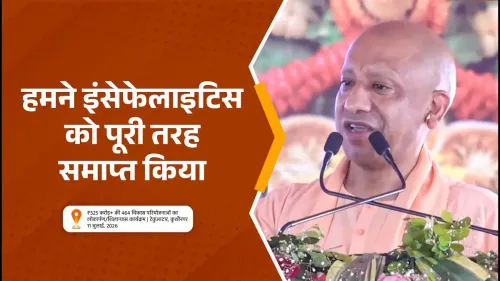
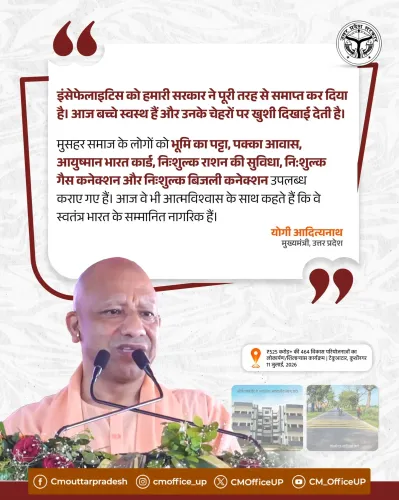
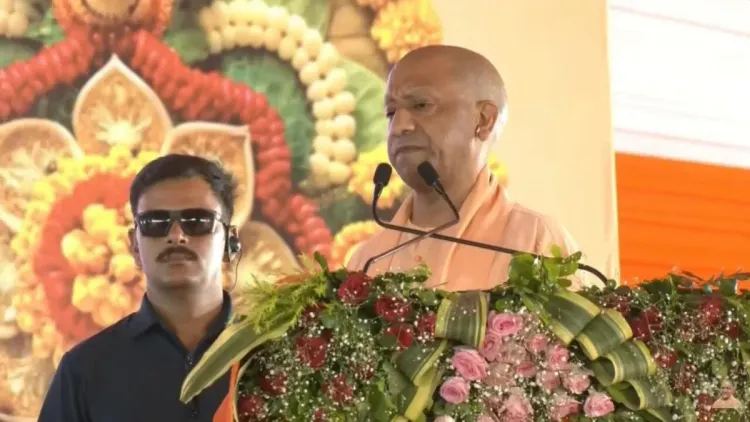
Uttar Pradesh Chief Minister Yogi Adityanath on Saturday, 11 July 2026, launched a sharp attack on previous state governments, accusing them of presiding over starvation deaths among the Musahar community and unchecked encephalitis outbreaks that killed children across eastern Uttar Pradesh. The remarks, posted on his official X account, contrasted what he described as years of neglect under earlier administrations with his government's record on child welfare and public health.
In the post, Adityanath wrote in Hindi: 'ये लोग' सत्ता में थे तो मुसहर जाति के लोग भूख से तड़पकर मरते थे, बच्चे इंसेफेलाइटिस की चपेट में आते थे' — translated: 'When 'these people' were in power, members of the Musahar caste died writhing in hunger, children fell prey to encephalitis.' He added that his administration had given children 'a bright and secure future.'
Context
The Musahar community is a Scheduled Caste group concentrated in the flood-prone eastern districts of Uttar Pradesh and neighbouring Bihar, historically associated with extreme poverty and landless agricultural labour. The community has long ranked among the most economically marginalised in the state, with high rates of hunger and limited access to formal healthcare. The phrase 'ये लोग' ('these people') is a pointed but unnamed reference, widely understood in the context of UP politics as directed at the Samajwadi Party and the Bahujan Samaj Party, both of which governed the state in the decade before Adityanath took office in 2017. Former Chief Minister Akhilesh Yadav's government (2012–2017) faced sustained criticism over encephalitis deaths and rural malnutrition.Policy Backdrop
Acute Encephalitis Syndrome (AES) — a cluster of seasonal neurological diseases linked to Japanese Encephalitis and other pathogens — devastated children in eastern Uttar Pradesh for years. Gorakhpur, the Chief Minister's own political base, was the epicentre: the Baba Raghav Das Medical College in the city witnessed multiple child deaths during acute outbreak seasons, drawing national attention in 2017. Following the 2017 crisis, the state government undertook expanded vaccination drives and upgraded paediatric intensive care units. The 2018–19 state budget raised allocations for vector-borne disease control and rural anganwadi centres in Musahar-dominated blocks of Gorakhpur, Maharajganj, and Kushinagar. These measures have been presented by the ruling dispensation as evidence of inclusive governance reaching the state's most marginalised communities.Stakeholders and Impact
For the Musahar community, the political salience of these remarks lies in their acknowledgement — rare in mainstream discourse — of the community's historical suffering. Whether that acknowledgement translates into measurable improvements in nutrition and healthcare access remains the central question for welfare advocates and opposition parties. Beyond the immediate community, the statement is aimed at a broader electoral audience in eastern Uttar Pradesh, a region that sends a large number of legislators to the Vidhan Sabha. Scheduled Caste voters, particularly those outside the traditional Jatav consolidation behind the BSP, have been an important focus of BJP outreach since 2017.What's Next
The timing of the post — more than a year before the 2027 Uttar Pradesh Assembly elections — signals an early start to the ruling party's welfare-narrative campaign. Analysts will watch for the release of the next annual health survey data on AES cases and malnutrition indicators in eastern UP districts, which will either corroborate or complicate the government's claims. Any new state schemes targeting Musahar habitations announced in the run-up to 2027 would reinforce this messaging arc and indicate whether the rhetoric is backed by fresh policy action.Point of View
Using the Musahar community's documented suffering as a moral indictment of Samajwadi Party and BSP governance. By invoking encephalitis deaths — a crisis that touched his own constituency of Gorakhpur — he grounds the attack in lived, verifiable tragedy rather than abstract policy debate. The messaging also signals a deliberate push into non-Jatav Scheduled Caste constituencies, where the BJP has sought to erode the BSP's traditional base. With the 2027 assembly elections approaching, the frequency of such targeted welfare narratives is likely to increase, making the government's actual health and nutrition data in eastern UP the key metric to watch.
NationPress
11 Jul 2026
Frequently Asked Questions
Who are the Musahar and why are they politically significant in UP?
The Musahar are a Scheduled Caste community in eastern Uttar Pradesh and Bihar, historically among the poorest in India due to landlessness and limited access to education and healthcare. They are politically significant because parties across the spectrum compete for their support, and their welfare record is often cited as a barometer of inclusive governance in the state.
What is Acute Encephalitis Syndrome and why did it affect eastern UP?
Acute Encephalitis Syndrome (AES) is a cluster of neurological diseases — including Japanese Encephalitis — that causes brain inflammation and is often fatal in children. Eastern UP's flood-prone, densely populated districts with poor sanitation and limited healthcare access made them especially vulnerable to seasonal outbreaks, with Gorakhpur's BRD Medical College becoming a focal point of the crisis.
What did CM Yogi Adityanath say about the Musahar community?
CM Yogi Adityanath said that when 'these people' were in power, members of the Musahar caste died writhing in hunger and children fell prey to encephalitis, and that his government had given children a bright and secure future.
What steps did the Yogi government take after the 2017 encephalitis crisis?
Following the 2017 AES crisis, the Uttar Pradesh government expanded vaccination drives, upgraded paediatric ICUs, and in the 2018-19 budget increased allocations for vector-borne disease control and rural anganwadi centres in Musahar-dominated blocks of Gorakhpur, Maharajganj, and Kushinagar.
Is CM Yogi's attack directed at Akhilesh Yadav?
The post uses the phrase 'these people' without naming anyone, but the political context — referring to governments before 2017 — points to the Samajwadi Party under former Chief Minister Akhilesh Yadav (2012-2017) and the BSP, both of which faced criticism over encephalitis outbreaks and rural malnutrition during their tenures.