Dr. Jitendra Singh: Lakhanpur selected as Street Food Hub

Synopsis
Union Minister Dr. Jitendra Singh announced on 11 July 2026 that Lakhanpur, the Punjab–J&K border gateway town in Kathua district, has been selected as one of 50 Street Food Hubs under PM SVANidhi. Two clusters near the old bus stand and Sales Tax Office will be developed as world-class vending spaces to support local vendors and tourists.
Key Takeaways
Lakhanpur in Kathua district, J&K, selected among 50 towns nationally to be developed as a Street Food Hub under PM SVANidhi.
The hub will feature two clusters : one near the old bus stand and one near the Sales Tax Office at Lakhanpur Market.
Street Food Hubs aim to create world-class vending spaces promoting local culinary heritage and dignified livelihoods for street vendors.
The initiative is led by the Ministry of Housing and Urban Affairs and includes financial assistance plus additional financial incentives for vendors.
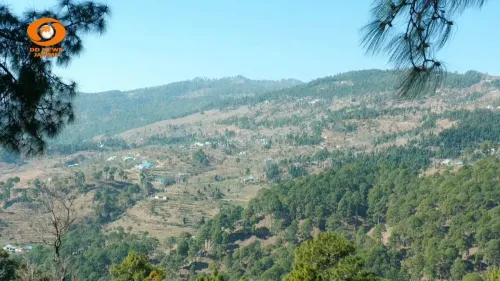
Lakhanpur is the gateway town on the Punjab–J&K border with high footfall of tourists, pilgrims, and highway travellers.
The selection is part of a broader pattern of extending central urban schemes to Jammu and Kashmir following its reorganisation as a Union Territory in 2019.
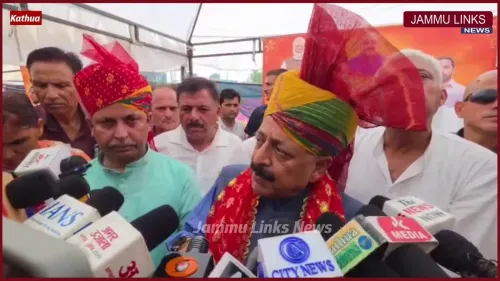
Union Science and Technology Minister Dr. Jitendra Singh announced on Saturday, 11 July 2026 that Lakhanpur, the entry-point town on the Punjab–Jammu and Kashmir border in Kathua district, has been selected under a Government of India scheme to be developed as one of 50 Street Food Hubs across the country.
Context
Lakhanpur holds a unique geographic significance as the gateway to Jammu and Kashmir, recording consistently high footfall from tourists, pilgrims, and transit travellers on the Punjab–J&K national highway corridor. The town falls under Kathua district, which Dr. Jitendra Singh represents, making the selection a direct development win for his constituency.
In his post, the Minister noted: 'Street Food Hubs are sought to be developed as world-class vending spaces, that will promote local culinary heritage and at the same time, ensure dignified livelihood for street vendors.' He credited Prime Minister Narendra Modi for 'giving high priority to J&K, which has enabled the inclusion of Lakhanpur in the very first phase of this national level plan.'
Policy Backdrop
The Street Food Hubs initiative is embedded within PM SVANidhi — the Pradhan Mantri Street Vendor's AtmaNirbhar Nidhi scheme — which was launched in June 2020 to extend working-capital micro-credit and promote the formalisation of street vendors, initially as a COVID-19 relief measure. The scheme is administered by the Ministry of Housing and Urban Affairs, which is spearheading this latest component focused on curated vending clusters.
The legal foundation for planned vending zones dates to the Street Vendors (Protection of Livelihood and Regulation of Street Vending) Act, 2014, which first mandated town vending committees and designated vending spaces in urban areas. The Street Food Hubs component adds financial assistance and additional financial incentives on top of the existing PM SVANidhi framework to develop world-class infrastructure at selected sites.
The inclusion of a Jammu and Kashmir town in the very first phase of this national rollout reflects the broader pattern of extending centrally sponsored urban schemes to the Union Territory following its reorganisation in 2019. Similar vending and culinary-heritage initiatives have been implemented in other high-footfall states under the same ministry.
Stakeholders and Impact
The proposed Street Food Hub at Lakhanpur Market will be organised into two clusters: Cluster 1 near the old bus stand, and Cluster 2 near the Sales Tax Office. The twin-cluster design is intended to distribute footfall and provide structured, dignified vending spaces across the town's two busiest commercial nodes.
Street vendors in Lakhanpur stand to benefit directly through formalised stalls, access to micro-credit under PM SVANidhi, and digital onboarding support. Tourists, pilgrims, and travellers passing through the highway stopover are the secondary beneficiaries, gaining access to a curated local food experience. The Kathua district administration will play a key coordinating role in forming the town vending committee required under the 2014 Act.
What's Next
The immediate milestones will include the constitution of a town vending committee for Lakhanpur, preparation of a detailed Street Vending Plan, and the release of financial assistance to begin physical development of the two clusters. Progress on fund disbursement and vendor onboarding will be closely watched as indicators of whether the first-phase rollout can serve as a replicable model.
With 49 other towns also selected in this phase, the Ministry of Housing and Urban Affairs is expected to issue implementation guidelines and timelines for all sites. The inclusion of Lakhanpur also raises the prospect of additional J&K towns being considered for later phases of the Street Food Hubs programme, further integrating the Union Territory into mainstream urban livelihood schemes.
Point of View
The announcement doubles as a constituency-level win tied to a national scheme, a pattern increasingly common in how central ministers communicate policy gains. The choice of a high-footfall highway town also reflects a deliberate strategy of anchoring livelihood schemes to tourism corridors, where visibility and vendor income potential are highest. Whether the two-cluster design at Lakhanpur translates into durable infrastructure and vendor formalisation will be the real test of the initiative's ambition.
NationPress
10 Oct 2026
Frequently Asked Questions
What is the Street Food Hub scheme in India?
Street Food Hubs is a component under PM SVANidhi through which the Ministry of Housing and Urban Affairs is developing world-class vending spaces in 50 towns across India to promote local culinary heritage and provide dignified livelihoods for street vendors, with financial assistance and additional incentives.
Why was Lakhanpur selected as a Street Food Hub?
Lakhanpur in Kathua district was selected because it is the main entry point on the Punjab–Jammu and Kashmir border and records consistently high footfall from tourists, pilgrims, and transit travellers, making it an ideal site for a curated street-food destination.
Where will the Lakhanpur Street Food Hub be located?
The proposed Street Food Hub at Lakhanpur Market will have two clusters: Cluster 1 near the old bus stand and Cluster 2 near the Sales Tax Office.
What is PM SVANidhi and how does it help street vendors?
PM SVANidhi (Pradhan Mantri Street Vendor's AtmaNirbhar Nidhi), launched in June 2020 , provides working-capital micro-credit loans and supports the formalisation and digital onboarding of street vendors across India.
Is Lakhanpur the only J&K town selected for Street Food Hubs?
As per the announcement by Dr. Jitendra Singh , Lakhanpur has been included in the first phase of the national Street Food Hubs plan. Whether additional J&K towns will be included in later phases has not yet been confirmed.