CM Yogi Flags Welfare, Security and Anti-Mafia Drive in UP
Synopsis
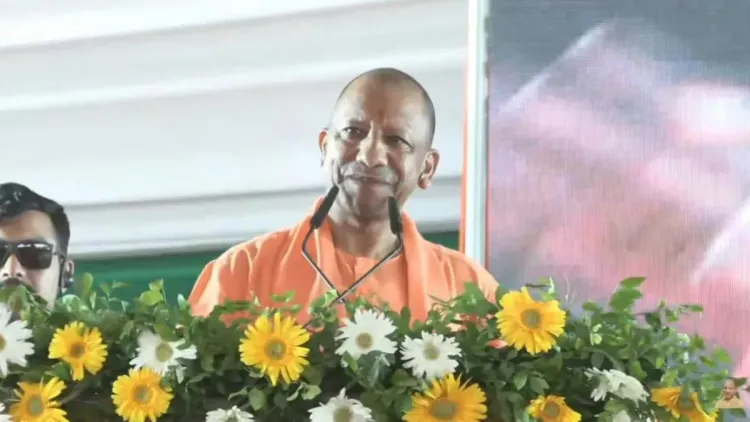
Uttar Pradesh Chief Minister Yogi Adityanath posted on X on 13 June 2026 articulating four pillars of 'New India': welfare for the poor, development schemes, improved security, and elimination of organised crime — a compact restatement of the BJP's UP governance template.
Key Takeaways
CM Yogi Adityanath posted on 13 June 2026 outlining four pillars of governance under the 'New India' banner.
The post explicitly references eliminating the 'mafia', echoing a signature theme of his administration since March 2017 .
Anti-mafia drives in Uttar Pradesh have included property-demolition and asset-attachment actions targeting sand-mining and real-estate syndicates.
The Supreme Court of India has pending challenges to state property-demolition policies, adding legal weight to the political moment.
The BJP's 'New India' governance template pairing welfare delivery with law-and-order crackdowns has been replicated across Madhya Pradesh , Haryana and Rajasthan .
The UP 2026-27 budget is expected to carry fresh welfare scheme announcements that could give the narrative new programmatic substance.
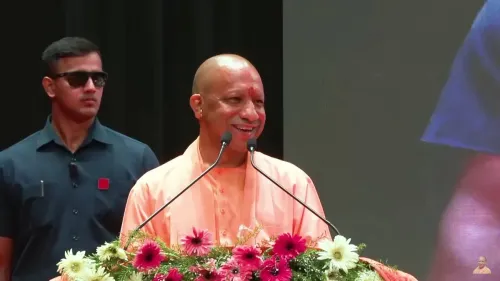
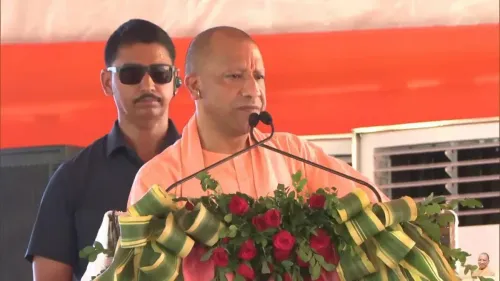
Uttar Pradesh Chief Minister Yogi Adityanath on Saturday, 13 June 2026, posted a pointed message on X articulating what he called the defining traits of a 'New India' — welfare for the poor, development schemes, improved security, and the elimination of organised crime. The post, shared in Hindi, carried a video and quickly drew attention as a compact statement of the Bharatiya Janata Party's governance pitch for Uttar Pradesh.
Context
The post, in Hindi, reads: 'Yahi naya Bharat hai' — 'This is the new India' — and lists four pillars: welfare of the poor, delivery of development schemes, a better environment of security, and, in a striking closing line, 'the work of grinding the mafia into dust.' The language is unambiguous in its targeting of organised crime networks that have long operated in Uttar Pradesh's sand-mining, real-estate and local-extortion sectors.
CM Yogi has used similar formulations since his first term began in March 2017, but the June 2026 post arrives as the state government continues to defend its property-demolition and asset-attachment policies against legal scrutiny. The four-point framing is a rhetorical distillation of what his administration presents as an integrated model — social spending and law-and-order reinforcing each other.
Policy Backdrop
Yogi Adityanath's government launched a series of anti-encroachment and property-attachment drives starting around 2018, targeting assets allegedly linked to criminal syndicates in sectors such as sand mining and real estate. Parallel welfare rollouts — covering housing, food security and sanitation — were framed as the positive complement to these crackdowns.
The phrase 'mafia ko mitti mein milana' ('grinding the mafia into dust') has become a signature expression in UP's political discourse, often invoked alongside bulldozer-led demolition actions that drew national attention and subsequent judicial scrutiny. The Supreme Court of India has pending challenges to state-level property-demolition policies, making the political salience of such rhetoric particularly high in mid-2026.
The BJP's 'New India' narrative, promoted at both the national and state level since 2014, pairs centrally sponsored welfare programmes with visible action against local strongmen. Similar templates have been deployed in Madhya Pradesh, Haryana and Rajasthan following BJP election victories in those states.
Stakeholders and Impact
For poor households in Uttar Pradesh — India's most populous state — the welfare dimension of the post references an ongoing pipeline of schemes covering housing, ration distribution and livelihood support. These programmes represent the government's primary outreach to its core electoral base in rural and semi-urban constituencies.
Law-enforcement agencies in UP have been central actors in the anti-mafia drives, conducting raids, registering cases and executing demolition orders. The political framing in CM Yogi's post effectively positions these agencies as instruments of a broader governance philosophy rather than routine policing operations.
Organised crime networks — particularly those embedded in the sand-mining and real-estate sectors — remain the stated targets. Civil-society groups and legal advocates, however, have raised due-process concerns about demolition-led enforcement, arguments that are currently being weighed by higher courts.
What's Next
The Supreme Court's eventual ruling on state property-demolition policies will shape the legal boundaries within which CM Yogi's anti-mafia narrative can be translated into executive action. A ruling restricting demolitions would force the administration to recalibrate its enforcement optics, even if the political messaging continues.
On the welfare front, the Uttar Pradesh 2026-27 budget is expected to carry fresh scheme announcements targeting rural beneficiaries — announcements that would give the 'New India' framing fresh programmatic content ahead of any upcoming electoral cycle. The convergence of welfare delivery and law-and-order branding remains the central axis of BJP governance strategy in the state.
Point of View
And equally visible coercive action against criminal networks to signal strength. The 'New India' framing allows the party to present these as a unified moral project rather than separate policy domains. The timing, amid live Supreme Court scrutiny of demolition policies, suggests the administration is keen to hold the political ground even as the legal ground shifts. If the court constrains demolition-led enforcement, the rhetorical architecture of this post will need fresh operational content to remain credible.
NationPress
14 Sept 2026
Frequently Asked Questions
What did CM Yogi Adityanath post on X on 13 June 2026?
CM Yogi Adityanath posted a Hindi message on 13 June 2026 stating that 'New India' is defined by welfare for the poor, delivery of development schemes, improved security, and the elimination of the mafia — accompanied by a video.
What does 'mafia ko mitti mein milana' mean in CM Yogi's post?
The Hindi phrase 'mafia ko mitti mein milana' translates to 'grinding the mafia into dust' and refers to the Uttar Pradesh government's ongoing crackdowns on organised crime networks, particularly in sand-mining and real-estate sectors.
What is the BJP's 'New India' governance model in Uttar Pradesh?
The BJP's 'New India' model in Uttar Pradesh pairs centrally sponsored welfare programmes — covering housing, food security and sanitation — with strict law-and-order action against local criminal strongmen, a template in use since CM Yogi's first term began in March 2017.
Is the UP government's bulldozer demolition policy under legal challenge?
Yes, the Supreme Court of India has pending challenges to state-level property-demolition policies, including those used in Uttar Pradesh's anti-mafia drives, raising due-process questions about the enforcement approach.
Which other BJP-ruled states have used a similar anti-mafia and welfare governance approach?
Madhya Pradesh, Haryana and Rajasthan have deployed similar governance templates combining welfare scheme rollouts with visible crackdowns on local strongmen following BJP election victories in those states.