CM Yogi credits PM Modi for 'New UP' industry, welfare push
Synopsis
Uttar Pradesh Chief Minister Yogi Adityanath credited Prime Minister Narendra Modi's guidance for the parallel rise of industry, development and pro-poor welfare schemes in what he described as a 'New Uttar Pradesh', reinforcing the BJP's double-engine governance pitch in India's most populous state.
Key Takeaways
CM Yogi Adityanath posted on X on 3 June 2026 crediting PM Modi's guidance for UP's industry and welfare push.
The post frames a 'New Uttar Pradesh' built on simultaneous industrial growth, development works and welfare delivery.
It reinforces the BJP's 'double engine' narrative of centre-state policy alignment.
Industrial messaging draws on the UP Industrial Investment and Employment Promotion Policy, 2017.
Welfare messaging leans on schemes like PM Garib Kalyan Anna Yojana, PM Awas Yojana, Ujjwala and Jal Jeevan Mission.
Next markers: investors' summit outcomes and scheme saturation data.
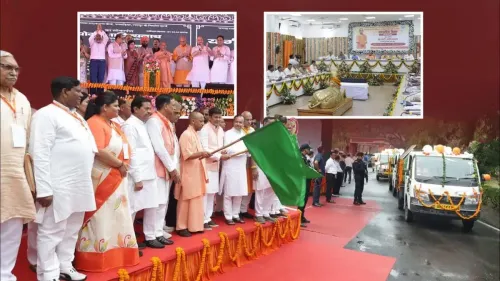
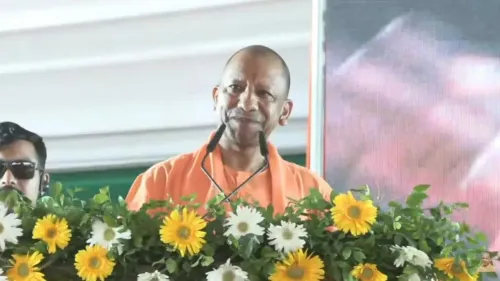
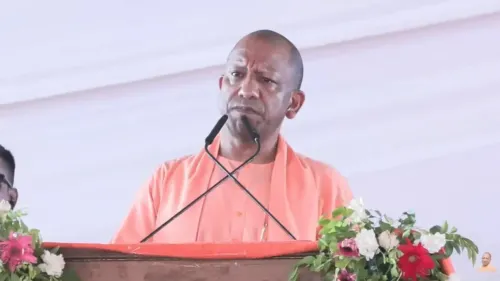
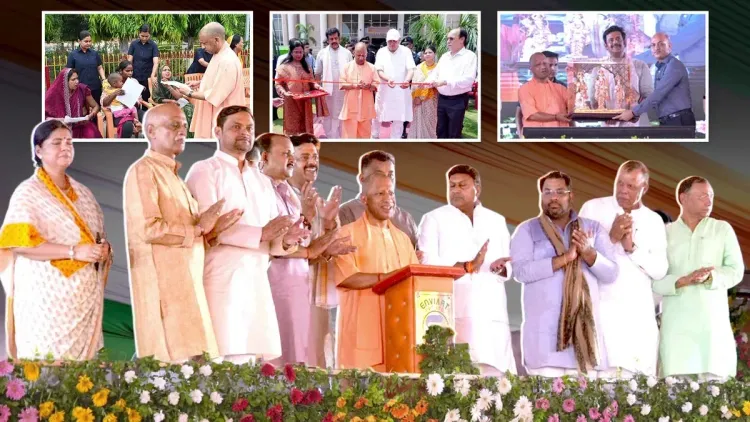
Uttar Pradesh Chief Minister Yogi Adityanath on Wednesday, 3 June 2026, credited Prime Minister Narendra Modi's guidance for the simultaneous expansion of industry, development works and pro-poor welfare delivery in what he described as a 'New Uttar Pradesh'. Posting on X from Lucknow, the chief minister framed the state's recent trajectory as the outcome of close alignment between central direction and state-level execution.
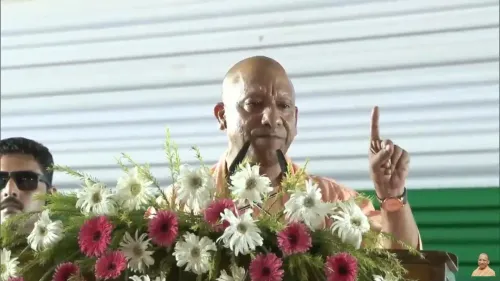
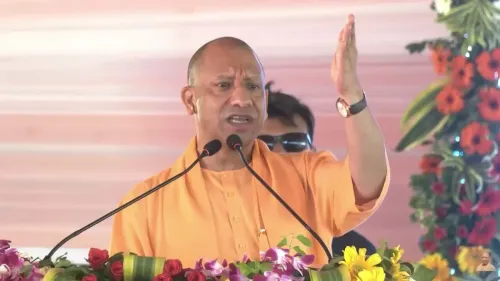
In the post, written in Hindi, the chief minister stated that 'aadarniya pradhan mantri ji ke yashasvi margdarshan mein' (under the successful guidance of the respected Prime Minister), industries are being set up, development is taking place, and welfare schemes for the poor are being advanced effectively in Uttar Pradesh. The post was accompanied by a video clip.
Context
The remarks fit a familiar template that the chief minister has used since assuming office in March 2017, in which the state's industrial and welfare outcomes are tied to central policy direction. The 'double engine' formulation — coordinated governance by the Bharatiya Janata Party at the Centre and in the state — has been a recurring theme of the party's communication in Uttar Pradesh.
India's most populous state, with an estimated population of over 24 crore, has been positioned by the state government as an emerging manufacturing and logistics hub, particularly along expressway corridors and the dedicated freight network.
Policy backdrop
The industry leg of the message draws on the Uttar Pradesh Industrial Investment and Employment Promotion Policy, 2017, which laid out fiscal and land-related incentives to attract manufacturing, food processing and infrastructure investments. Subsequent sector-specific policies covering electronics, defence manufacturing, data centres and warehousing have built on that framework.
The welfare leg leans on a stack of central schemes implemented through the state machinery, including the Pradhan Mantri Garib Kalyan Anna Yojana for free foodgrains, the PM Awas Yojana for rural and urban housing, the Ujjwala Yojana for cooking-gas connections, and the Jal Jeevan Mission for tap-water supply. The chief minister has repeatedly cited saturation of these schemes as a marker of governance performance.
Stakeholders and impact
For prospective investors, the message reinforces the state's continued political commitment to its incentive regime and single-window clearance approach. The recurring framing of policy continuity is aimed at long-gestation projects in sectors such as semiconductors, electric mobility and renewable energy, where firms typically seek multi-year predictability.
For lower-income households, the emphasis on welfare delivery signals that flagship transfer and entitlement programmes — covering rations, housing, gas, water and direct benefit transfers — remain politically central. State-level convergence of these schemes has been a consistent administrative focus.
The post also serves an intra-party signalling function, underscoring the chief minister's positioning of his administration as an executor of the Prime Minister's agenda rather than an independent track, a frame that has shaped the state unit's public communication for several years.
What's next
Attention will turn to upcoming state-level data on industrial unit approvals, capital expenditure execution and scheme saturation figures, which the government typically uses to substantiate such claims. The next edition of the state's investors' summit and ground-breaking ceremonies for committed projects will be watched for conversion of memoranda of understanding into operational capacity.
If industrial commissioning and welfare-saturation numbers continue to rise in tandem, the 'New Uttar Pradesh' framing is likely to remain the centrepiece of the state government's messaging through the remainder of its term.
Point of View
Knitting industrial investment and welfare delivery into a single performance story anchored to the Prime Minister. By foregrounding PM Modi's guidance, the chief minister signals continuity with the central agenda rather than a divergent state track. The framing is designed to reassure investors of policy predictability while keeping welfare beneficiaries in the political fold. Expect this dual narrative to remain the dominant template for Uttar Pradesh's official communication.
NationPress
19 Sept 2026
Frequently Asked Questions
What did Yogi Adityanath say about PM Modi in his latest post?
He said that under PM Modi's guidance, industries are being set up, development is happening, and welfare schemes for the poor are being effectively advanced in Uttar Pradesh.
What is the 'New Uttar Pradesh' narrative?
It is the state government's framing of post-2017 Uttar Pradesh as a place of combined industrial growth, infrastructure expansion and welfare-scheme saturation under BJP rule.
What is the double engine government concept?
It refers to the BJP's pitch that having the same party in power at the Centre and in a state ensures faster, coordinated implementation of policies and schemes.
Which welfare schemes are central to UP's governance pitch?
Key schemes include PM Garib Kalyan Anna Yojana, PM Awas Yojana, Ujjwala Yojana and Jal Jeevan Mission, implemented through the state administration.
Which industrial policy underpins UP's investment push?
The Uttar Pradesh Industrial Investment and Employment Promotion Policy, 2017, along with later sector-specific policies for electronics, defence, data centres and warehousing.