CM Yogi Reaffirms No-Discrimination Welfare Pledge for UP's Poor
Synopsis
Uttar Pradesh Chief Minister Yogi Adityanath reaffirmed on 20 July 2026 that his government will serve every section of society — poor, Dalit, deprived, farmers and women — without discrimination, reinforcing the BJP's broad-based welfare narrative ahead of the 2027 state elections.
Key Takeaways
CM Yogi Adityanath posted on 20 July 2026 reaffirming the UP government's principle of non-discriminatory welfare delivery.
The post explicitly names Dalits, the poor, the deprived, farmers and women as equal beneficiaries of state policy.
The messaging aligns with the BJP 's post-2014 shift from caste-specific mobilisation to a 'Sabka Saath, Sabka Vikas' development narrative in Uttar Pradesh .
State-level schemes such as the Mukhyamantri Kisan Kalyan Yojana and Ujjwala-linked LPG support have been presented under this universal-welfare framework since 2017 .
The statement is politically significant with the 2027 Uttar Pradesh Assembly elections approaching, as the ruling party seeks to consolidate its cross-caste coalition.
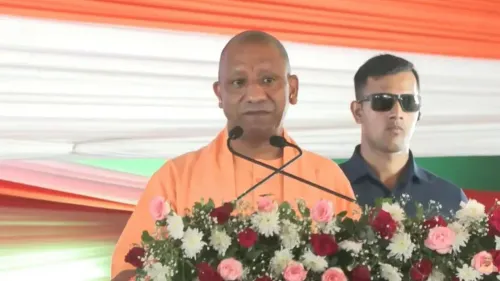
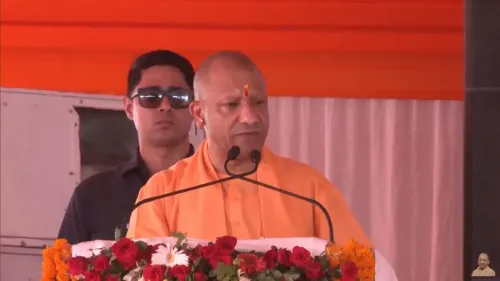
The post was accompanied by a video , indicating deliberate amplification of the governance message beyond text-only reach.
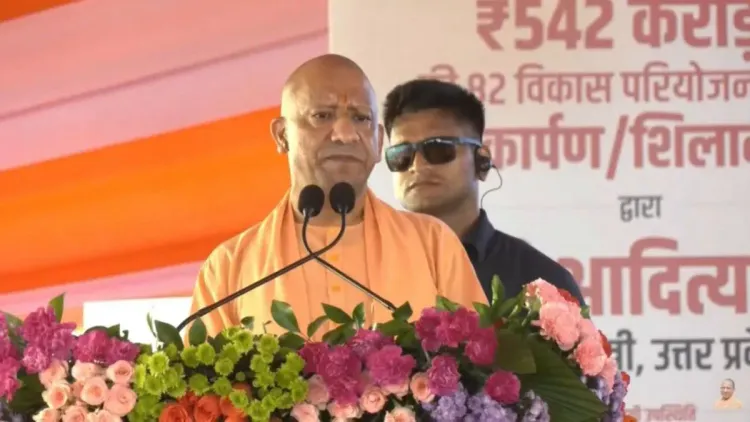
Uttar Pradesh Chief Minister Yogi Adityanath on Monday, 20 July 2026, reaffirmed his government's core governance principle — that the state will work for every section of society, including the poor, Dalits, the marginalised, farmers and women, without discrimination. The statement, posted on his official X account, underscores the ideological framing that has defined the Bharatiya Janata Party's administration in Uttar Pradesh since 2017.
In his post, the Chief Minister wrote: 'Sarkar ka spasht siddhant hai — sarkar bina bhedbhav ke garib, dalit, vanchit, kisan, mahila sahit samaj ke pratyek tabke ke liye karya karegi...' ('The government's clear principle is — the government will work for every section of society, including the poor, Dalits, the deprived, farmers and women, without discrimination.')
Context
The declaration echoes the BJP's post-2014 political vocabulary, which shifted the party's public messaging in Uttar Pradesh from explicit caste-based mobilisation toward a narrative of uniform development. The phrase signals a welfare-delivery model framed as merit-based and non-discriminatory rather than targeted at any single community. Chief Minister Adityanath has consistently invoked this principle across public addresses and social-media communication since taking office.
Policy Backdrop
The Yogi Adityanath government's record since 2017 reflects this stated principle in its scheme architecture. Programmes such as the Mukhyamantri Kisan Kalyan Yojana and state-level support linked to the Ujjwala LPG scheme were presented as universal rather than community-specific. Successive state budgets have expanded outlays for direct-benefit transfers, housing, and women's welfare, each time framed under the 'Sabka Saath, Sabka Vikas' rubric borrowed from the Union government's own development lexicon.
The explicit mention of Dalits and the vanchit (deprived) alongside farmers and women is notable. It signals that the government wishes to be seen as addressing structural social inequalities, not merely economic ones — a distinction that carries significant political weight in Uttar Pradesh, home to one of India's largest Dalit populations.
Stakeholders and Impact
The communities named in the post — Dalits, small farmers, women, and the economically weaker sections — collectively represent a substantial majority of Uttar Pradesh's electorate. For Dalit communities, the explicit mention carries symbolic importance, given the historical undercounting of their welfare needs in mainstream political discourse. For farmers, the signal connects to ongoing demands around crop-price support and debt relief.
Women's welfare has been a particular focus area, with schemes targeting self-help groups, nutrition, and safety. The Chief Minister's framing of all these groups under a single, non-discriminatory umbrella is designed to project administrative impartiality — a message that resonates across both urban and rural constituencies in the state.
What's Next
With the 2027 Uttar Pradesh Assembly elections on the horizon, statements of this nature are likely to become more frequent as the ruling party seeks to consolidate its broad-based coalition. Analysts will watch the next state budget closely for allocation patterns that either validate or complicate this non-discrimination narrative. Any new flagship scheme announced ahead of the election cycle will be scrutinised against the benchmark the Chief Minister has publicly set for himself.
The post, accompanied by a video, suggests the message is being amplified beyond text for wider reach — an indication that the government views this governance principle as a core electoral asset heading into the next political cycle.
Point of View
It signals discipline within the BJP's UP cadre to avoid communally divisive welfare framing; externally, it attempts to neutralise opposition narratives that the government favours particular communities. The explicit naming of Dalits is the sharpest edge of the message, as it directly contests the ground traditionally held by the Bahujan Samaj Party in Uttar Pradesh. Heading into 2027, this framing will be tested not by the words of the post but by the budget lines and scheme beneficiary data the government chooses to make public.
NationPress
20 Oct 2026
Frequently Asked Questions
What did CM Yogi Adityanath say about welfare in his July 2026 post?
CM Yogi Adityanath stated that the government's clear principle is to work for every section of society — including the poor, Dalits, the deprived, farmers and women — without discrimination.
What is the Mukhyamantri Kisan Kalyan Yojana in Uttar Pradesh?
The Mukhyamantri Kisan Kalyan Yojana is a state-level farmer welfare scheme launched by the Yogi Adityanath government to provide financial support to small and marginal farmers in Uttar Pradesh, framed as a universal rather than community-specific programme.
How does Yogi Adityanath's welfare policy connect to the BJP's 'Sabka Saath Sabka Vikas' slogan?
The Yogi government has consistently aligned its welfare messaging with the BJP's national 'Sabka Saath, Sabka Vikas' principle, presenting state schemes for farmers, women and Dalits as non-discriminatory and merit-based rather than targeted at specific caste or religious groups.
Why is CM Yogi's mention of Dalits politically significant in Uttar Pradesh?
Uttar Pradesh has one of India's largest Dalit populations, and Dalit voters have historically been a key constituency of the Bahujan Samaj Party. By explicitly naming Dalits as equal beneficiaries, the BJP-led state government signals a direct effort to broaden its support base among this community.
When are the next Uttar Pradesh Assembly elections?
The next Uttar Pradesh Assembly elections are scheduled for 2027 , and governance statements such as this one are expected to intensify as the ruling party seeks to consolidate its electoral coalition across caste and community lines.