CM Yogi Vows No Discrimination for Any Eligible Beneficiary
Synopsis
Uttar Pradesh Chief Minister Yogi Adityanath has declared that every eligible person, irrespective of caste or religious community, will receive equal treatment under state welfare and recruitment programmes — reinforcing the BJP government's eligibility-first governance messaging.
Key Takeaways
CM Yogi Adityanath posted on June 6, 2026 that no eligible person will face discrimination regardless of caste or religious community.
The statement applies to all individuals who meet the eligibility criteria for state welfare schemes and government recruitment.
The 103rd Constitutional Amendment (2019) introduced 10% EWS reservation irrespective of caste, a policy the UP government has aligned with.
The BJP-led Uttar Pradesh government has emphasised merit and eligibility-based delivery since taking office in 2017 .
Key stakeholders include government job aspirants and students dependent on state scholarships and welfare programmes.
Upcoming state recruitment notifications and scholarship guidelines will be watched for alignment with this public commitment.
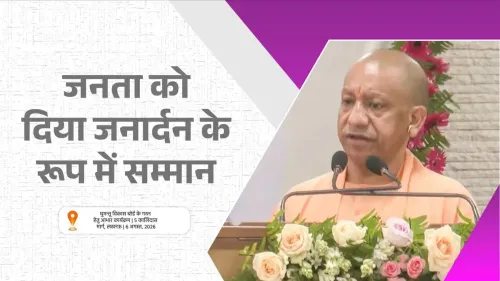
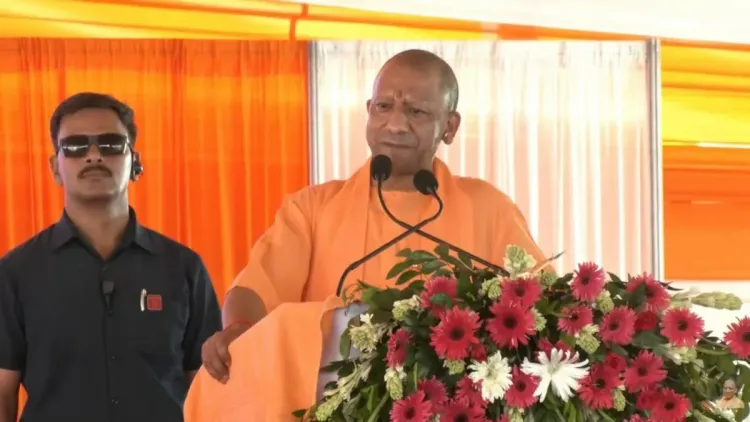
Uttar Pradesh Chief Minister Yogi Adityanath on Saturday, June 6, 2026, reaffirmed that no eligible person will face discrimination in state welfare and recruitment schemes, regardless of their caste or religious community. The statement, posted on his official X account, signals a continued emphasis by the BJP-led Uttar Pradesh government on eligibility-first delivery of public benefits.
In his post, the Chief Minister stated: 'हर पात्र व्यक्ति चाहे वह किसी जाति, मत-संप्रदाय का हो, अगर वह पात्रता की श्रेणी में आता है, उसके साथ कोई भेदभाव नहीं होगा' — translated: 'Every eligible person, regardless of their caste or religious community, if they fall within the eligibility criteria, will face no discrimination.'
Context
The statement comes against the backdrop of longstanding debates in Uttar Pradesh — India's most populous state — over equitable access to government jobs, scholarships, and welfare schemes. Allegations of bias in beneficiary selection have periodically surfaced from multiple community groups across the state. Chief Minister Adityanath has used public messaging to counter such perceptions since taking office in 2017.
The post, though brief, carries political weight given the diversity of Uttar Pradesh's population, which includes substantial populations from scheduled castes, Other Backward Classes, religious minorities, and the general category.
Policy Backdrop
The 103rd Constitutional Amendment of 2019 introduced a 10% reservation for Economically Weaker Sections (EWS) regardless of caste, a policy that the BJP-led central government has positioned as transcending identity-based frameworks. The Uttar Pradesh government has aligned its state-level recruitment and scholarship guidelines with this broader 'merit and eligibility' orientation.
Since 2017, the state administration has repeatedly emphasised transparent, criteria-driven delivery in flagship programmes — from housing under Pradhan Mantri Awas Yojana to ration distribution under the National Food Security Act. The Chief Minister's post reinforces this public posture ahead of what observers expect to be a busy recruitment and scholarship cycle.
Stakeholders and Impact
The most directly affected groups are government job aspirants and students applying for state-funded scholarships and welfare benefits. For communities that have historically felt excluded from state patronage — whether from upper-caste, minority, or Dalit backgrounds — the assurance of non-discriminatory eligibility assessment carries practical significance.
Civil society organisations monitoring welfare delivery in Uttar Pradesh have long called for grievance mechanisms to be strengthened so that eligibility-based promises translate into on-ground outcomes. The Chief Minister's public commitment provides a benchmark against which implementation can be measured.
What's Next
Attention will now turn to forthcoming state recruitment notifications and scholarship circulars to see whether the eligibility criteria are framed in explicitly caste-neutral and community-neutral language consistent with this statement. Advocacy groups are likely to invoke this post should disputes over beneficiary selection arise in the months ahead. The statement may also inform the Uttar Pradesh government's positioning as state assembly by-elections and local body polls approach on the horizon.
Point of View
The Chief Minister addresses a persistent criticism of identity-driven patronage politics without conceding that such bias has existed. The timing, ahead of likely recruitment cycles and possible electoral contests, suggests the message is as much political signalling as administrative directive. Whether the commitment is matched by verifiable, grievance-redress mechanisms will determine its long-term credibility with beneficiary communities.
NationPress
19 Sept 2026
Frequently Asked Questions
What did CM Yogi Adityanath say about caste discrimination in UP schemes?
CM Yogi Adityanath stated that every eligible person, regardless of their caste or religious community, will face no discrimination in Uttar Pradesh's welfare and recruitment programmes, provided they meet the eligibility criteria.
Which communities does Yogi Adityanath's no-discrimination pledge apply to?
The pledge applies to all communities — scheduled castes, Other Backward Classes, religious minorities, and the general category — with eligibility criteria as the sole determining factor for benefit access.
What is the EWS reservation and how does it relate to this statement?
The Economically Weaker Section (EWS) reservation, introduced by the 103rd Constitutional Amendment in 2019 , provides a 10% quota for economically weaker individuals irrespective of caste, reflecting a similar eligibility-first principle that CM Yogi's statement reinforces at the state level.
Has the UP government taken specific steps to prevent discrimination in scheme delivery?
Since 2017, the BJP-led Uttar Pradesh government has aligned flagship programmes such as housing and food security with criteria-driven beneficiary selection, though civil society groups continue to call for stronger grievance-redress mechanisms.
What should job aspirants and students watch for after CM Yogi's statement?
Aspirants and students should monitor forthcoming state recruitment notifications and scholarship circulars to see whether eligibility criteria are framed in explicitly caste-neutral language consistent with the Chief Minister's public commitment.