CM Yogi: UP ranks No. 1 or 2 in central welfare schemes
Synopsis
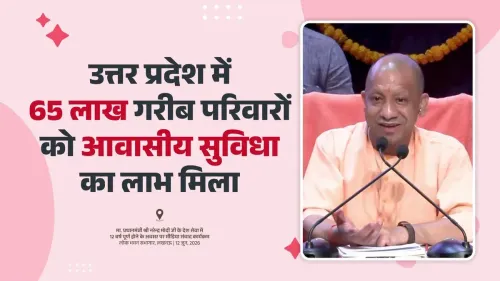
Uttar Pradesh Chief Minister Yogi Adityanath claimed on 3 July 2026 that UP consistently ranks first or second among all Indian states in the implementation of central government welfare schemes, citing the state's delivery record as evidence of effective governance.
Key Takeaways
Chief Minister Yogi Adityanath stated on 3 July 2026 that UP ranks number 1 or 2 in every central welfare scheme.
Uttar Pradesh is India's most populous state with an estimated 24 crore residents, giving it one of the largest beneficiary pools for central schemes.
Key schemes with state-level tracking include Pradhan Mantri Awas Yojana (2015) and Ayushman Bharat (2018) .
The claim reflects a broader pattern of competitive federalism where states are measured on delivery metrics by central ministries and NITI Aayog .
Independent verification of the rankings will depend on forthcoming dashboards from central ministries and planning bodies.
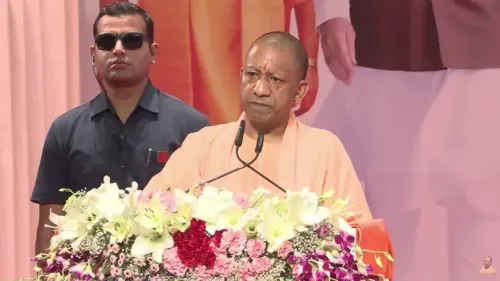
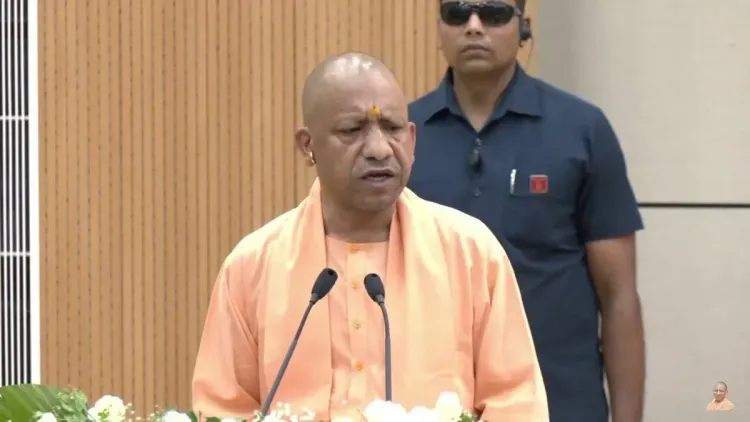
Uttar Pradesh Chief Minister Yogi Adityanath on Friday, 3 July 2026, asserted that Uttar Pradesh consistently ranks first or second among all Indian states in the implementation of welfare schemes launched by the Government of India. The claim, made via a post on X, underscores the state government's emphasis on delivery metrics as a measure of governance performance.
In his post, the Chief Minister stated — 'वेलफेयर की जो भी स्कीमें भारत सरकार प्रस्तुत करती है, उसमें यूपी, देश के अंदर नंबर 1 या नंबर 2 के स्थान पर रहता है' — which translates as: 'In whichever welfare schemes the Government of India presents, UP remains at number 1 or number 2 within the country.'
Context
Uttar Pradesh is India's most populous state, home to an estimated 24 crore people, making it one of the largest beneficiary pools for any centrally sponsored scheme. Since the BJP government came to power in Lucknow in 2017, the state administration has consistently highlighted its performance rankings in central welfare delivery as a marker of administrative efficiency. Such statements are typically made in the context of competitive federalism, where states are evaluated on dashboards maintained by central ministries and planning bodies.
Policy Backdrop
The central government has, since 2014, rolled out a series of flagship welfare programmes with built-in state-level tracking. Pradhan Mantri Awas Yojana (PMAY), launched in 2015, ranks states on housing unit completions; Ayushman Bharat, launched in 2018, tracks beneficiary coverage and hospital empanelment across states. Both schemes have large absolute beneficiary bases in Uttar Pradesh owing to the state's population size, which can contribute to high absolute delivery numbers.
The alignment between the BJP-led state government and the BJP-led central government has been cited by the state administration as a structural advantage in scheme implementation, enabling faster fund disbursement and coordination between state and district-level agencies.
Stakeholders and Impact
The primary beneficiaries of this narrative are the crores of UP residents enrolled under housing, health insurance, sanitation, and direct benefit transfer programmes. State implementation agencies — including district magistrates, block-level offices, and gram panchayats — bear the operational responsibility for translating central allocations into on-ground delivery. Independent assessments of scheme quality, grievance redress, and last-mile reach remain important counterpoints to aggregate ranking data.
For the BJP ahead of future electoral cycles, UP's welfare delivery record is a key political asset. The state's performance rankings, when validated by central ministry dashboards or NITI Aayog indices, lend credibility to the governance narrative the party has built since 2017.
What's Next
Attention will now turn to forthcoming state-wise implementation data from NITI Aayog and relevant central ministries, which will either substantiate or complicate the rankings cited by the Chief Minister. Observers will also watch whether specific scheme-wise data — broken down by district and beneficiary category — is made publicly available to allow independent verification of the top-1-or-2 claim.
Point of View
' where state-centre alignment under the same party is presented as a structural advantage in scheme execution. However, aggregate rankings driven by population size raise questions about per-capita delivery quality, a distinction that independent assessments and NITI Aayog indices are better placed to resolve. As the next electoral cycle approaches, the frequency and specificity of such welfare-performance messaging from Lucknow is likely to intensify.
NationPress
1 Oct 2026
Frequently Asked Questions
What did CM Yogi Adityanath say about UP's welfare scheme ranking?
On 3 July 2026, Chief Minister Yogi Adityanath stated that Uttar Pradesh ranks number 1 or number 2 in every welfare scheme launched by the Government of India.
Which central welfare schemes is UP said to perform well in?
The state has highlighted its performance in schemes such as Pradhan Mantri Awas Yojana and Ayushman Bharat, both of which have large beneficiary bases in UP due to the state's population size.
Why does Uttar Pradesh often rank high in central scheme delivery?
UP's large population — estimated at 24 crore — means it has one of the biggest absolute beneficiary pools in the country, which can contribute to high delivery numbers in centrally tracked schemes.
What is 'double engine government' in the context of UP?
'Double engine government' refers to the BJP's argument that having the same party in power at both the state and central levels enables faster coordination, fund disbursement, and scheme implementation.
How can UP's welfare scheme rankings be independently verified?
State-wise implementation data is periodically released by NITI Aayog and central ministries through online dashboards; these are the primary sources for verifying ranking claims made by state governments.