CM Yogi: UP a revenue surplus state, leads welfare scheme delivery

Synopsis
Chief Minister Yogi Adityanath declared on July 3, 2026 that Uttar Pradesh has established itself as a revenue surplus state over six years and now ranks first or second nationally in implementing central government welfare schemes, citing improved fiscal discipline and scheme delivery.
Key Takeaways
CM Yogi Adityanath stated that Uttar Pradesh has positioned itself as a revenue surplus state over the past six years .
The state claims to rank first or second nationally in the effective implementation of Government of India welfare schemes.
The fiscal turnaround follows a consolidation roadmap launched after the Yogi Adityanath government took office in March 2017 .
Key central schemes cited in the broader policy context include Saubhagya , Ujjwala , PM-KISAN , and Ayushman Bharat .
NITI Aayog dashboards and indices are the standard benchmarks used to assess and compare state-level scheme delivery.
Upcoming state budget documents and NITI Aayog rankings will be critical in independently corroborating these claims.
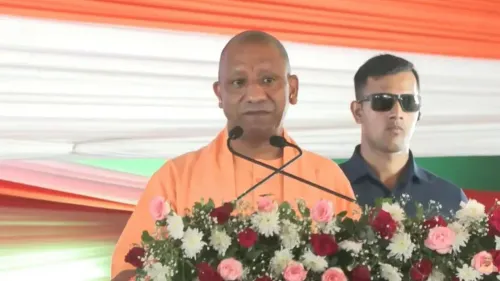
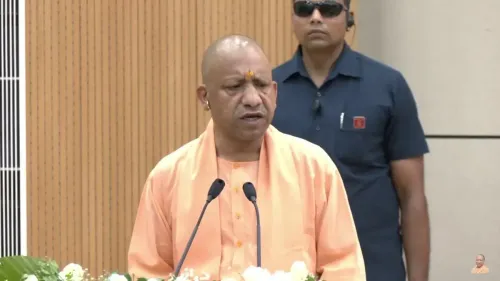
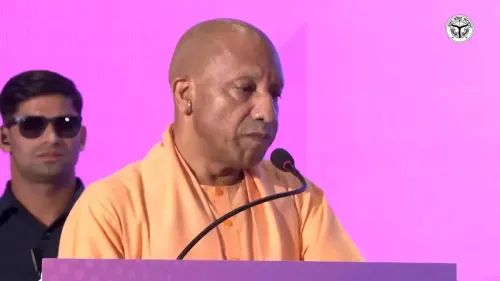
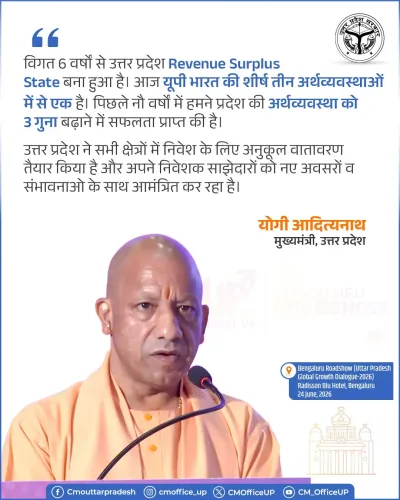
The Chief Minister's Office of Uttar Pradesh on Friday, July 3, 2026 shared a statement by Chief Minister Yogi Adityanath asserting that the state has established itself as a revenue surplus state over the past six years and consistently ranks first or second in the effective implementation of central government welfare schemes.
Speaking in the context of the state's fiscal trajectory, CM Yogi Adityanath stated: 'Uttar Pradesh ne pichhle 6 varshon mein revenue surplus state ke roop mein khud ko sthapit kiya hai' — 'Uttar Pradesh has established itself as a revenue surplus state over the last six years.' He further noted that in the successful implementation of welfare schemes operated by the Government of India, Uttar Pradesh today ranks first or second.
Context
The statement marks a significant claim for a state that historically carried chronic revenue deficits before the Yogi Adityanath government assumed office in March 2017. A revenue surplus indicates that a state's non-capital receipts exceed its non-capital expenditure — a benchmark of fiscal discipline that larger, more populous states have historically struggled to maintain. Uttar Pradesh, as India's most populous state, achieving and sustaining this status would represent a notable administrative milestone.Policy Backdrop
Upon taking office, the Yogi Adityanath administration announced a fiscal consolidation roadmap centred on expenditure rationalisation and improved tax compliance. The state aligned fully with the nationwide rollout of GST in July 2017, which restructured revenue streams and required new compliance mechanisms. From 2018 onward, Uttar Pradesh intensified implementation of flagship central schemes, reporting high household saturation levels under programmes such as Saubhagya (household electrification), Ujjwala (LPG connections), PM-KISAN, and Ayushman Bharat. Rankings in such scheme delivery are periodically assessed through dashboards maintained by NITI Aayog, which has become a standard reference point for state-level governance comparisons.Stakeholders and Impact
The claim carries direct relevance for Uttar Pradesh's estimated population of over 24 crore people, a large proportion of whom are beneficiaries of one or more central welfare schemes. A state that ranks at the top in scheme implementation translates, in practice, to higher saturation of subsidised cooking gas, crop income support, health insurance coverage, and electrified households reaching the last mile. For the state finance department, a sustained revenue surplus position improves the state's borrowing profile and creates fiscal headroom for capital expenditure. Similar fiscal and governance messaging has been publicly projected by BJP-governed states including Madhya Pradesh and Gujarat over the same period, reflecting a broader pattern of using NITI Aayog indices and scheme dashboards as governance scorecards.What's Next
The next state budget documents and any updated NITI Aayog performance index on welfare scheme implementation will be closely watched to verify and contextualise the claims made in this statement. If official budget data corroborates the revenue surplus position for the full six-year window, it would strengthen Uttar Pradesh's case as a model for large-state fiscal management — and is likely to feature prominently in political messaging ahead of future electoral cycles in the state.Point of View
The largest state by population, such a claim carries outsized political weight: if substantiated by budget data, it would mark a structural shift from decades of fiscal stress. The emphasis on welfare scheme rankings also signals a deliberate alignment with the Centre's delivery architecture, reinforcing the state-Centre partnership narrative that has been central to the BJP's political communication since 2014. Independent verification through forthcoming budget documents and NITI Aayog indices will determine whether the claim holds as policy fact or functions primarily as political positioning.
NationPress
1 Oct 2026
Frequently Asked Questions
Has Uttar Pradesh become a revenue surplus state?
The Chief Minister's Office of Uttar Pradesh stated on July 3, 2026 that the state has established itself as a revenue surplus state over the past six years under CM Yogi Adityanath . Independent confirmation through official budget documents is pending.
What does revenue surplus state mean?
A revenue surplus state is one where non-capital receipts exceed non-capital expenditure, indicating that the government earns more from taxes and other regular income than it spends on day-to-day operations, leaving room for capital investment without borrowing.
Which welfare schemes is Uttar Pradesh ranked first or second in?
CM Yogi Adityanath stated that Uttar Pradesh ranks first or second in the implementation of welfare schemes operated by the Government of India . Schemes assessed in this context include PM-KISAN , Ujjwala , Ayushman Bharat , and Saubhagya , with rankings tracked by NITI Aayog .
When did Yogi Adityanath become Chief Minister of Uttar Pradesh?
Yogi Adityanath became Chief Minister of Uttar Pradesh in March 2017 and has since been re-elected, continuing to serve as of 2026 .
How does NITI Aayog rank states on welfare scheme implementation?
NITI Aayog publishes periodic dashboards and indices, including the SDG India Index , that assess state-level performance on central scheme delivery, using saturation data, beneficiary coverage, and outcome metrics to rank states against each other.