Iran rules out improved IAEA cooperation amid US-Israeli strikes fallout
Synopsis
Iran has effectively frozen any prospect of improved IAEA cooperation, tying it directly to unresolved consequences of US-Israeli strikes on its nuclear facilities. With Tehran simultaneously rejecting GCC compensation demands and invoking international law to claim victim status, the diplomatic fallout from the 40-day war continues to ripple through global nuclear oversight and West Asian security frameworks — just days before a critical IAEA Board of Governors meeting.
Key Takeaways
Iranian Foreign Ministry spokesman Esmaeil Baghaei said on 15 November 2026 that improved cooperation with the IAEA is unlikely as long as current conditions persist.
Iran accused the IAEA of failing to identify US-Israeli attacks on Iranian nuclear facilities as the principal cause of the cooperation breakdown.
GCC Secretary-General Jasem Mohamed Albudaiwi told the UN Security Council that Iran launched over 7,000 missiles and drones against Gulf states since 28 February .
Iran rejected GCC demands for compensation, arguing that countries which hosted or facilitated military operations against Iran cannot seek reparations.
Tehran says it is itself pursuing reparations and has completed documentation under UN General Assembly Resolution 3314 .
Iran reaffirmed commitment to the NPT and characterised its strikes as targeting only US military bases and assets .
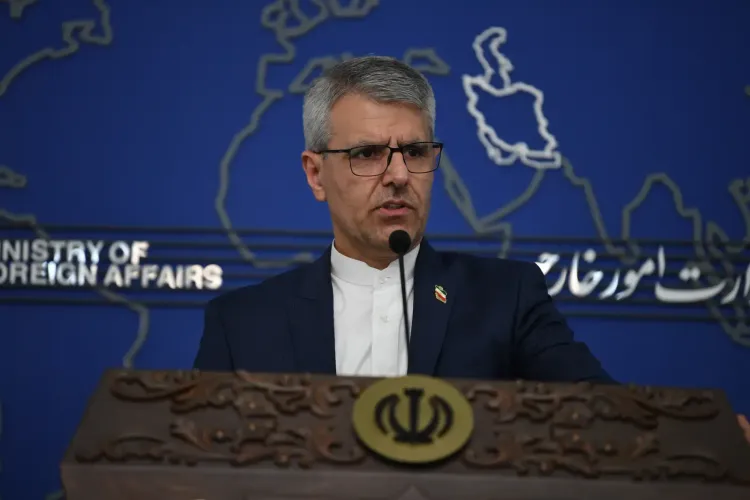
Iranian Foreign Ministry spokesman Esmaeil Baghaei said on Sunday, 15 November 2026, that cooperation between Iran and the International Atomic Energy Agency (IAEA) would not improve as long as the current situation persists — a pointed warning issued days before a critical meeting of the IAEA Board of Governors. Baghaei made the remarks at a weekly press conference in Tehran, responding to a confidential IAEA report circulated ahead of that meeting.
Iran's Grievance With the IAEA
Baghaei acknowledged that the IAEA had recognised that US-Israeli attacks on Iranian nuclear facilities disrupted the agency's activities inside Iran. However, he accused the agency of stopping short of explicitly naming the strikes as the principal cause of the breakdown in cooperation.
'As long as this situation persists, we cannot expect a transformation in cooperation between Iran and the agency,' Baghaei said, in remarks reported from Tehran.
He further accused the IAEA of issuing one-sided reports, arguing that such an approach had damaged the agency's international reputation and credibility. Despite the standoff, Baghaei affirmed that Iran would continue to honour its obligations under the Treaty on the Non-Proliferation of Nuclear Weapons (NPT) for as long as it remained a signatory.
Iran Rejects GCC Compensation Demands
Baghaei separately pushed back against calls by the Gulf Cooperation Council (GCC) for Iran to pay compensation for damages arising from its strikes on US bases and assets in West Asia. The GCC demand was articulated by GCC Secretary-General Jasem Mohamed Albudaiwi during a UN Security Council meeting in New York on Friday, convened at Bahrain's request.
Albudaiwi stated that Iran had launched over 7,000 missiles and drones against Gulf states since 28 February, and that the GCC holds Iran fully responsible for the attacks and their consequences. The GCC's demands to the Security Council reportedly included requiring Iran to provide full compensation 'in accordance with international law and Human Rights Council Resolution 61/1.'
Baghaei rejected this framing outright, arguing that regional countries which 'actively participated in the military aggression' against Iran and made their territories available to 'aggressors' could not demand reparations.
Iran Claims Legal High Ground
The Iranian spokesperson said there is 'clear evidence' that losses and damages suffered by Iran during what he described as a 40-day war originated from certain countries in the region. He invoked UN General Assembly Resolution 3314, asserting that any country that played a role — directly or indirectly — in what he called the 'US-Israeli military aggression against Iran' is considered an accomplice and bears responsibility under international law.
Baghaei stressed that Iran is itself the party seeking reparations, adding that the necessary documentation has already been prepared. He characterised Iran's actions as 'purely defensive in nature,' targeting exclusively US military bases and assets that had been used to launch attacks against the country, and stated that Iran had taken no action against the sovereignty of other nations in the region.
What This Means for Nuclear Diplomacy
Iran's hardened position on IAEA cooperation complicates the already fraught landscape of nuclear diplomacy in the region. The upcoming IAEA Board of Governors meeting is expected to address the state of inspections and monitoring inside Iran — a process that has been severely strained by the military strikes on nuclear facilities. With Tehran conditioning any improvement in transparency on a resolution it deems unlikely under present circumstances, the prospects for near-term progress appear slim.
The standoff also deepens the rift between Iran and GCC states, whose competing narratives over responsibility and reparations now play out in multilateral forums including the UN Security Council. How the international community responds to Iran's counter-claims and documentation efforts will shape the next phase of West Asian security diplomacy.
Point of View
But operational access requires political accommodation. Meanwhile, the competing reparations narratives — Iran invoking Resolution 3314, the GCC citing Resolution 61/1 — suggest that the legal battleground over the 40-day war has only just opened. What mainstream coverage underplays is that Iran's documentation exercise is not symbolic; if pursued in multilateral forums, it could force a formal accountability debate that Western powers have so far managed to avoid.
NationPress
15 Nov 2026
Frequently Asked Questions
Why is Iran refusing to improve cooperation with the IAEA?
Iran's Foreign Ministry has said cooperation with the IAEA will not improve as long as the current situation persists, specifically pointing to US-Israeli strikes on Iranian nuclear facilities. Tehran accuses the agency of acknowledging the disruption caused by these strikes but failing to explicitly identify them as the main cause of the breakdown.
What did the GCC demand from Iran at the UN Security Council?
GCC Secretary-General Jasem Mohamed Albudaiwi, speaking at a UN Security Council meeting on Friday convened at Bahrain's request, said Iran had launched over 7,000 missiles and drones against Gulf states since 28 February and demanded full compensation for damages under international law and Human Rights Council Resolution 61/1.
How did Iran respond to the GCC compensation demands?
Iran rejected the demands outright, with spokesman Esmaeil Baghaei arguing that countries which actively participated in or facilitated military aggression against Iran cannot seek reparations. He added that Iran is itself the aggrieved party, has documented its losses, and is pursuing its own reparations claims under UN General Assembly Resolution 3314.
What is the IAEA Board of Governors meeting expected to address?
The IAEA Board of Governors is meeting next week and is expected to take up a confidential report on the state of nuclear inspections and monitoring inside Iran — activities that have been severely disrupted following military strikes on Iranian nuclear facilities.
Does Iran still consider itself bound by the Nuclear Non-Proliferation Treaty?
Yes. Baghaei affirmed that Iran will continue to honour its NPT obligations for as long as it remains a party to the treaty, even as cooperation with the IAEA remains stalled over the unresolved fallout from the strikes.