CM Yogi Says UP Welfare Schemes Now Reach the Poor
Synopsis
Uttar Pradesh Chief Minister Yogi Adityanath on 11 July 2026 declared that welfare schemes now genuinely reach the poor, arguing that before 2017 no government benefit reached the weak and marginalised. He linked the change to his administration's governance reforms and ongoing development work across the state.
Key Takeaways
CM Yogi Adityanath stated on 11 July 2026 that welfare scheme benefits are now reaching the poor in Uttar Pradesh .
He claimed that before 2017 , no government scheme benefit reached the poor or the weak sections of society.
The statement contrasts the current BJP administration's record with that of the preceding government in Uttar Pradesh .
The post also noted that development work is now running alongside welfare delivery — a dual-progress claim.
The remarks are consistent with the BJP 's broader narrative of reducing leakages and improving direct benefit transfers since taking power in March 2017 .
State-level welfare scheme audits and beneficiary data will be key indicators of whether ground realities match the political assertion.
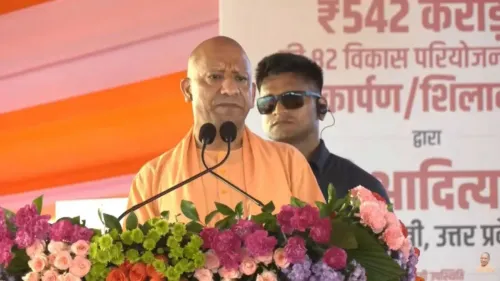
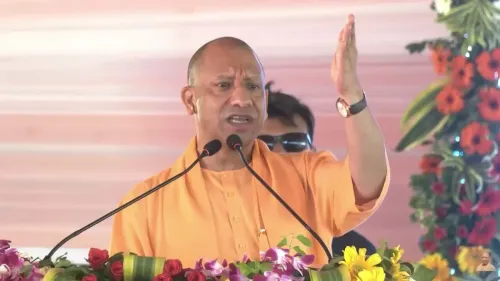
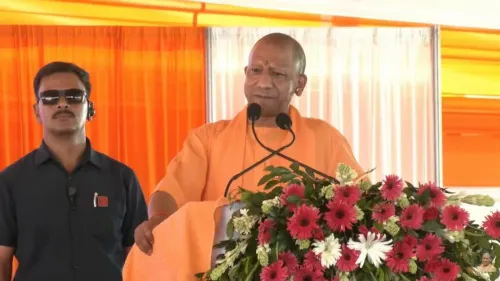
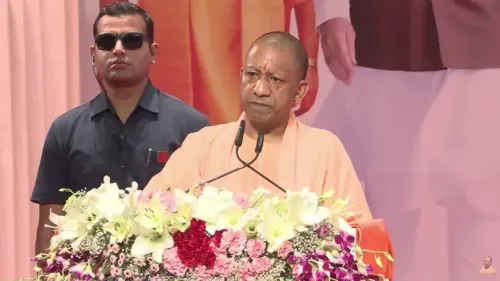
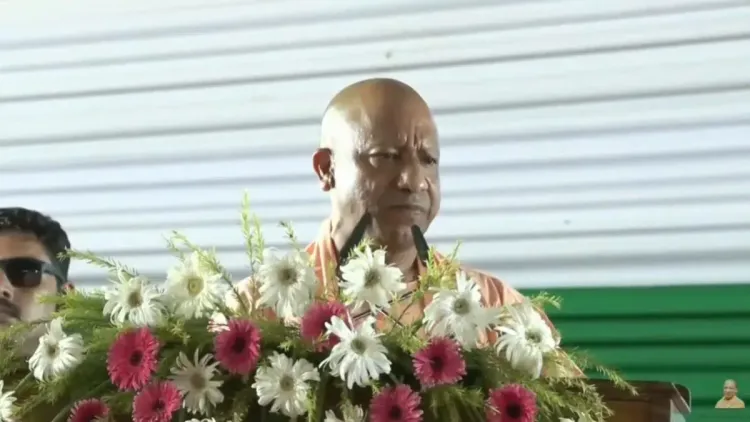
Uttar Pradesh Chief Minister Yogi Adityanath on Saturday, 11 July 2026 asserted that government welfare schemes are now reaching the poor and marginalised sections of society — a stark contrast, he said, to the situation before 2017 when benefits rarely trickled down to those who needed them most.
Posting on X, CM Yogi stated: 'वर्ष 2017 के पहले शासन की किसी भी योजना का लाभ गरीबों और कमजोरों को नहीं मिल पाता था' ['Before 2017, the benefits of any government scheme did not reach the poor and the weak']. He added that today, people are not only receiving scheme benefits but development work is also being carried out simultaneously.
Context
Yogi Adityanath was sworn in as Chief Minister of Uttar Pradesh in March 2017 following the Bharatiya Janata Party's decisive victory in the state assembly elections. Since then, the state government has repeatedly positioned its tenure as a period of administrative reform, particularly in welfare delivery. The post's framing — contrasting governance before and after 2017 — is a recurring rhetorical device used by the BJP in Uttar Pradesh to highlight what it describes as systemic correction under its watch.
Policy Backdrop
A central plank of the BJP's governance narrative in Uttar Pradesh has been the elimination of leakages in welfare distribution and the expansion of direct benefit transfers to intended beneficiaries. The party has consistently argued that under the preceding administration, scheme funds were siphoned off before reaching the poor, and that structural reforms since 2017 have reversed this trend. CM Yogi's statement reinforces this framing, linking improved welfare delivery to the government's broader anti-corruption and administrative efficiency drive.
Stakeholders and Impact
The primary stakeholders in this narrative are Uttar Pradesh's poor and economically weaker sections — a population that spans hundreds of districts across India's most populous state. Welfare schemes covering housing, food security, healthcare, and livelihood support are among those the government claims have seen improved outreach since 2017. For beneficiaries, the practical question remains whether ground-level delivery has matched the political assertion — a point that state-level audits and independent assessments would need to verify.
Politically, the statement also targets voters ahead of future electoral cycles, reinforcing the BJP's claim that its governance model is more effective and less corrupt than that of its rivals in the state.
What's Next
The coming months are likely to see the Uttar Pradesh government release or cite welfare scheme performance data to substantiate claims of improved delivery. Independent audits and beneficiary surveys will be closely watched to assess whether the gains described by CM Yogi are reflected in verifiable outcomes on the ground. With the next Uttar Pradesh assembly elections on the horizon, the governance-versus-misgovernance framing is expected to intensify as the ruling party seeks to consolidate its record-based appeal among the state's poor and marginalised communities.
Point of View
The statement implicitly indicts the preceding Samajwadi Party government without naming it — a politically efficient move that avoids direct confrontation while keeping the contrast sharp. The emphasis on simultaneous welfare delivery and development work signals an attempt to counter any perception that the administration prioritises one over the other. As the next assembly election cycle approaches, such statements are likely to become more frequent and data-backed, raising the stakes for independent verification of scheme outcomes.
NationPress
10 Oct 2026
Frequently Asked Questions
What did CM Yogi Adityanath say about welfare schemes in UP?
CM Yogi Adityanath said on 11 July 2026 that before 2017, no government scheme benefit reached the poor or weak sections in Uttar Pradesh, but now people are receiving those benefits and development work is also ongoing.
What changed in Uttar Pradesh after 2017 according to Yogi Adityanath?
According to Yogi Adityanath, the BJP government that came to power in March 2017 improved welfare delivery so that scheme benefits now actually reach the poor and marginalised, unlike under the previous administration.
Which government was in power in UP before 2017?
The Samajwadi Party was in power in Uttar Pradesh before 2017. The BJP under Yogi Adityanath won the state assembly elections and took charge in March 2017.
How is the BJP government in UP improving welfare scheme delivery?
The BJP government in Uttar Pradesh has focused on direct benefit transfers and reducing leakages in scheme implementation, aiming to ensure benefits reach intended beneficiaries directly rather than being siphoned off.
What is the significance of CM Yogi's statement ahead of UP elections?
The statement reinforces the BJP's core electoral narrative in Uttar Pradesh — that its governance model is more effective and less corrupt than that of its predecessors — which is expected to be a key campaign theme in future assembly elections.