CM Yogi Marks 12 Years of Modi Govt Welfare Push
Synopsis
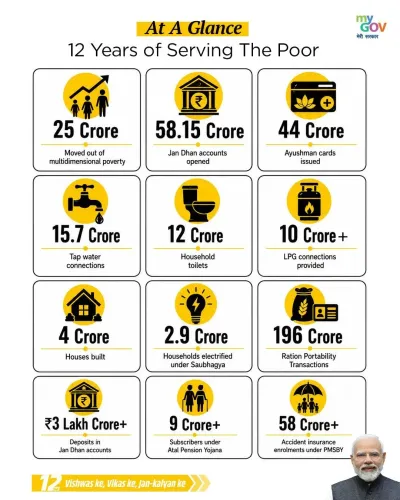
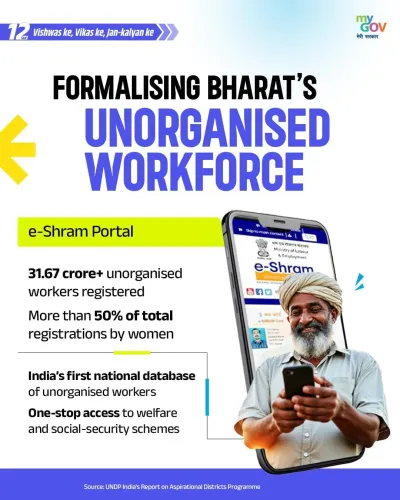
On 8 June 2026, UP Chief Minister Yogi Adityanath marked twelve years of the Modi government's welfare push, crediting Jan Dhan, Ujjwala, Ayushman Bharat, Jal Jeevan Mission and Direct Benefit Transfer with delivering dignity and security to crores of India's poorest families.
Key Takeaways
CM Yogi Adityanath posted on 8 June 2026 marking 12 years of the Modi government's Garib Kalyan welfare drive.
Pradhan Mantri Jan Dhan Yojana (launched August 2014 ) and Pradhan Mantri Ujjwala Yojana (launched May 2016 ) were cited as pillars of financial and energy access for the poor.
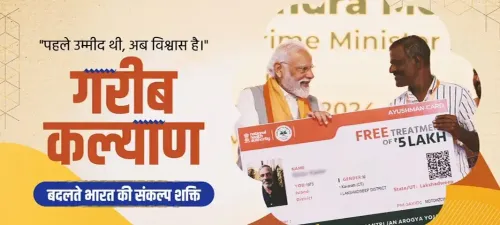
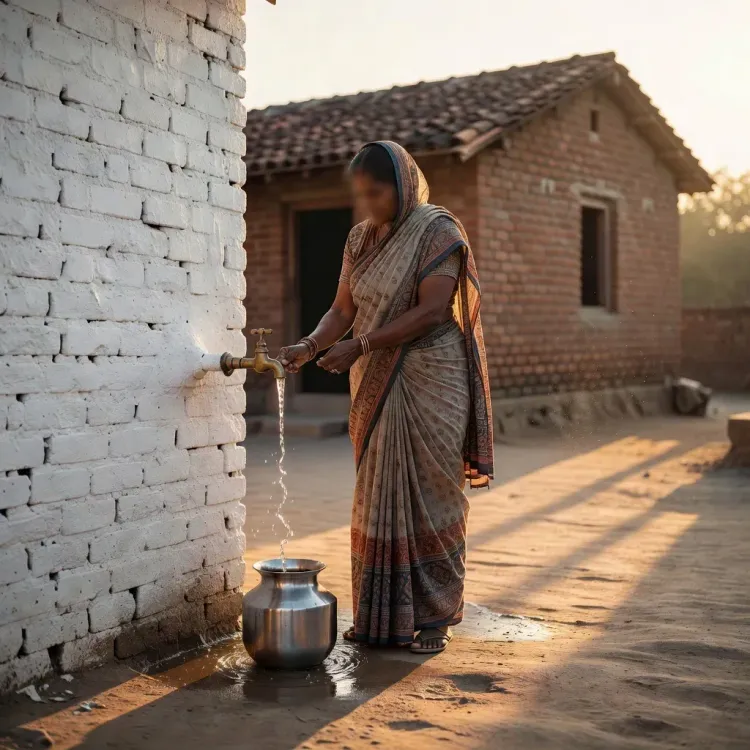
Ayushman Bharat (2018) offers up to Rs 5 lakh health insurance cover per eligible family; Jal Jeevan Mission (2019) targets tap water in every rural home.
Direct Benefit Transfer , scaled from 2014, was credited with strengthening transparency by routing payments directly to Aadhaar-linked accounts.
Uttar Pradesh is among the largest beneficiary states under these centrally sponsored schemes, giving CM Yogi's endorsement particular administrative significance.
The CM framed the twelve-year record as the foundation of the Viksit Bharat ('Developed India') vision, signalling continued political emphasis on welfare delivery.
Uttar Pradesh Chief Minister Yogi Adityanath on Monday, 8 June 2026, praised Prime Minister Narendra Modi's twelve-year welfare record, calling it a 'glorious saga of the renaissance of dignity, security and trust' in the lives of crores of deprived families across India. The post, shared on X under the hashtag #12YearsOfGaribKalyan, highlighted a cluster of flagship central schemes that the CM described as having transformed governance into a 'value system' dedicated to Antyodaya (uplift of the last person in the queue).
Context
Prime Minister Modi's government took office in May 2014 with an explicit commitment to technology-enabled, leakage-free welfare delivery. The twelve-year milestone falls in June 2026, prompting leaders across the ruling alliance to mark the occasion with assessments of the social-sector record. CM Yogi Adityanath, who heads both the Gorakhnath Math and the Uttar Pradesh government, positioned his post as a formal expression of gratitude to the Prime Minister on behalf of the state's beneficiary families.
Policy Backdrop
The CM's post enumerated several landmark programmes by name. Pradhan Mantri Jan Dhan Yojana, launched in August 2014, opened banking access for previously unbanked households. Pradhan Mantri Ujjwala Yojana, started in May 2016, provided LPG connections to women from below-poverty-line families, freeing them from cooking-smoke hazards — what the CM called 'mātṛśakti ko dhuẽ se mukti' ('liberation of women from smoke').
Swachh Bharat Mission, launched in October 2014, targeted open defecation elimination. Jal Jeevan Mission, announced in 2019, aims to deliver tap water to every rural household. Pradhan Mantri Awas Yojana, launched in June 2015, extended pucca (permanent) housing to rural and urban poor families. The Direct Benefit Transfer architecture, scaled up from 2014 onward, underpins all these programmes by routing payments directly to Aadhaar-linked accounts, cutting intermediary leakages.
Ayushman Bharat, rolled out in 2018, provides health insurance coverage of up to Rs 5 lakh per eligible family annually, described by the CM as a 'shield of health security' for crores of households. Social security schemes, taken together, form what the CM called a 'new chapter of hope, opportunity and self-confidence' for the poor and marginalised.
Stakeholders and Impact
Uttar Pradesh — India's most populous state — has been among the largest recipients of funds and beneficiary connections under each of these schemes, making CM Yogi's endorsement both politically significant and administratively relevant. Women from BPL households, rural families lacking piped water, and unbanked communities in the state stand as the primary stakeholders the post addresses. The CM framed the twelve years not as a list of programmes but as a journey to homes 'where conveniences reached for the first time' and families 'who felt for the first time that the government had come to their doorstep.'
The state-central coordination dynamic is central to delivery: Uttar Pradesh implements all these centrally sponsored schemes through its own administrative machinery, and the ruling party's alignment at both levels has been cited as a factor in accelerating enrolment and disbursement.
What's Next
Analysts tracking welfare delivery will watch state-level utilisation certificates and third-party coverage evaluations in Uttar Pradesh to assess ground-level outcomes against the claims of the twelve-year milestone. Any expansion of beneficiary lists or enhanced budgets in the forthcoming Union Budget could add a fresh policy dimension to the anniversary narrative. The 'Viksit Bharat' ('Developed India') framework, which the CM invoked as the destination this twelve-year journey is building toward, is expected to remain the central political and policy framing for the ruling alliance through the next electoral cycle.
Point of View
CM Yogi anchors abstract governance claims to tangible infrastructure — a communication strategy that has become standard practice within the ruling alliance to counter opposition narratives about inequality. The framing of welfare as sanskar (ingrained value) rather than mere policy priority signals an attempt to shift the discourse from entitlement to cultural identity. Uttar Pradesh's centrality as the largest beneficiary state gives the CM's endorsement institutional weight beyond ceremonial congratulation.
NationPress
21 Sept 2026
Frequently Asked Questions
What is the 12 Years of Garib Kalyan that CM Yogi posted about?
It refers to twelve years of the Narendra Modi-led central government's welfare programmes since May 2014, including Jan Dhan, Ujjwala, Swachh Bharat, Jal Jeevan Mission, PM Awas Yojana and Ayushman Bharat, collectively framed under the Garib Kalyan (poor welfare) banner.
What is Pradhan Mantri Jan Dhan Yojana?
Pradhan Mantri Jan Dhan Yojana is a financial inclusion scheme launched in August 2014 to open zero-balance bank accounts for households that previously had no access to banking services.
What does Ayushman Bharat offer to beneficiaries?
Ayushman Bharat, rolled out in 2018, provides health insurance coverage of up to Rs 5 lakh per eligible family per year, covering hospitalisation costs at empanelled public and private hospitals.
Why did CM Yogi Adityanath post about Modi's welfare schemes?
CM Yogi posted on 8 June 2026 to mark the twelve-year milestone of the Modi government, expressing gratitude to the Prime Minister and highlighting the impact of central welfare schemes on crores of poor and marginalised families, particularly in Uttar Pradesh.
What is the Viksit Bharat goal mentioned in CM Yogi's post?
Viksit Bharat, meaning 'Developed India', is the Modi government's overarching vision for India's development trajectory, which CM Yogi invoked as the destination that twelve years of welfare-scheme implementation has been building toward.