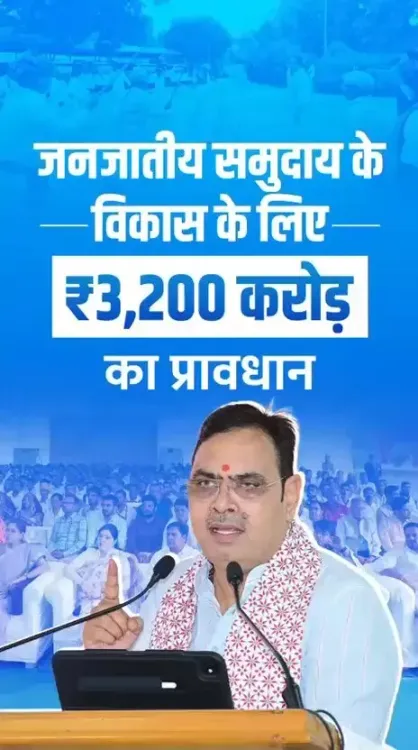
CM Bhajanlal Sharma marks Janjatiya Gaurav Divas, cites ₹3,200 cr tribal outlay
Synopsis
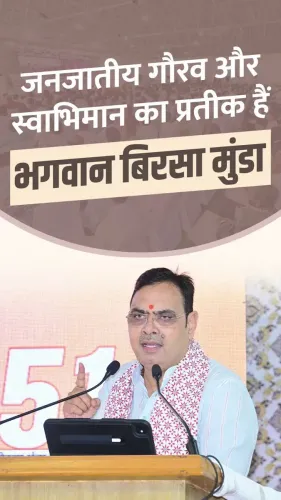
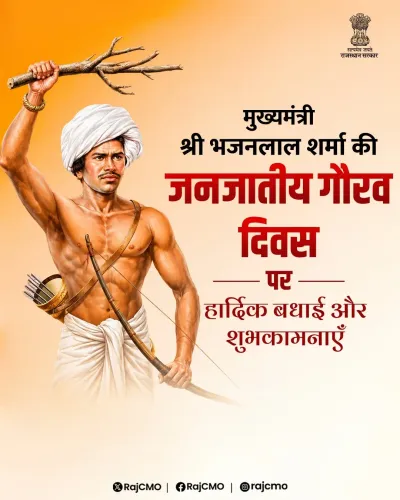
Chief Minister Bhajanlal Sharma addressed a Janjatiya Gaurav Divas event on Birsa Munda's 151st birth anniversary, stating that Rajasthan's 'double engine' government has provisioned roughly ₹3,200 crore for tribal community development over the last three years.
Key Takeaways
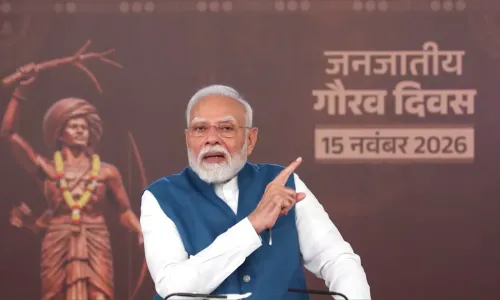
CM Bhajanlal Sharma addressed the Janjatiya Gaurav Divas programme at the Chief Minister's Residence, Jaipur, on 15 November 2026 .
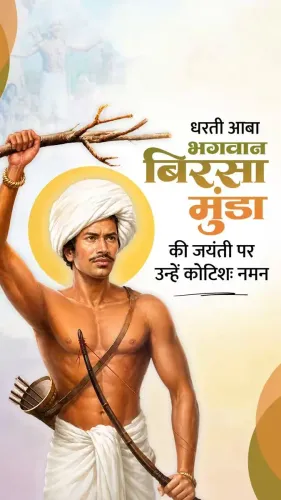
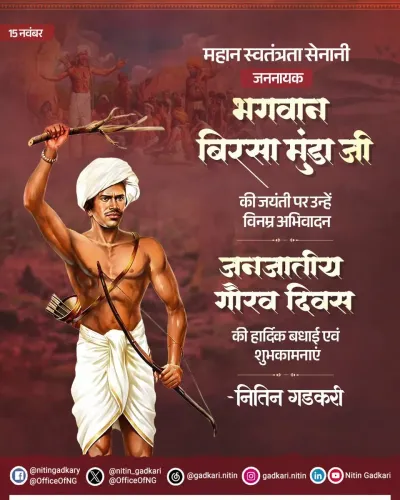
The occasion marks the 151st birth anniversary of tribal freedom fighter Birsa Munda , known as Dharti Aaba.
The Chief Minister stated an allocation of approximately ₹3,200 crore for tribal development over the last three years .
Sharma invoked the BJP's 'double engine' governance framework to credit coordinated central-state policy for the outlay.
Janjatiya Gaurav Divas was instituted by the Government of India in 2021 to recognise tribal heritage and leaders.
Rajasthan's major tribal communities include the Bhil, Meena, and Garasia peoples, concentrated in districts such as Dungarpur, Banswara, and Udaipur.
On the 151st birth anniversary of Dharti Aaba Bhagwan Birsa Munda, Chief Minister Bhajanlal Sharma stood before a gathering at the Chief Minister's Residence in Jaipur on 15 November 2026 and made a pointed promise: Rajasthan's tribal communities are not an afterthought. They are the headline.
Addressing the Janjatiya Gaurav Divas programme, CM Sharma declared that the 'double engine' government — the BJP ruling both at the Centre and in the state — has committed approximately ₹3,200 crore for tribal development over the last three years. The figure, cited directly by the Chief Minister's Office, is meant to signal institutional follow-through, not just ceremonial tribute.
Who was Birsa Munda — and why 15 November matters
Birsa Munda, born on 15 November 1875, led the late-19th-century Ulgulan (Great Tumult) movement among the Munda tribal community in what is now Jharkhand — a revolt against colonial land-grab policies and forced religious conversion. He died at just 25, but his resistance became foundational to India's tribal rights narrative. The Government of India formally instituted Janjatiya Gaurav Divas in 2021 to honour him and all tribal freedom fighters on this date every year.
Rajasthan has a significant Scheduled Tribe population, including the Bhil, Meena, and Garasia communities — historically among the state's most underserved. Any serious conversation about their welfare carries real political and human weight.
The 'double engine' argument — and what it means on the ground
CM Sharma framed the tribal outlay explicitly through the BJP's 'double engine' lens: the idea that having the same party govern both Delhi and Jaipur accelerates fund flow and policy alignment. The ₹3,200 crore allocation is presented as evidence of that alignment translating into rupees, not just rhetoric.
Rajasthan's tribal belt — spanning districts such as Dungarpur, Banswara, and Udaipur — has long been a focus of both welfare programmes and electoral contestation. The BJP reclaimed the state in December 2023, with Sharma taking charge as Chief Minister, and tribal outreach has featured consistently in the government's public messaging since.
What the ₹3,200 crore figure does — and doesn't — tell us
The scale of the stated allocation — roughly ₹1,067 crore per year on average over three years — raises a natural follow-on question: which schemes, which districts, and which measurable outcomes? The Chief Minister's Office has not yet itemised the components of the outlay in this communication. That detail will determine whether the number is a budget provision, an actual expenditure, or a combination of central and state funding streams.
What is clear is the political arithmetic: with the next Rajasthan assembly elections still years away, the government is investing heavily in the symbolic and financial architecture of tribal welfare — and doing so loudly, on the one day in the calendar designed to make that message resonate most.
Birsa Munda fought so that tribal land, identity, and dignity would not be traded away quietly. One hundred and fifty-one years later, the question his anniversary always forces is a simple one: how much of what is promised actually reaches the people who need it?
Point of View
Now a national observance — with announced budgetary figures to reinforce the 'double engine' governance narrative. For Rajasthan, with large tribal populations in its southern belt, this is both a welfare imperative and an electoral investment. The absence of scheme-level detail behind the ₹3,200 crore figure leaves the claim open to scrutiny; the government's credibility on tribal welfare will ultimately rest on outcomes in districts like Dungarpur and Banswara, not on press-ready totals. How the opposition and civil-society groups in tribal areas respond to this framing over the coming months will shape the political salience of the issue.
NationPress
15 Nov 2026
Frequently Asked Questions
What is Janjatiya Gaurav Divas and why is it celebrated on 15 November?
Janjatiya Gaurav Divas is a national observance held on 15 November every year to honour tribal freedom fighters and heritage. The date was chosen because it marks the birth anniversary of Birsa Munda , the iconic Munda tribal leader. The Government of India instituted the observance in 2021 .
Who was Birsa Munda?
Birsa Munda was a tribal leader and freedom fighter from the Munda community, born on 15 November 1875 in present-day Jharkhand. He led the Ulgulan (Great Tumult) movement against colonial land-grab policies and is revered as 'Dharti Aaba' — Father of the Earth — across India's tribal communities.
How much has the Rajasthan government spent on tribal development?
Chief Minister Bhajanlal Sharma stated that approximately ₹3,200 crore has been provisioned for tribal community development over the last three years in Rajasthan. The specific schemes and districts covered by this allocation have not yet been itemised in this announcement.
What does 'double engine government' mean in the context of tribal welfare?
The 'double engine government' is the BJP's phrase for states where both the central and state governments are led by the same party. CM Sharma used it to argue that this alignment accelerates policy coordination and fund flow for tribal welfare schemes in Rajasthan.
Which tribal communities live in Rajasthan?
Rajasthan's major Scheduled Tribe communities include the Bhil, Meena, and Garasia peoples. They are concentrated primarily in the southern districts of the state, including Dungarpur, Banswara, and Udaipur .