CM Yogi joins Chhath Sandhya Arghya at Gomti Ghat, Lucknow
Synopsis
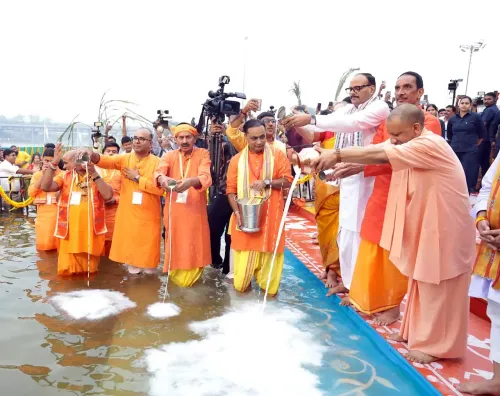
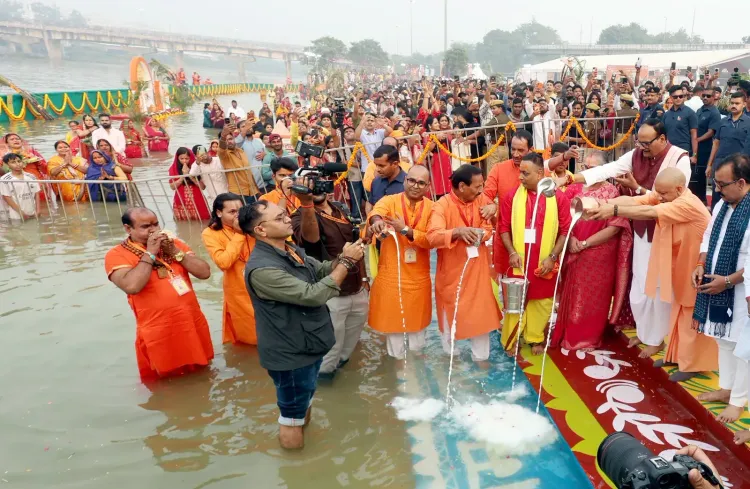
Chief Minister Yogi Adityanath joined the Chhath Sandhya Arghya at Laxman Mela Maidan on the Gomti riverbank in Lucknow on 15 November 2026, showering flower petals on fasting devotees and releasing the Bhojpuri Samaj souvenir 'Sanesh'.
Key Takeaways
CM Yogi Adityanath attended the Chhath Sandhya Arghya at Laxman Mela Maidan, Gomti Ghat, Lucknow on 15 November 2026 .
He showered flower petals ( pushpavarsha ) on Chhath-observing women as a gesture of public honour.
He released 'Sanesh' , a commemorative souvenir of the Akhil Bharatiya Bhojpuri Samaj .
CM Yogi described Chhath as an occasion to express gratitude towards nature, water and the Sun God.
He called the festival the 'divine light of India's Sanatan cultural soul,' teaching devotion, purity, self-purification and discipline.
The event extended the festival's official visibility to Lucknow, beyond its traditional Bihar and eastern UP heartland.
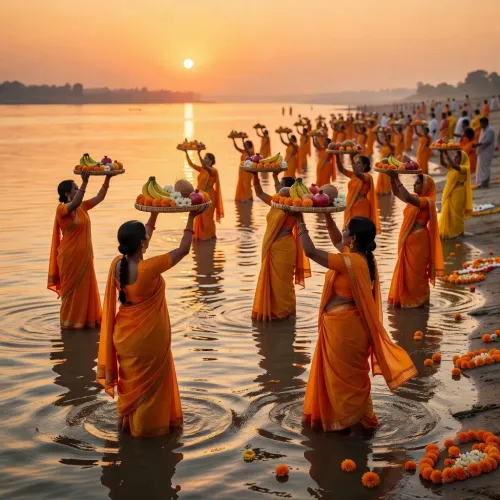
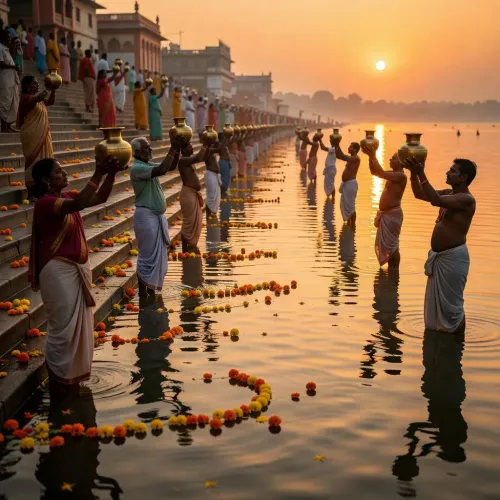
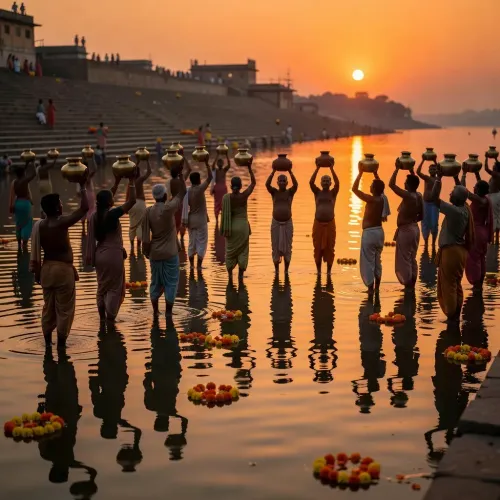
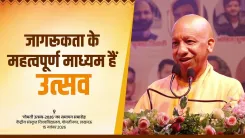
At the edge of the Gomti river in Lucknow on Sunday, 15 November 2026, thousands of devotees gathered at Laxman Mela Maidan for the most visually striking ritual of Chhath Mahaparv — the Sandhya Arghya, the evening offering to the setting sun. Chief Minister Yogi Adityanath, joining the faithful at the ghat, showered flower petals over the fasting women observing the vrat, in a gesture of public tribute to the festival's heart.
The Chief Minister's Office of Uttar Pradesh shared the moment on X, quoting CM Yogi Adityanath directly: 'Chhath Mahaparv prakrti, jal aur Bhagwan Surya ke prati kritajnata vyakt karne ka avsar hai' — 'Chhath Mahaparv is an occasion to express gratitude towards nature, water and the Sun God.' He added that Chhath is the divine light of India's Sanatan cultural soul, one that teaches devotion, purity, self-purification and discipline.
Flower petals and a Bhojpuri souvenir at Gomti Ghat
Beyond the ritual participation, the Chief Minister also released 'Sanesh', a commemorative souvenir of the Akhil Bharatiya Bhojpuri Samaj — a national organisation dedicated to the promotion of Bhojpuri language, culture and literature. The launch at a public festival ground, before an audience drawn largely from eastern Uttar Pradesh's Bhojpuri-speaking diaspora in Lucknow, underlined the festival's dual role as both a religious observance and a cultural anchor for a community spread far beyond its Bihar and Purvanchal heartland.
Chhath beyond its heartland — Lucknow as a stage
Chhath Mahaparv is a four-day Hindu festival dedicated to the Sun God, with rituals centred on water bodies — rivers, ponds and ghats — and observed with a strict fast by devotees, overwhelmingly women. Its core geography has traditionally been Bihar and eastern Uttar Pradesh, but migration patterns have carried the festival into every major Indian city.
The Uttar Pradesh government's public facilitation of large-scale Chhath events at state-capital venues like Laxman Mela Maidan extends the festival's official visibility beyond its grassroots eastern UP base. A Chief Minister's physical presence at the Sandhya Arghya — the most photographed moment of Chhath — amplifies that signal considerably. The state has consistently supported the public observance of regional festivals as part of a broader cultural-continuity agenda.
The gathering on the Gomti's banks was not merely ceremonial. Chhath imposes one of Hinduism's strictest personal disciplines on its observers — a 36-hour waterless fast, standing in river water at sunrise and sunset, and an ethos of collective purity. The Chief Minister's framing of the festival as a lesson in 'shradha, pavitrata, aatmashuddhi aur anushasan' (devotion, purity, self-purification and discipline) aligned his remarks closely with the festival's own internal theology, rather than purely political messaging.
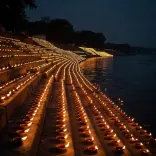
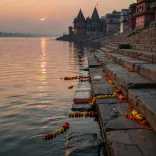
With the sun dipping over the Gomti and diyas flickering across the water, Lucknow offered, for one evening, a tableau that belonged as much to Patna or Varanasi as to the state capital — and the Chief Minister made sure he was standing in it.
Point of View
A numerically significant demographic in eastern UP and Bihar. Together, these moves reflect a governance style in which cultural participation and policy signalling are deliberately fused.
NationPress
15 Nov 2026
Frequently Asked Questions
Why did CM Yogi Adityanath attend the Chhath Puja in Lucknow?
CM Yogi Adityanath attended the Sandhya Arghya event at Laxman Mela Maidan on the Gomti riverbank in Lucknow on 15 November 2026 to participate in Chhath Mahaparv alongside devotees and to honour the fasting women observing the vrat. He also used the occasion to release a Bhojpuri Samaj souvenir.
What is Chhath Mahaparv and why is it significant?
Chhath Mahaparv is a four-day Hindu festival dedicated to the Sun God, observed mainly in Bihar and eastern Uttar Pradesh. It is notable for its strict discipline — including a 36-hour waterless fast — and rituals performed at water bodies at sunrise and sunset, making it one of Hinduism's most demanding observances.
What is 'Sanesh' and who published it?
'Sanesh' is a commemorative souvenir released by the Akhil Bharatiya Bhojpuri Samaj , an organisation that promotes Bhojpuri language, culture and literature across India. CM Yogi Adityanath formally launched it at the Chhath event in Lucknow.
Where is Laxman Mela Maidan located?
Laxman Mela Maidan is located on the banks of the Gomti river in Lucknow, the capital of Uttar Pradesh. It is a popular public ground used for large cultural and religious gatherings.
What did CM Yogi say about Chhath Mahaparv?
CM Yogi Adityanath said Chhath Mahaparv is an occasion to express gratitude towards nature, water and the Sun God, and described the festival as the divine light of India's Sanatan cultural soul that teaches devotion, purity, self-purification and discipline.