CM Yogi Greets UP on Chhath Mahaparv, Hails Festival's Sanatan Soul
Synopsis
Chief Minister Yogi Adityanath greeted Uttar Pradesh on Chhath Mahaparv on 15 November 2026, describing the ancient Vedic festival as a 'divine light of India's Sanatan cultural soul' rooted in devotion, purity, self-purification, and discipline.
Key Takeaways
CM Yogi Adityanath posted a Chhath Mahaparv greeting on 15 November 2026 via the official Chief Minister's Office account on X.
The message expressed gratitude for 'the boundless grace of nature, water, and Lord Surya' on the occasion of Chhath.
Chhath Mahaparv is an ancient Vedic festival observed widely across Uttar Pradesh , Bihar, and Jharkhand, with strict fasting and sunrise-sunset water rituals.
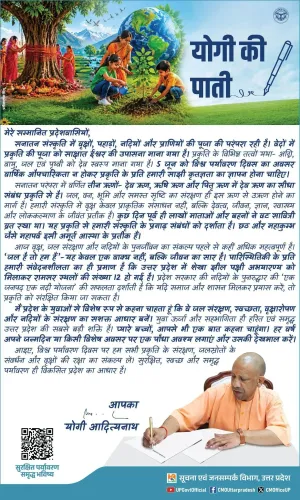
CM Yogi framed the festival as teaching four core values: shraddha (devotion), pavitrata (purity), aatmashuddhi (self-purification), and anushasan (discipline).
The message continues a consistent pattern of the UP government framing Hindu festivals within a Sanatan cultural continuity narrative since 2017 .
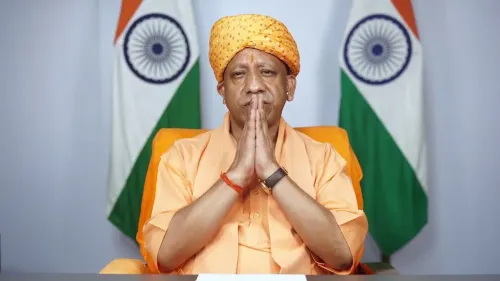
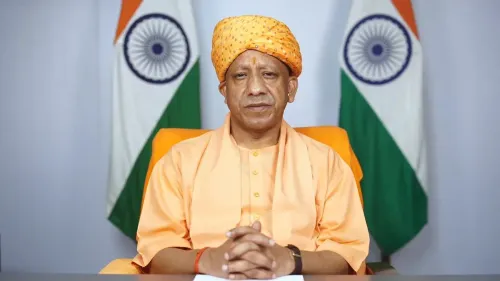
On the occasion of Chhath Mahaparv, Chief Minister Yogi Adityanath of Uttar Pradesh extended greetings to devotees on Sunday, 15 November 2026, calling the ancient festival a 'divine light of India's Sanatan cultural soul' that teaches reverence, purity, self-purification, and discipline.
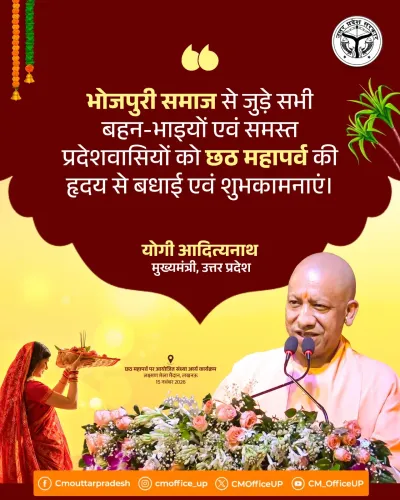
The Chief Minister's Office of Uttar Pradesh shared the message on X, quoting CM Yogi Adityanath in Hindi: 'हम छठ महापर्व पर प्रकृति, जल और भगवान सूर्य की असीम कृपा के प्रति कृतज्ञता ज्ञापित करते हैं' — 'On Chhath Mahaparv, we express gratitude for the boundless grace of nature, water, and Lord Surya.'What Chhath Mahaparv means — and why UP marks it with such weight
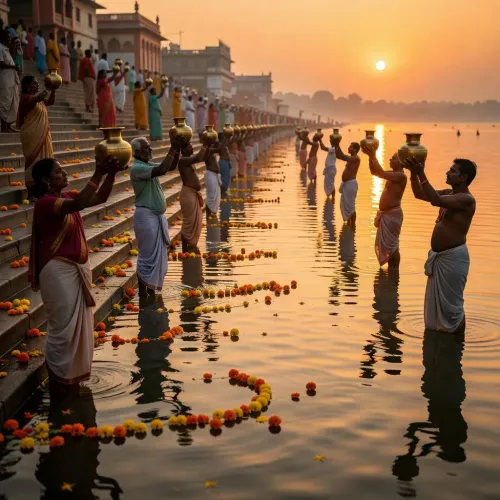
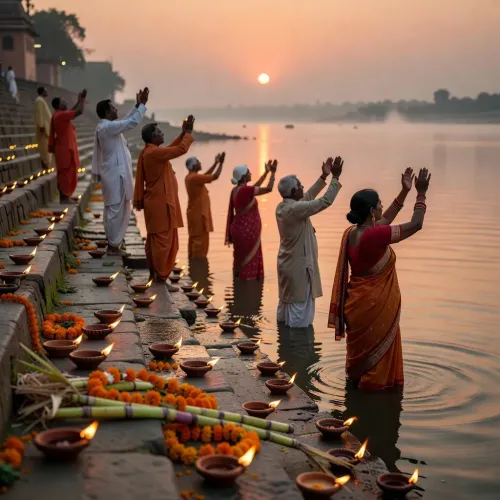
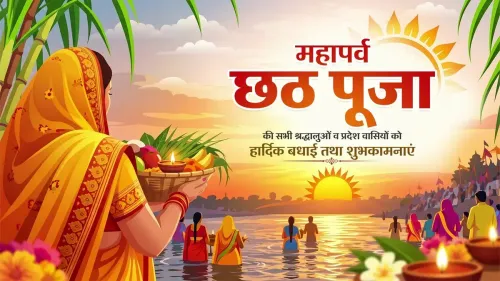
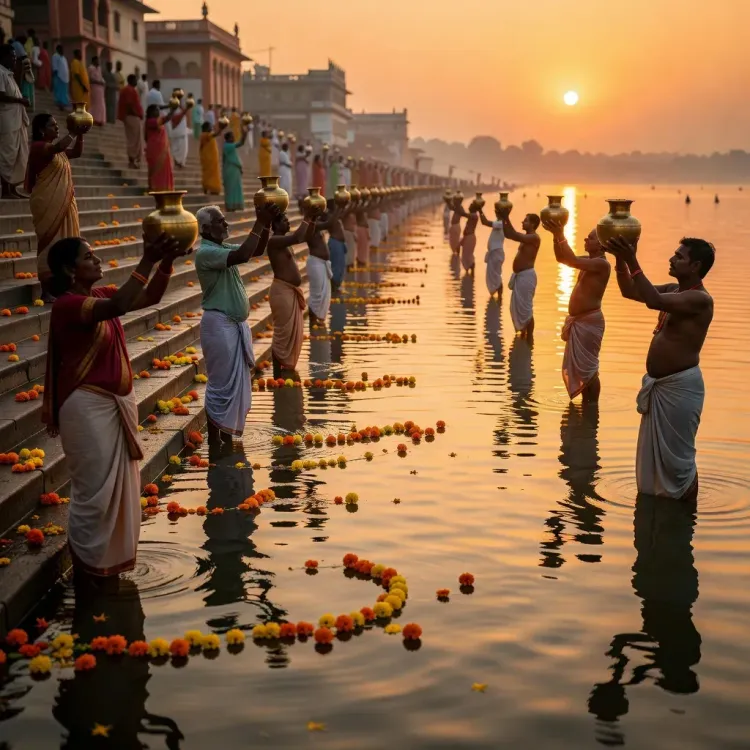
Chhath is among the most ancient of Vedic observances, dedicated to Surya, the sun god, and to the life-giving forces of nature and water. The four-day festival — defined by rigorous fasting, ritual bathing, and the iconic arghya (water offering) at sunrise and sunset — draws millions of devotees to riverbanks across Uttar Pradesh, Bihar, and Jharkhand. In eastern Uttar Pradesh especially, Chhath is not merely a religious event; it is a communal identity. CM Yogi, in his message, framed the festival as more than ritual. He described it as a living instruction in shraddha (devotion), pavitrata (purity), aatmashuddhi (self-purification), and anushasan (discipline) — four values the state government has consistently woven into its cultural messaging.A pattern of Sanatan framing in UP's festival outreach
Since taking office in 2017, CM Yogi Adityanath has made the public celebration of Hindu festivals a defining feature of his administration's cultural posture. Festival greetings from the Chief Minister's Office routinely frame regional traditions — Diwali, Makar Sankranti, Navratri, and now Chhath — as expressions of Sanatan civilisational continuity rather than seasonal customs. The Chhath message fits squarely within that arc: gratitude to nature and the sun is elevated to a statement of cultural identity. What makes this year's message notable is its emphasis on aatmashuddhi — self-purification — alongside the more conventional vocabulary of devotion and discipline. The language signals an attempt to cast Chhath not just as a Bihari or Purvanchali tradition but as a universally resonant Sanatan practice for all of Uttar Pradesh's 240 million residents.Point of View
The message serves a dual purpose: it consolidates political affinity with Purvanchali voters who hold Chhath sacred, while simultaneously asserting a broader cultural ownership over the festival's meaning. The emphasis on 'self-purification' adds an inward, almost reformist dimension rarely seen in routine festival greetings. Taken as a pattern, these messages function as low-cost, high-reach instruments of cultural governance — reinforcing a worldview far more than any single policy announcement could.
NationPress
15 Nov 2026
Frequently Asked Questions
What is Chhath Mahaparv and why is it significant in Uttar Pradesh?
Chhath Mahaparv is an ancient Vedic festival dedicated to Lord Surya (the sun god) and the forces of nature. It is one of the most widely observed festivals in eastern Uttar Pradesh, Bihar, and Jharkhand, marked by rigorous fasting, ritual bathing, and water offerings at sunrise and sunset.
What did CM Yogi Adityanath say about Chhath Mahaparv in 2026?
CM Yogi Adityanath, in his message shared by the Chief Minister's Office of Uttar Pradesh on 15 November 2026, expressed gratitude for the 'boundless grace of nature, water, and Lord Surya,' and described Chhath as a 'divine light of India's Sanatan cultural soul' that teaches devotion, purity, self-purification, and discipline.
What values does Chhath Mahaparv represent according to Yogi Adityanath?
According to CM Yogi Adityanath's 2026 Chhath message, the festival embodies four core values: shraddha (devotion), pavitrata (purity), aatmashuddhi (self-purification), and anushasan (discipline).
How has the UP government approached Hindu festivals under Yogi Adityanath?
Since 2017, the Yogi Adityanath government has consistently framed Hindu festivals — including Diwali, Navratri, Makar Sankranti, and Chhath — as expressions of Sanatan civilisational continuity, using festival greetings to reinforce a cultural identity rooted in Sanatan tradition.
Which states celebrate Chhath Mahaparv the most?
Chhath Mahaparv is most prominently celebrated in Uttar Pradesh (especially eastern UP or Purvanchal), Bihar, and Jharkhand, with large diaspora communities also observing it across India and abroad.